
The articlegameplay, story, development, reception
Gameplay
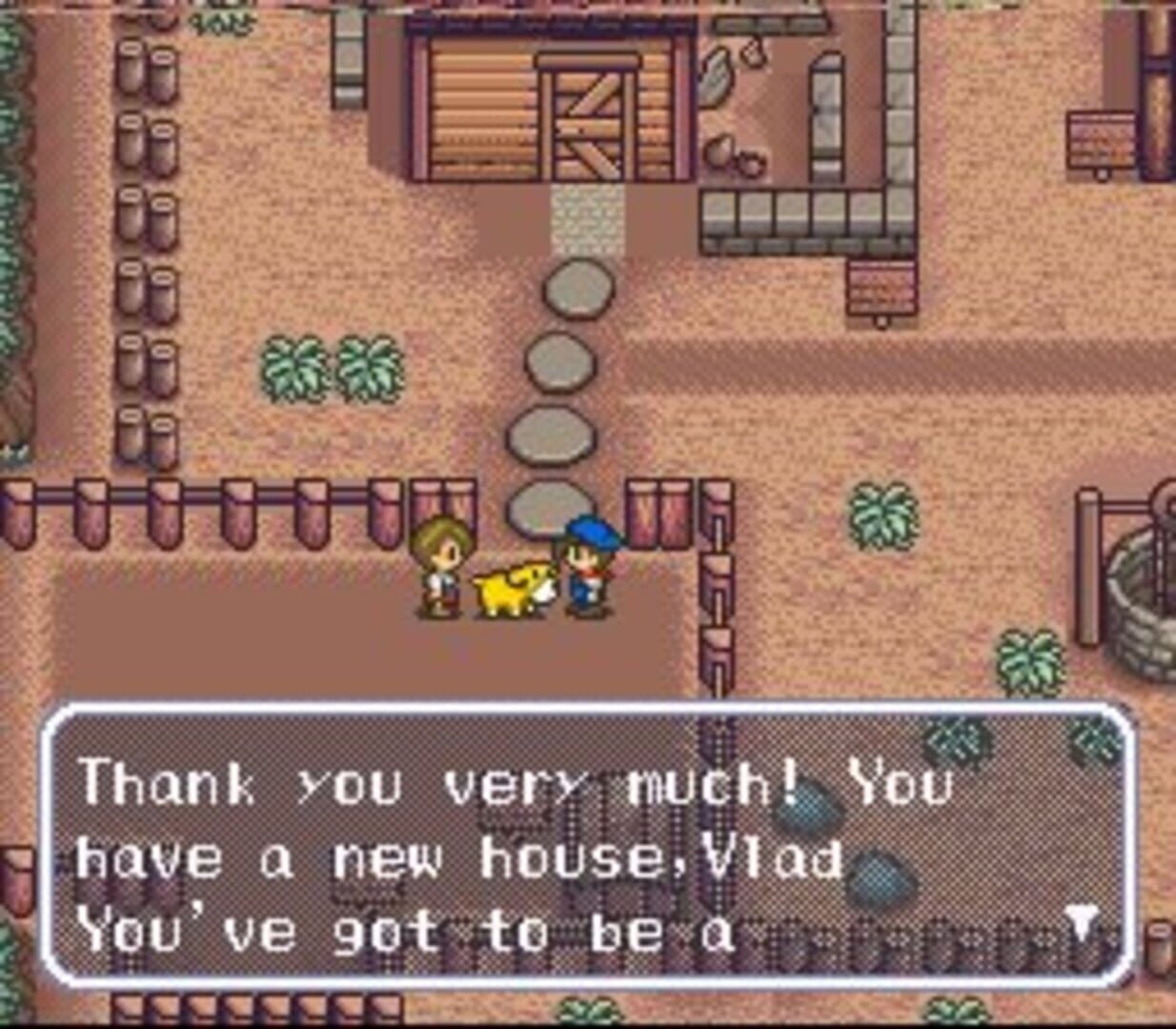
The player controls a young man charged with maintaining the farm he inherits from his grandfather. The primary objective is to restore and maintain a farm that has fallen into disrepair. The player decides how to allocate time between daily tasks, such as clearing land, planting crops, selling harvests, raising livestock, attending festivals, building relationships with villagers, and foraging.
For vegetables to develop, they must receive water each day; lack of water does not kill crops, but prevents them from growing. Animals must be fed once a day to keep them producing. Although the only care that chickens require is feeding, cows must be talked to frequently, brushed, and milked to retain their health. A cow may become sick if it is not fed for one day, which may lead to death if ignored.
Development
The concept of Harvest Moon came to director Yasuhiro Wada during his first years living in Tokyo. His first job was as a production assistant on PC Engine games, where he learned more about the principles of game development. New to life in the big city, Wada would reminisce about his simple childhood life in the countryside in Miyazaki, Kyushu. He conceived an idea for a country-living simulation game, including the ability to get married and have children.
He wanted the game to be unique apart from the fighting games popular at the time, but was worried it would not be successful as there was no comparable precedent. It took Wada two years to build the budget and rapport to propose Harvest Moon. Among the games he worked on during this time was Magical Pop'n. Harvest Moon was the first original title he would work on.
Reception
The game received mainly positive reviews and has a GameRankings standing of 73%. Crispin Boyer remarked in Electronic Gaming Monthly, "An RPG about farming? Talk about a hard sell. But this epic adventure in agriculture is as fun as it is original."
He and the other three members of the EGM review team praised the game's original concept and the numerous interesting tasks the player must juggle. The four reviewers in Famitsu complimented the game saying that even during the more monotonous days of work, the real-time gameplay added tension to the proceedings. One reviewer said that the game "really struck a chord with me. I've never come across a game that expresses the excitement of "what will I do tomorrow?""
Legacy
The profitable release of Harvest Moon led to development of a second game in what would become a series, Harvest Moon GB. A third installment, Harvest Moon 64, would also be developed. For nearly the next two decades, new Harvest Moon games would be released frequently, at which point new games would be released under the title Story of Seasons due to issues with rights when Marvelous chose to move their localization division from Natsume Inc. to Xseed Games.
Harvest Moon is one of the first games of the farm life simulation genre, also considered by some to be the first cozy game. Engadget called Harvest Moon "one of the most quietly influential games in the industry". According to Edge, millions of gamers have played farming simulation games of some kind since Harvest Moon's release.


