Ludography
Densha de Go! 2 cover

1999 · Port · Taito GM R&D Sect. #2 · Simulation

Densha de Go! 2

Timed SNK exclusivePort

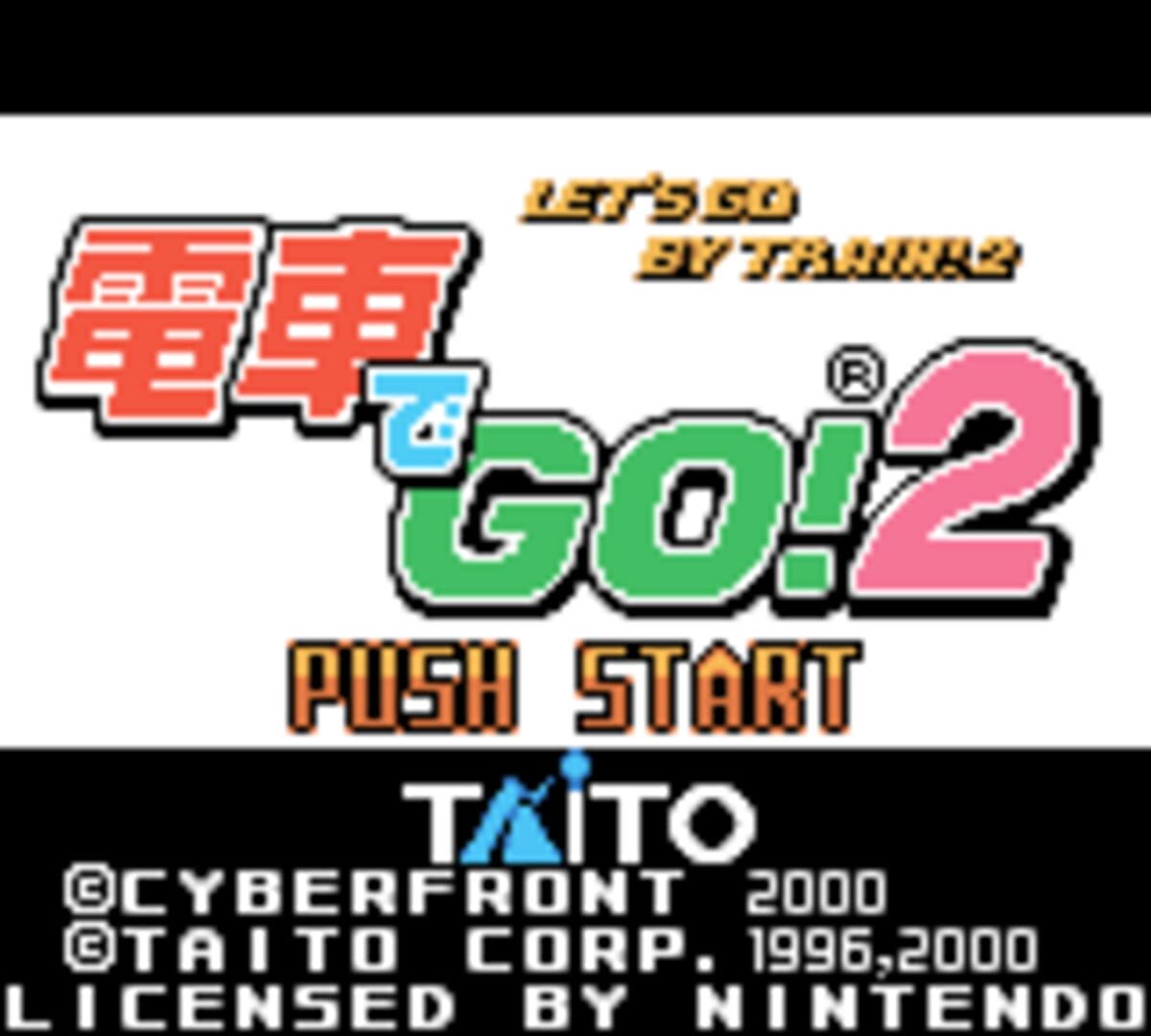
Densha de Go! 2 Kousoku-hen is a train driving simulation game. It was released in the arcades in Japan in 1998. It was ported to PlayStation, Nintendo 64, WonderSwan, Neo Geo Pocket Color, Windows, Dreamcast, and Game Boy Color.

The arcade version was also ported to Neo Geo Pocket. The PS1 version was also ported to WonderSwan and Game Boy Color.

Also known as
Go by Train! 2: High Speed Volume · Densha De Go! 2 Kousokuhen · Densha de Go! 2 Kousoku-hen · Let's Go by (electric) Train! High-Speed Volume · Densha de Go! 2 on Neo Geo Pocket · 電車でGO!2
Released
7 October 1999
Platforms
WonderSwanNeo Geo Pocket ColorGame Boy ColorArcadeDreamcastNeo Geo PocketPlayStationWindows
Genres
Simulation
Developers
Taito GM R&D Sect. #2
Publishers
SNKCyberFrontTaito
Modes
Single-player
Perspective
First person
Themes
Non-fiction
Languages
Japanese

About

Densha de Go! 2 高速編; "Go by Train! 2: High Speed Volume") is a train simulator. It is part of the Densha de Go!

series. It was released in the arcades in Japan in 1998. It was ported to PlayStation, Nintendo 64, WonderSwan, Neo Geo Pocket Color, Windows, Dreamcast, and Game Boy Color. The Nintendo 64 version is titled Densha de Go!

64.

Keywords

  • japan only

Media

The articlegameplay, story, development, reception

Gameplay

With 13 vehicles, on 16 missions, there are 7 main lines: Hokuhoku Line, Akita Shinkansen Line, Ōu Main Line, Tazawako Line, Keihin-Tōhoku Line, Yamanote Line, and the Tōkaidō Main Line.

Unique to the Nintendo 64 version is a Beginner Mode, which allows 999 seconds for the player to complete either the Training Course or Practice Course. The player is given an allotted amount of time to bring their train to the next station as well as a fixed time that the train is expected to arrive. If the player goes around curves too fast, stops suddenly or incurs other such dangers of train operation a few seconds are taken away from the remaining time they have to complete their task.

As with most Densha de Go! games, a special controller was available for the Nintendo 64 version, which is plugged into controller outlet 3, while the Voice Recognition Unit (VRU) microphone is inserted into controller outlet 4, and a standard controller is in outlet 1. It consists of a switch on the left that goes up and down, and it controls the train's speed, all five of its drive speeds, and Neutral. The handle on the right controls the braking speeds 1–8, emergency brake, and doors opening.

Between these two levers is a slot in which the player can place a pocket watch or stop watch (not included but designed to look more realistic) to keep the time as they drive. There are five buttons, A, B, C, Start, and Select. The select button acts as the Z button to show distance to the next stop, in some game variations.
Reception

In Japan, Game Machine listed Densha de Go! 2 Kōsoku-hen on their April 15, 1998 issue as being the third most-successful dedicated arcade game of the year. On release, Famitsu magazine scored the Densha de Go! 64 at 32 out of 40.

Releases by platformdates and regions as published

Releases by platform
PlatformReleasedRegions
WonderSwan7 October 1999Japan
Neo Geo Pocket Color21 October 1999Japan
Game Boy Color8 December 2000Japan

Title IDsone per regional release, with its latest update

Title ids and disc serials by release
PlatformTitle IDRegionLatest update
Game Boy ColorCGB-B82J-JPNJapan—
Neo Geo Pocket ColorNEOP00600Japan—
PlayStationSLPM-80346Japan—
SLPM-80406Japan—
SLPM-86141Japan—
SLPM-86142Japan—
SLPM-86615Japan—
WonderSwanSWJ-CFT001Japan—

Editions and related releases

Expanded editions
Densha de GO! 2 3000
Part of
Densha de Go! 2
Ported as
Densha de GO! 64
Built on it
Densha de Go! 2 Kōsoku-henDensha de GO! 2 3000

Games like this

Collections4 collections

Platform libraries

Description adapted from its source, CC BY-SA 4.0.