Ludography
Dezeni Land cover

1983 · Hudson Soft Company, Ltd. · Adventure · Visual novel

Dezeni Land

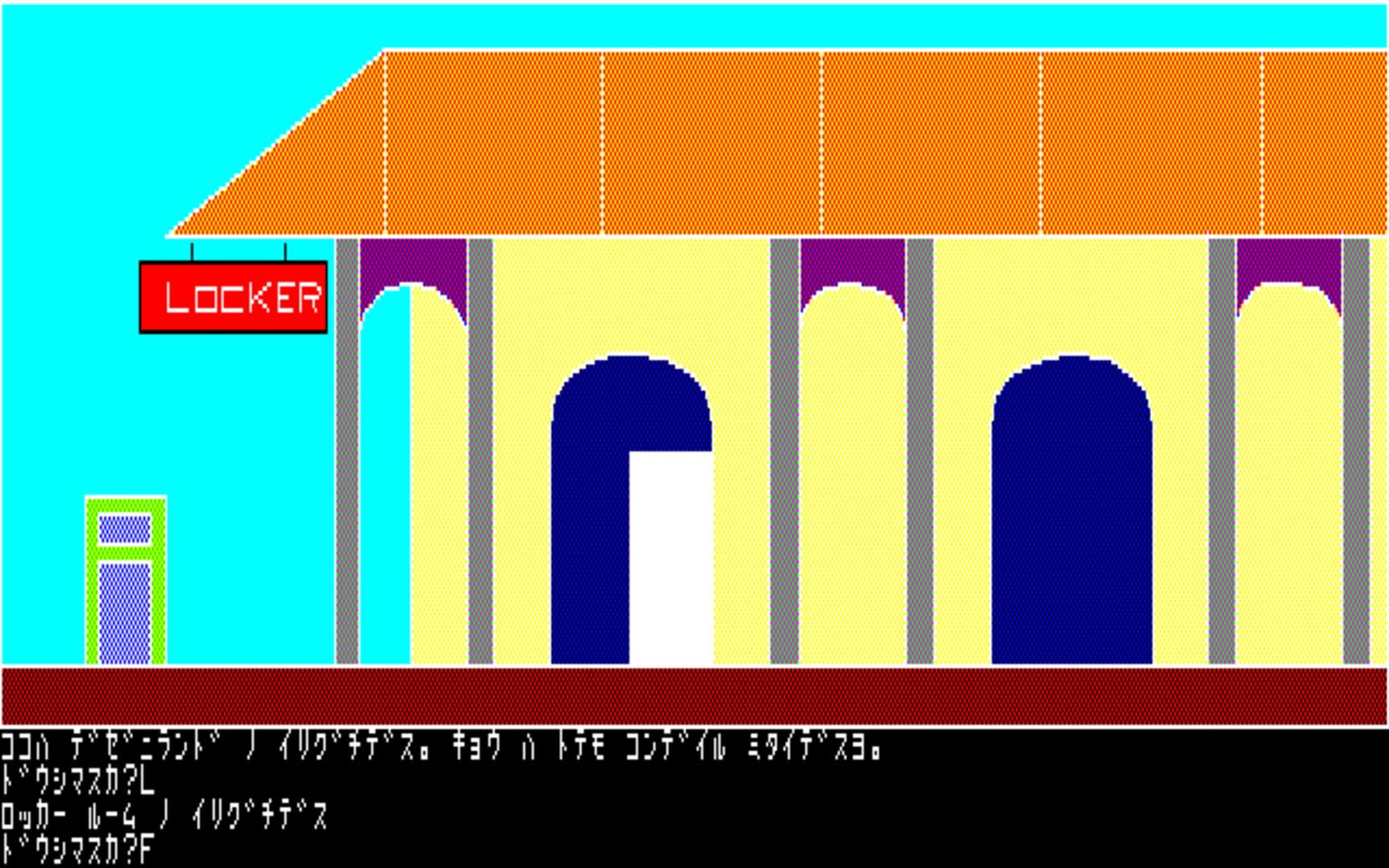
Adventure game created by Hudson in 1983. The game's nameless protagonist must visit six attractions parodying well-known areas of Tokyo Disneyland of the early 1980's, find the treasures within and escape. The title itself is a pun involving Disney and a Japanese expression referring showing off one's wealth.

Released
1 December 1983
Platforms
PC-8800 SeriesFM-7Sharp X1MSXNEC PC-6000 SeriesPC-9800 SeriesSharp MZ-2200
Genres
AdventureVisual novel
Developers
Hudson Soft Company, Ltd.
Publishers
Hudson Soft Company, Ltd.

About

Dezeni Land is a 1983 adventure game developed by Hudson Soft. It was part of an early wave of adventure games in Japan and was Hudson Soft's first game in the genre. The game involves a humorous story about a player entering an amusement park and trying to escape with the treasure they can find in the area. The game was influenced by the opening of Tokyo Disneyland in the same year.

Dezeni Land sold particularly well and was released across various Japanese personal computers lines. The success of the game changed the way Hudson developed games after, with a focus on making stronger individual titles instead of a large quantity of games at once. Akira Yamashita, in his 1987 book on adventure games, complimented it as one of the best adventure games released in Japan, and the game was included in an overview of the best PC games of the 1980s in Asocon  in 1990. The developers of the game followed it up with two other humorous adventure games for Hudson Soft with Princess Tomato in the Salad Kingdom and a sequel, Dezeni World the following year.

Media

Dezeni Land screenshot 1

The articlegameplay, story, development, reception

Gameplay

Dezeni Land is a humorous fantasy-themed adventure game. It is set in an amusement park. The goal is for the player to make their way through the game's six attractions and find the treasures that lie within, and then escape the park.

The player controls the actions in the game through a text parser. Most of the text is in Japanese, while the user input is handled in English.

Development

Japan released its first adventure game with Omotesandō Adventure in 1982, which was released for the personal computer (PC) market. By the latter half of 1982, other Japanese magazines began to feature adventure games that would slowly spread throughout Japan, which in turn created the first boom period for adventure games in the country. Hudson Soft was one of the earliest companies to begin developing adventure games in Japan with Dezeni Land. It was Hudson Soft's first adventure game.

In April 1983, the employees of the company visited Tokyo Disneyland, which had just opened. This led to the creation of the game Dezeni Land. Each of the attractions to escape from in the game are patterned after areas of Tokyo Disneyland that were present at the time.

Reception

Akira Yamashita wrote in Super Soft Magazine that Hudson Soft put a lot of effort into the game, which was shown through the speed at which the screen generated its images. Yamashita continued that the story development and graphics were all top-notch, and it was one of the finest Japanese adventure games.

In March 1985, Technopolis  published their poll on their readers favourite personal computer games. Each reader was allowed to submit five games. Dezeni Land placed in fifth place on the list. In an overview of PC games from the 1980s, an Asocon  magazine writer found the game was thoroughly funny throughout its playtime, and was refreshing for an era of such bleak and brutal games.

Releases by platformdates and regions as published

Releases by platform
PlatformReleasedRegions
PC-8800 Series1 December 1983Japan
Sharp X131 December 1983Japan
FM-731 December 1983Japan
MSX31 December 1984Japan
PC-9800 Series31 December 1984Japan
NEC PC-6000 Series31 December 1984Japan
Sharp MZ-220031 December 1984Japan

Games like this

Collections2 collections

Platform libraries

Description adapted from its source, CC BY-SA 4.0.