The articlegameplay, story, development, reception
Gameplay
Donkey Kong Bananza is a 3D platformer and adventure game that emphasizes destruction and open-world exploration. Journalists have compared it to Super Mario Odyssey (2017), with some describing it as a successor. As the gorilla Donkey Kong, the player collects the Banandium Gems, golden banana-shaped diamonds, while exploring sandbox-like levels in an underground world. Each underground layer has a unique theme, including ice, lava, and tropical biomes.
Donkey Kong can roll, punch, slap the terrain, pick up and throw objects, and climb most surfaces. The player learns five animal-themed power-up transformations from non-player character (NPC) elders: a gorilla transformation that increases Donkey Kong's strength; a zebra transformation that increases his speed; an ostrich transformation that allows him to glide and drop egg bombs; an elephant transformation that allows him to inhale and spit terrain; and a snake transformation that increases his jump height. The player can use and swap between transformations at any time, though their duration is limited by an energy meter.
The player completes missions, solves puzzles, and fights enemies to collect Banandium Gems, which are also found by exploring or progressing through the story. Banandium Gems are used to upgrade Donkey Kong's abilities from a skill tree. There are reportedly up to 1,000 Banandium Gems obtainable, 777 of which are tracked as unique collectibles. Collecting them is optional, and it is possible to complete the game without obtaining any.
While exploring, the player discovers secluded areas where they must complete challenges including platforming, solving puzzles, defeating enemies within a time limit, and mining for gold. They are rewarded Banandium Gems or gold upon completion. Some areas contain side-scrolling sections, referencing the Donkey Kong Country games, and minecarts.
The player can receive advice from, assist, and obtain Banandium Gems from NPCs, including Donkey Kong characters such as Cranky Kong, Diddy Kong, Dixie Kong, and Rambi. When Bananza starts, Donkey Kong befriends Odd Rock, an anthropomorphic purple stone who directs him towards objectives. As the game progresses, Odd Rock is revealed to be a young Pauline, who can use her singing voice to activate Donkey Kong's transformations, remove seals, and, if a second player controls her in a co-op mode, emit explosive projectiles. Bananza supports GameShare, allowing a second player to control Pauline locally or online on another Nintendo Switch 2, or locally on an original Nintendo Switch.
Bananza is distinguished by its destructible environments: Donkey Kong can smash almost every surface and destroy terrain. He can rip pieces of the environment from the ground or walls and throw them to uncover items or destroy enemies, or use them as snowboards. Soft terrain can be stacked to create new paths. Destroying environments allows for varied traversal; for instance, Donkey Kong can dig underground and create a path to another area of the world.
He can also uncover Banandium Gems by digging. The extent to which the player can destroy the environment is limited by a layer of unbreakable bedrock at the bottom of each level. Large bosses block the routes that link each layer, and the player must defeat each to progress. Progress is tracked in a 3D world map, and giant eels allow players to fast travel to different layers or across the current layer.
Other collectibles include gold, which serves as currency and fuel for transformations; balloons, which rescue Donkey Kong from bottomless pits; Banandium Chips, coins that the player can trade for Banandium Gems; fossils, which the player can trade for clothing to customize Donkey Kong and Pauline; and tracks for an in-game music player. Bananza features Amiibo support; scanning a Bananza-themed Donkey Kong and Pauline figure unlocks a special costume for Pauline, and existing Donkey Kong Amiibo (Donkey Kong, Diddy Kong, King K. Rool, and Super Nintendo World bands) summon explosive gold tiles. Other Amiibo summon spheres with special properties that assist traversal. A photo mode allows the player to use a free-moving camera to take and customize screenshots, and an art creation mode, DK Artist, allows them to carve and paint sculptures using the Joy-Con 2's mouse functionality.
Story
Donkey Kong travels to Ingot Isle to search for Banandium Gems amidst a gold rush. , steals the gems to power its ship. 's president, Void Kong, seeks to travel to the planetary core to find the Banandium Root, a magical object that grants the wishes of its wielder, and obtain riches. Donkey Kong is swept underground, where he rescues Odd Rock.
They discover a vast Hollow Earth-like region inhabited by animal societies and their ancient elders. A Kong elder grants Donkey Kong transformative powers and restores Odd Rock to its true self, the teenage girl Pauline. She explains that Void kidnapped her, believing her singing voice could awaken the root.
The elder advises Donkey Kong and Pauline to continue to the core to find the root. 's minions, and meet other animal tribe elders, who grant Donkey Kong new transformations. Pauline dreams of becoming a famous singer and gains more confidence to sing as she and Donkey Kong progress. Void's subordinates grow disillusioned with VoidCo.
and quit, choosing to help Donkey Kong instead. Donkey Kong and Pauline battle Void at the core, where Pauline awakens an object that Void thinks is the root. She instead frees King K. Rool, who became trapped with his Kremling Krew while searching for the root.
K. Rool dispatches Void and resumes his search; he wishes to turn the world into rotten banana mush to eat. Donkey Kong and Pauline defeat him in a battle at the core and claim the root. Donkey Kong wishes for a large supply of bananas, while Pauline wishes to return home.
The root brings them to New Donk City, Pauline's hometown, on a tower of bananas. K. Rool pursues them, claims the root, and floods the city with toxic mush. Donkey Kong and Pauline defeat him again, restoring New Donk City, and reluctantly part ways.
Donkey Kong dives underground to continue adventuring while Pauline begins street performing. Three months later, Donkey Kong and Pauline reunite. She asks for his help to prepare for a show at New Donk City Hall, believing that the elders can help her write a new song. After completing a challenge in the core, Pauline comes up with the melody, and they return to the surface for her performance.
Development
After Nintendo Entertainment Planning & Development (EPD) Production Group No. 8 completed Super Mario Odyssey, EPD's senior general manager Yoshiaki Koizumi—who directed Donkey Kong Jungle Beat (2004)—asked the team to develop a 3D Donkey Kong game. The last original Donkey Kong game was Donkey Kong Country: Tropical Freeze (2014), and Koizumi wanted to expand the franchise. Furthermore, Nintendo had not developed a Donkey Kong game internally since Jungle Beat, and wanted to establish separate 2D and 3D Donkey Kong series as they had with the Super Mario series. The Odyssey director Kenta Motokura, who worked as a character artist on Jungle Beat, was assigned as producer.
Motokura said EPD wanted to innovate as Donkey Kong (1981) had with story-driven gameplay and varied stage design and Donkey Kong Country (1994) had with pre-rendered graphics, using the skills they gathered from developing Super Mario games. The team consulted Koizumi and Donkey Kong's creator, Shigeru Miyamoto, to better understand Donkey Kong; they emphasized Donkey Kong's strength. Koizumi highlighted his large arms as distinguishing him from Mario, while Miyamoto highlighted his wild, goofy nature and varied abilities, such as slapping terrain.
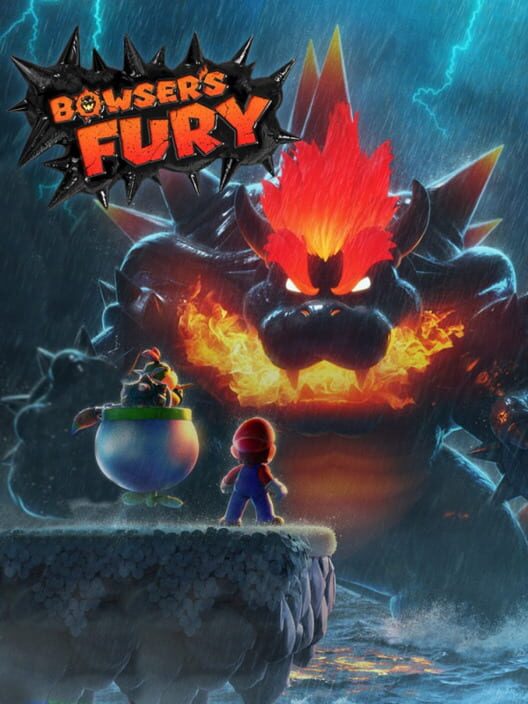
Kazuya Takahashi, who joined Nintendo in 2020 after previously working on open-world role-playing video games, and Wataru Tanaka, Odyssey's programmer, were assigned as Bananza's directors. Nintendo Life reported that development began in 2017 or 2018, while GamesRadar+ speculated that full-scale production likely did not start until after Takahashi joined Nintendo and EPD finished Bowser's Fury (2021). EPD began work remotely due to the COVID-19 pandemic. Much of the staff were lifelong Donkey Kong fans; Tanaka said he was "obsessed" with Donkey Kong Country (1994) as a child, while other staff played the Rare Donkey Kong games and the art director, Daisuke Watanabe, grew up playing the 1981 game on the Famicom.
After Odyssey's release, a software engineer, Tatsuya Kurihara, began conducting experiments with voxel technology. It had been used to a limited degree in Odyssey to allow Mario to dig through cheese and plow snow, and Motokura thought it had the potential to be pushed further. In one experiment, Kurihara added large hands to a Goomba so it could rip and throw terrain. Tanaka said the team found this "surprisingly satisfying" and interesting as a central gameplay element, and Motokura suggested that Donkey Kong's physical strength was a good fit for the technology.
He was inspired by the second level of Super Mario Bros. (1985), which allows the player to create paths by destroying blocks.
Bananza's development began on the original Switch, but shifted to the Switch 2 around 2021. The limited memory of the original Switch struggled to handle the detailed environments, and Tanaka was unsure if it was possible to develop the game as envisioned. The Switch 2 allowed Bananza to run at a stable 60 frames per second, expand the environmental size and details, and incorporate concepts that had been discarded due to technical constraints. Takahashi said the team was also enticed by the Joy-Con 2's mouse controls.
The entirety of Bananza's terrain is made from voxels, which Motokura said was its main difference from Odyssey. The average Bananza level contains over 347 million voxels. Takahashi described building levels from voxels as more convenient than polygonal modeling, as developers could quickly iterate by combining voxels and materials and testing in-game. EPD sought to ensure players would not notice the voxels, finding it more fun if objects did not look destructible.
They limited using polygons to ensure the frame rate remained smooth. Moving to the Switch 2 enabled the expansion of the level of environmental destruction; Watanabe said: "[the Switch 2] unlocked the game's full potential—no, it made the game possible." EPD developed a new virtual camera system so players would be able to see while digging underground. 1-Up Studio and tri-Crescendo provided programming assistance.
EPD developed Bananza using Odyssey as a basis. As it was the first 3D Donkey Kong platformer since Donkey Kong 64 (1999), Watanabe wanted it to feel new in terms of gameplay and art direction. Nonetheless, EPD sought to honor Donkey Kong's history and revive elements they felt would mesh with the destructible environments. Takahashi replayed every Donkey Kong game and cited Donkey Kong Country as a particular influence.
EPD used the voxel technology to present returning elements, including minecarts, barrel cannons, and Animal Friends such as Rambi, in new ways; Motokura added that they did not want to rely solely on nostalgia. They wanted to satisfy veteran Donkey Kong fans while appealing to players who were alienated by the franchise's high difficulty level, so they included the skill tree, an easier game mode, and co-op features as options. Side-scrolling areas were included to bridge the gap between the 2D and 3D Donkey Kong games.
In designing each layer, EPD generally chose a theme and then thought about what voxel-based game mechanics could be included. In one instance, the ability to surf on pieces of terrain inspired a layer with rolling hills. They designed the underground world as a hierarchical society, the structures of each world based on either the animal inhabitants or bananas. The team wanted the underground world to feel strange and distinct from the surface setting of previous Donkey Kong games, with a wide variety of colors, but sought to evoke the franchise's original Brooklyn-inspired aesthetic and incorporated the neon pink and blue colors from the 1981 game as highlights.
They also included an indicator for how many meters underground the player is as a reference to the 1981 game, which uses height to distinguish levels. The team connected layers through sinkholes to enhance the feeling of going deeper underground and, unlike Odyssey, so players could travel
Reception
Donkey Kong Bananza received "universal acclaim" according to the review aggregator website Metacritic. OpenCritic reported that 98% of critics recommended the game. Reviewers described it as the Switch 2's killer app.
Logan Plant of IGN called Bananza "Nintendo's first Switch 2 masterpiece" and one of the best platform games, and The Washington Post said it was one of the best Nintendo games of recent years, likening it to Super Mario Odyssey.
Critics praised the game's visuals and gameplay. IGN praised DK's movement and abilities, as well as the destructible environments and platforming challenges, calling it "a smashing return for a classic Nintendo character". Adam Newell in his review for Destructoid praised the surprises, gameplay, and story. Jim Norman in his review for Nintendo Life praised the variety, sense of adventure, and challenges.
Critics enjoyed the destruction. They criticized the camera and frame rate. 4Players and NME criticized the co-op mode, which NME said felt "like an afterthought". Jeuxvideo.com said that the bosses are too easy and are "recycled", that the music is not impactful enough, and that the game has few "wow" sequences.
Billie Bugara of Pitchfork gave the soundtrack 7.0 out of 10. He praised it as central to Bananza's identity, blending inventive "genre-hopping" compositions with dynamic level themes that build on Donkey Kong's musical legacy. He criticized the remixes of Wise's Donkey Kong Country tracks as part of "Nintendo's seemingly terminal plague of injecting hollow nostalgia into its games", but saw the soundtrack as an "electrifying" and forward-looking continuation of Donkey Kong music.
Donkey Kong Bananza was the seventh-highest-rated game of 2025 on Metacritic, and the fifth on OpenCritic. Many publications named Bananza one of the best games of 2025, including Ars Technica, The A.V. Club, Den of Geek, The Economist, Edge, Eurogamer, IGN, GamesRadar+, GQ, NPR, Rolling Stone, Der Spiegel, and Slant Magazine.
A poll of 191 Japanese game developers and industry figures ranked Bananza the fourth-most popular game of 2025. A similar poll conducted by 4Gamer.net highlighted Bananza as a year-end favorite among Japanese gaming celebrities. Naoki Hamaguchi, director of the Final Fantasy VII Remake series, named Bananza one of his favorite games of 2025.