The articlegameplay, story, development, reception
Gameplay
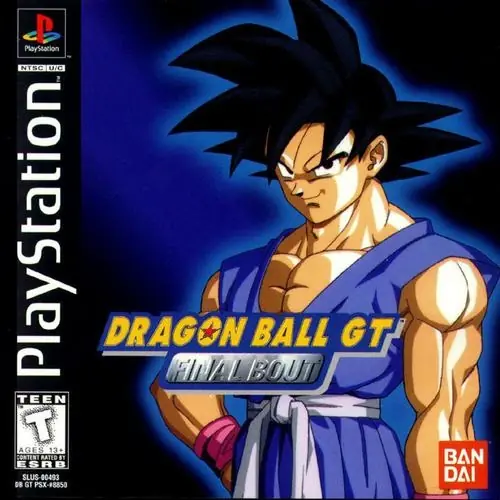
The game's gameplay similar to the Butōden series, playing out entirely in two dimensions but featuring 3D environments and characters from the Z and GT series of the Dragon Ball franchise. The fighters can fly to almost any point on the playing field. Unique in the game are special ki attacks called Special Knockout Trick. These are the spectacular versions of the character's ki attacks the character performs at a distance.
When these attacks are performed, the camera cuts and pans to the attacking character, who powers up and fires. During the attacking character's power up, the opposing character has the opportunity to either retaliate or block when the word counter flashes on the lower right hand corner of the screen. If the player chooses to retaliate, they too power up and fire a ki attack, causing a power crossfire. Whichever player presses their beam button the fastest will push their opponent's super back and force their own super to damage their opponent.
Another feature carried over from The Legend is the Meteor Smash technique. With a key combo, players can ignite a chain of mêlée attacks.
Development
Bandai kept Final Bout under wraps for most of its development. Responding to rumors that Dragon Ball Z: The Legend was being released in the U.S., Jeff Rotter, associate producer of Bandai of America, said that negotiations were underway to bring a Dragon Ball Z game to North America, but did not identify the game. Final Bout's surprise unveiling at the 1997 Tokyo Toy Show came when the game was half-finished and less than six months away from its Japanese release.
Reception
In Japan, the game sold 245,000 units. In North America, due to Dragon Ball not being popular in the region at the time, Bandai America initially only produced around 10,000 copies of the game. The game eventually sold 19,564 units in the United States by 2002, bringing its combined sales to 264,564 units in Japan and the United States.
Commentary on the game has varied widely; while most reviews were negative, they gave differing reasons for why the game failed. Some of the more common criticisms were that the pace is too slow, the camera is jerky and confusing due to a lack of panning and opponents' ability to move out of view, and the controls respond too slowly to button presses. S. release was a near certainty by this time.
He praised the visual spectacle of the beam clashes, but found the gameplay suffers from a lack of variety in both the characters and the move sets. IGN also found the move sets lacking, but primarily criticized the controls, concluding, "If you're a Dragon Ball Z fan, then you may like this game, simply because it stars all your favorite Dragon Ball characters. But to be honest, you might as well go out and buy all the toys -- at least they're more controllable." GamePro instead focused criticism on the Meteo moves, which the reviewer called "one of the cheapest, longest-lasting special moves in fighting history".
He also derided the sparse backgrounds, breakup in the character models, and childish taunts.
The game did receive positive assessments from most of the four-person Electronic Gaming Monthly review crew, with Sushi-X calling it "a 'guru game', a game that stretches our abilities with a game engine so complex to master, yet simple enough for a beginner" and taking a more positive perspective on the taunts, describing them as "hilarious". Co-reviewer John Ricciardi agreed that it is a very different sort of fighting game which proves rewarding for those who adjust to its quirks, and Kelly Rickards said it is clearly superior to previous Dragon Ball games, while Dan Hsu fell more in line with the majority opinion, summarizing that "It's different, but frankly, most of you won't like it." Next Generation called it "inarguably the worst PlayStation fighting game ever made", complaining that the character models do not resemble the Dragon Ball characters closely enough and ridiculing how characters in flight use the same poses as when they are standing. This contradicted IGN, who had described the character models as "very true to their anime counterparts".