The articlegameplay, story, development, reception
Gameplay
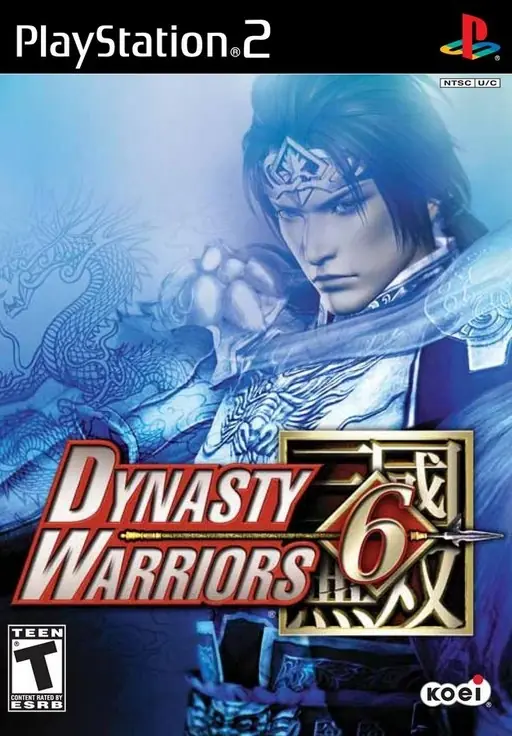
This installment varies greatly from past games in the series. One of the key additions is the Renbu system, a new way for characters to build up their attack combos. In previous installments in the series, combos were affected by the quality of weapon the character was wielding, with stronger weapons allowing characters longer, more elaborate and often mightier consecutive attacks. The Renbu system replaces this system with a gauge that gradually fills as the player performs attacks.
Performing attacks and dealing damage to the enemy fills the Renbu gauge, eventually earning a new rank/level, while taking damage and not attacking for awhile drops the gauge. If the player takes too much damage or goes for a long time without inflicting damage, the gauge may drop down to the previous level. However, even at Renbu Rank 1, characters will be able to perform non-ending combos. Without unlocking Renbu Ranks 3 and Infinite from the skill tree though, the player can only progress to Renbu Rank 2 (with the exception of the temporary Rank Infinity, which is acquired by collecting a certain item on the battlefield).
Another major addition is the skill tree, from which characters can earn higher Renbu Ranks, special abilities and improve their attributes. As the progression of the skill tree moves from left to right, those on the right side of the tree are harder to unlock than those on the left. The one which unlocks Infinite Renbu is normally on the furthest right.
Unique movesets for each character have been largely reduced. Only characters who have Musou Mode receive original movesets (with the exception of Diao Chan and sun shang xiang ). The rest of the characters playable only in Free Mode have cloned movesets based on the Musou Mode characters with altered properties (with the exception of Xiao Qiao, who retains her fan moveset). Due to the addition of the Renbu system, the traditional "fourth weapon" from previous games has been removed and the three normal weapons are no longer quality-based.
Each obtained weapon has random stats and effects implemented and the "weight system" from previous games has been replaced by weapon categories; Standard (default type), Strength (greater attack power at the cost of Renbu Gauge being kept for a smaller amount of time), and Skill (greater attack speed with low attack power). In addition to the new weapon system, it is now possible to block from any direction. For example, if a character is attacked from behind while blocking, they will rotate their body with their weapon in front of them to guard against the enemy's attack. This eliminates the need to quickly stop blocking, change direction, and press the guard button again.
Unlike previous games, horses can be found by obtaining saddles randomly dropped from boxes or defeated officers. These horses can gain levels, skills, and some can even change into the legendary Red Hare, although this is very rare.
The Musou Token that enables the use of Musou Rage has been removed. It is instead replaced by Tome item drop which allows the use of unique special attacks. There are five types of attacks; Swift Attack (increases the player's stats), Volley (launches waves of arrows), Fire (sets eruptions of fire), True Speed (boosts the player's speed), and Rockfall (launches giant boulders from above).
Dueling from Dynasty Warriors 4 returns, but has been revamped. Duels now occur on the battlefield and the nearby soldiers will circle around the two fighters, and other officers may jump into the circle, as opposed to the duel taking place in an arena that appears out of nowhere.
Bases have also been altered. They are larger and the player can now simply break down the outer gate with attacks instead of having to defeat a defense captain. There is also a new corporal unit which guards bases. Defeating troops and corporals within the base reduces the base's defense.
When the defense of the base drops to zero, the player will claim the base. However, defeating the corporal is equivalent to defeating 20 troops while defeating the guard captain will automatically capture the base.
bodyguards and items have been removed. Characters now have the ability to grab
Two new 'innovations' to the series are the abilities to swim and climb ladders. The ladder means that the player can now climb onto castle battlements in scenarios such as the Battle of Hu Lao Gate, and dispose of enemy ballistas and the new 'guard' unit. The first ties in with the improvements to enemy AI, allowing them to travel across rivers and other bodies of water in order to attack the player or allied bases. Swimming is now a part of scenarios such as the Battle of Fan Castle.
Reception
The Xbox 360 and PlayStation 3 versions received "mixed" reviews and the PlayStation 2 version received "unfavorable" reviews, according to video game review aggregator Metacritic. In Japan, Famitsu gave the PlayStation 3 and Xbox 360 versions a score of one eight, one nine, and two eights for a total of 33 out of 40.
GameSpot nominated Dynasty Warriors 6 for 'least improved sequel' in their 2008 award show.
Ryan Clements of IGN said of the Xbox 360 version, "Dynasty Warriors 6 is not a good looking game, and it performs even worse on the PS3 than on the 360 (even when you opt to install the game data)." He did note that "Dynasty Warriors 6 does have a number of cool things to note. The amount of leveling up you can do is fairly impressive and each character's campaign takes at least a few hours to work through, providing you with quite a lot of content (despite the repetition)."