The articlegameplay, story, development, reception
Gameplay
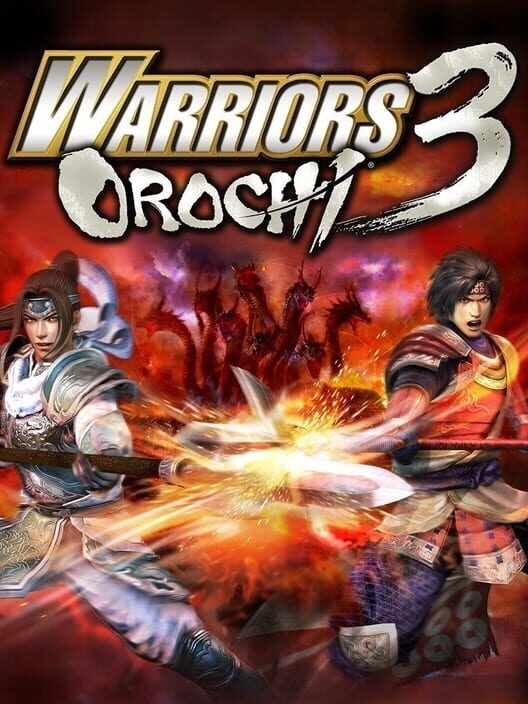
The gameplay of Warriors Orochi 3 is similar to that of the two titles that the Warriors Orochi 3 takes its characters from: namely Dynasty Warriors 7 (specifically, Dynasty Warriors Next) and Samurai Warriors 3. Characters from either of these series play similar to how they play in their respective source games, but with a number of changes to unify the two different games together, including:
Dynasty Warriors characters are solely armed with one weapon, and cannot switch to another one, but the weapon given to each character is their EX weapon from the series. Characters who have changed their EX weapons in Dynasty Warriors 7: Empires (which was released after Warriors Orochi 3, but before Ultimate) retain their older EX weapons in Ultimate instead of changing to their new EX weapons.
Dynasty Warriors characters are restricted to one Musou attack. Characters with a ground and aerial Musou attack in Dynasty Warriors 7 retain their ground Musou attack, while characters having two ground Musou attacks may retain either of theirs as their Musou attack.
As movesets are determined by weapon in Dynasty Warriors 7 rather than by character, characters sharing the same weapon in Dynasty Warriors 7 have altered charge attacks to differentiate them from each other.
Samurai Warriors characters perform their Ultimate Musou attack in situations where the True Musou attack is available, to compensate for the lack of the Spirit Gauge.
Samurai Warriors characters gain new Switch attacks, akin to weapon switching in Dynasty Warriors 7, for their use in Switch Combos.
For characters who are from neither of the two series, whether or not the character is of Japanese origin determines whether their Musou attack corresponds to that of the Dynasty Warriors or the Samurai Warriors cast. Characters new to Warriors Orochi also have movesets based on their overall character type in this regard: for example, some of non-Japanese origin characters like Nemea, whose moveset is based on a Dynasty Warriors 7 weapon unused by anyone in that roster, have an EX attack like Dynasty Warriors characters, while some of Japanese-origin characters like Kaguya has the longer, standard attack chain reminiscent of a character from the Samurai Warriors roster.
Gameplay takes place on modified versions of stages taken primarily from Dynasty Warriors 7 or Samurai Warriors 3 (in addition, some downloadable content and story elements in Ultimate take place in stages taken from Warriors Orochi 2); a select number of stages relevant to the story are new stages. Each of the new "collaboration characters" (Ryu Hayabusa, Ayane, Joan of Arc, Nemea, Achilles, Rachel, Momiji, Kasumi, Sterkenburg, and Sophitia) is also associated with a stage taken from either Dynasty Warriors 7 or Samurai Warriors 3, with graphical modifications made to resemble their game of origin. Much of the stage music is taken from earlier Dynasty Warriors, Samurai Warriors, or Warriors Orochi games; each of the collaboration characters is also associated with a unique theme.
New mechanics for the Warriors Orochi series include:
In addition to Power, Speed, and Technique, a new character attack type, "Wonder", is available.
Like Dynasty Warriors 7, there is a central base from which characters organize their missions. The base initially contains a weapons dealer and a network assistant for multiplayer play, but can be expanded to include a teahouse.
A modified version of the Bond system from Dynasty Warriors 7 is introduced. Bonds between two characters are formed through being allied in battle, being opponents in battle, being teammates in battle, or by completing a mission set forth by an ally in battle (failure to complete a mission weakens the bond between two characters). As new chapters are unlocked, bonds between characters may be raised by paying gems at the teahouse.
Each character is associated with a number of other characters considered to be "special relationships"; as the bond between the two characters increase, new support conversations may appear whenever the player controls either character in the central base. Special relationships span many different types, including family, adversarial, based on earlier Warriors Orochi series titles, or based on events in Story Mode.
As with Dynasty Warriors 7, the morale gauge is no longer present.
As with Samurai Warriors 3, each character is associated with four levels of weapons; a fifth level of weapon is available in Ultimate by fulfilling certain stage conditions on hard, as with past Warriors games.
Players may switch characters as they are attacking. This technique, known as a "Switch Combo", allows the combo counter of the outgoing character to be transferred to the incoming character, who performs a special switch attack when they are switched in. This, however, consumes a portion of the incoming character's Musou gauge. There is also a variation called the "Triple Rush" attack which is only available in the Ultimate update. A team of 3 specific characters will also result in creating a unique attack within the "Triple Rush" feature.
Characters may perform new attacks such as "Break Guard" and "Dash Chain".
A new gauge has been introduced, the True Triple Attack gauge, which fills as a player deals damage to enemies. For a short period of time after the True Triple Attack is initiated, all enemies will move in slow motion. The strength of the True Triple Attack is determined by the overall bond between the three characters.
Two-player co-op is available with both players permitted to use different teams. For Warriors Orochi 3 Hyper, the Wii U Gamepad may be used for one of the players, allowing the other player to play in full-screen.
A new mode, "Musou Battlefield", allows the modification of existing stages and sharing of modifications online. Players have a limited number of "edit points", where they may replace characters, add more aggressive enemy behaviour, and alter game audio. Ultimate removes
Story
Several years after the events of Warriors Orochi 2, the warriors of the Three Kingdoms era of China and the Sengoku period of Japan have begun to rebuild their lives in the twisted dimensional world after Orochi's permanent death. The peace is not to last for long though, as a monstrous eight-headed serpent beast known as Hydra appears and massacres the warriors. Combined with the resurrection of Kiyomori Taira and the reappearance of Da Ji, who brainwashes the remaining heroes, the warriors are left in shambles. The remaining three heroes – Ma Chao, Sima Zhao, and Hanbei Takenaka – are about to be defeated if not for the intervention of the Moon Princess, Kaguya, who claims to have been sent from the mystic world to help the warriors. She uses her time travel ability to send the three back in time, so they will be able to save their comrades from certain doom.
After securing the more strategic places like Odawara Castle, the coalition are informed by mystic Taigong Wang that they can defeat the Hydra using a special weapon called "Yashio'ori", but they will need the time and power to build such a weapon. The coalition capture an amnesiac mighty warrior, Shuten Dōji, who is later revealed to be an offshoot of Orochi who was born at the same time as Hydra; in reality, he is the world's will of Orochi's power, as well as Da Ji herself, who reluctantly joins after the coalition have her friend, Himiko as an unwitting hostage. Because of the time required to build multiple Yashio'ori, the coalition have to return to the distant past when the Hydra had yet to appear in the world, which they fulfill through Da Ji's power, as she has been in the dimensional world the entire time (the other mystics have only appeared when the Hydra had made its appearance). Upon arriving, the coalition have to protect Da Ji from the anti-Orochi forces as well as an army of mystics led by Susanoo, who has dedicated his job to hunt Da Ji. They eventually gain their trust, and with the help of them, the coalition build multiple Yashio'ori powered by Shuten Dōji's essence, while also preparing for the upcoming grand battle with the Hydra.
In the final chapter, the coalition confront the Hydra again, who is defeated with the help of Yashio'ori. The Hydra then reforms to eight Orochi clones and later a final Orochi X form. While battling them, the coalition also have to gain the trust of Susanoo, who is not yet willing to let the problem fall into the mortal's hands. The game has three endings, which are unlocked through certain requirements.
The "Normal" ending has the coalition finally being able to destroy Hydra. The "Good" ending is essentially the same, although the warriors then make pledge to rule the land together in peace. In the "True" ending, after Orochi X is defeated, the dimensional world begins to crumble, as Orochi's existence is the only thing that supports the world; defeating him means the end of the world. The mystics band their powers to send the warriors back to their own original time, saving them at the cost of their memories in the dimensional world.
The expanded story in the Ultimate update is continued from the "Good" ending of the original game, thus forgoing the "True" ending. Da Ji and the rest of the Demon Army have broken out from the coalition and are now traversing the dimensional world. They are attracted to a magical stone they found during their journey, which is revealed to be the sealed form of Mae Tamamo, a mystic who possesses a mysterious mirror, the Shinkyō, which has the ability to seal anyone who comes into contact with it and to create doppelgangers. Allying herself with Da Ji, Tamamo seals many warriors of the Three Kingdoms and Sengoku period and create doppelgangers of them, causing chaos and conflict within the Coalition.
The mystics, who have gone to the mystic realm since the Hydra's defeat, descend once more to help the warriors. Depending on the progression, the player may finish the game's story in Chapter 6, which ends in the release of the sealed warriors and Tamamo's defeat and subsequent sealing as the stone again by the mystics. Otherwise, while the sealed warriors are released, Tamamo is not yet defeated, and the story continues to Chapter 7.
In an attempt to stop Tamamo from causing further conflicts, the warriors will need her own magic mirror, the Shinkyō to seal her. Through Kaguya's powers combined with Fu Xi's memories, the warriors travel far back in time in the mystic realm, when Orochi had not existed yet. The mystic realm is ruled by Tiandi, who is the original possessor of the Shinkyō and had used it to seal demons. The warriors meet with the mystic Yinglong, who is fooled by Tamamo into believing that the Emperor had used the Shinkyō to control the demons.
He starts a rebellion against the Emperor and eventually manages to steal the mirror. This act causes him to be corrupted by the mirror's evil power, which transforms him into Orochi, who proceeds to go to the human realm to commit various evil acts after having killed the half-mystic Nezha. The Emperor, having learned of Tamamo's plans, gratefully lends the warriors the Shinkyō. Back in the present time, the warriors use the mirror against Tamamo, but this only makes her revert to her true form, the Kyūbi no Kitsune, who confronts the warriors in the final battle.
The Ultimate update has two endings in addition to the three mentioned above, the first of which is the aforementioned "Normal" ending where Tamamo is sealed without having reverted to her true form. In this ending the warriors continue to live their life in peace in the dimensional world. The second ending is similar to the "True" ending of the original game, where, after having sealed Kyūbi, the mystics band their powers to send the warriors to their original timeline, but the dimensional world seems to stay intact, unlike the original game.
Reception
Warriors Orochi 3 and its expanded versions received "mixed or average" reviews. The original version of Musou Orochi 2 sold 200,526 copies in its first three days of release. It was rated by Famitsu with a 9/8/8/9, for an averaged rating of 34/40.