
The articlegameplay, story, development, reception
Gameplay
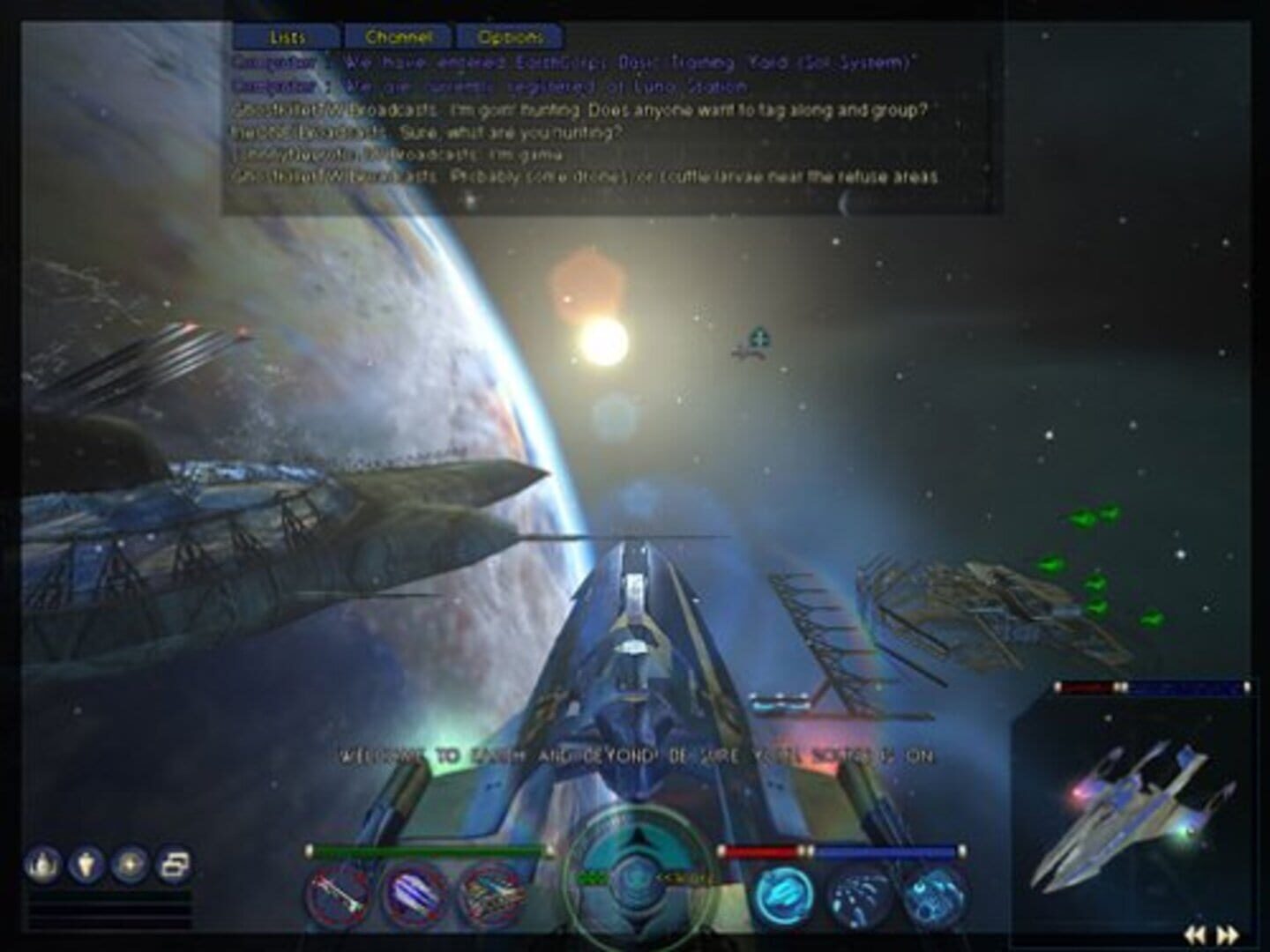
Earth and Beyond was played by controlling either a humanoid or spaceship avatar in the third-person. Each game server, or Galaxy, consisted of 12 main star systems. Each system contained multiple sectors. Warp gates were used to travel from sector to sector, and system to system.
Players created a character by choosing one of the three races, and one of three professions: Warrior, Trader or Explorer. Characters gained three types of experience: Combat experience was gained through fighting and completing combat jobs (being incapacitated resulted in "EXP Debt" and the character would only receive half of the normal experience until the debt was repaid), Trade experience was gained from selling loot, by building items and by taking trade jobs, and Exploration experience was gained from visiting navigation points, mining asteroids and gas clouds, and exploration jobs. In general each system had a number of "nav points". Visiting a nav point for the first time gave a certain amount of exploration experience. After a nav point was visited, it appeared on the "radar" when the player was in the system.
Story
Earth & Beyond was set some time around AD 2575. It featured three races: the Progen, Jenquai and Terran. The Progen were a genetically-altered and advanced race. The Jenquai were philosophers who sought eternal life.
The Terrans were the original humans. Each of the three races had descended from the human race on Earth. The game's storyline took place in the Milky Way Galaxy. The Progen, Terran and Jenquai were all uneasy of each other, but still managed to live together in peace.
Development
Development for Earth and Beyond – originally designated as Project G – began in 1997. By 2001, Westwood had created content for over 100 sectors of playable space. Public beta for the game began on 9 March 2002, allowing up to 100,000 new players to roam the sectors and test content. The finished game was launched on September 24 the same year.
It was initially shipped in limited quantities to retailers to allow for smooth experience as new players sign on to the servers. In January 2003, the main story line and accompanying events began. This required all players to download a patch and wait for servers to be upgraded. This was the first of regular monthly story driven updates designed to gradually change the game environment as the plot unfolded.
Reception
At the time of its release, the game received "favorable" reviews according to the review aggregation website Metacritic.
Earth & Beyond was a nominee for PC Gamer US's "2002 Best Massively Multiplayer Game" award, which ultimately went to Asheron's Call 2: Fallen Kings. It was a runner-up for GameSpot's 2002 "Most Disappointing Game on PC" award, losing to Civilization III: Play the World.


