
The articlegameplay, story, development, reception
Gameplay
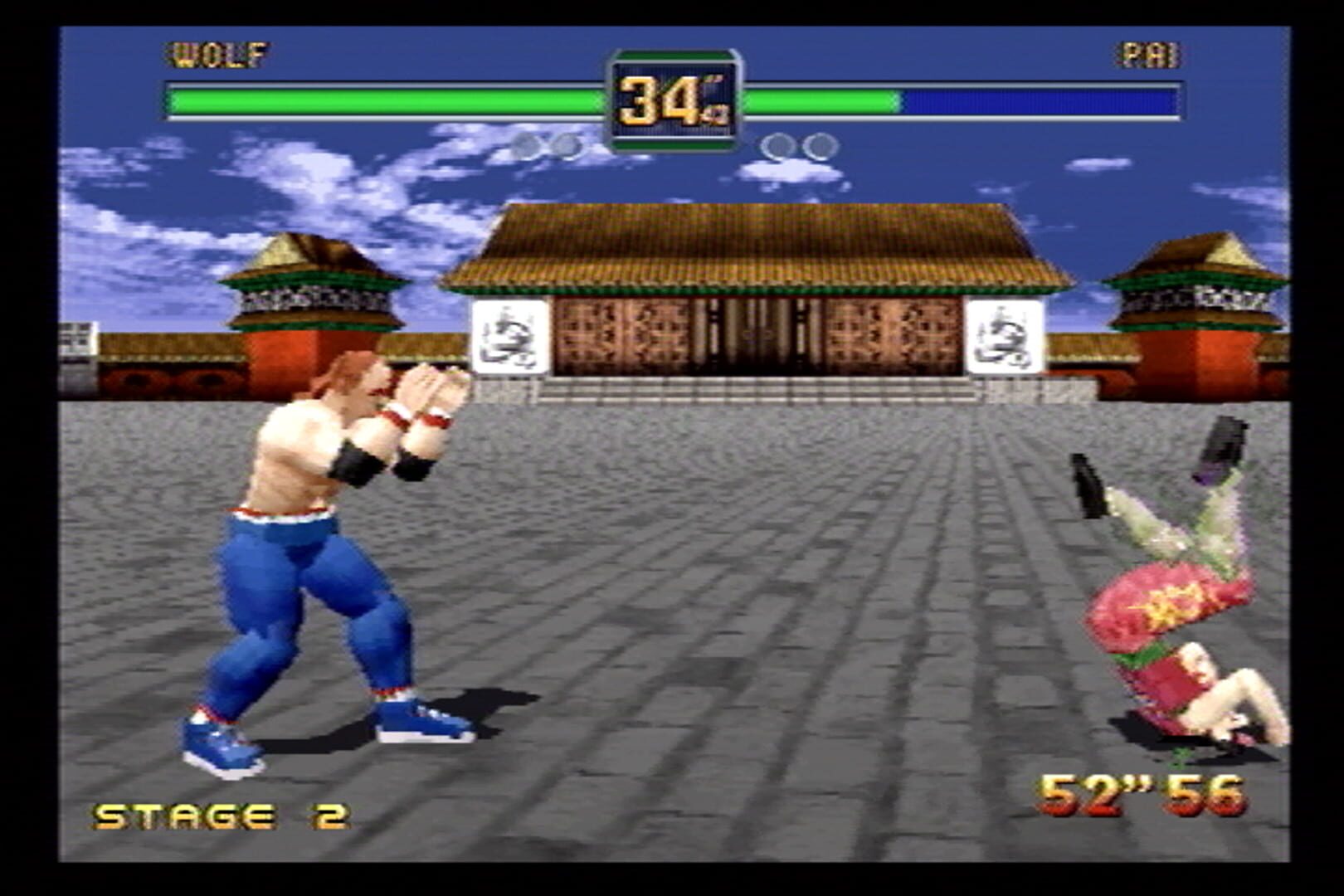
Fighters Megamix includes a training mode, a survival mode, a two-player vs. mode, a team battle mode, and a one-player mode split into nine tracks:
Novice Trial (beginners)
Virtua Fighter (all characters from Virtua Fighter)
Fighting Vipers (all characters from Fighting Vipers)
Girls (female characters)
Muscle (strong characters)
Smart guys (tactical fighters)
Dirty fighters (sneaky fighters)
Bosses (hidden characters played last)
Secrets (the rest of the bonus characters not fought in bosses)
Each track consists of six fights against currently available characters followed by a final battle against a hidden character. Once the first four tracks are completed, the next three become unlocked. After beating those, the next track (bosses) becomes unlocked, and then the final (bonus).
Players can switch between two fighting systems based on Virtua Fighter and Fighting Vipers, with the latter selected by default. The systems differ in their combat mechanics, including the distance characters are knocked back and their ability to recover from attacks. Battles can take place in either open arenas or walled arenas.
The default cast of characters consists of the entire cast from Virtua Fighter 2 and Fighting Vipers, as well as Kumachan, a bear mascot in a hat that has no points of articulation. The Virtua Fighter 2 characters have some (but not all) of their new moves from Virtua Fighter 3 added. The announcer is also the same as in Virtua Fighter 3. The Fighting Vipers characters still have their armor from that game, and the Virtua Fighter 2 characters accordingly have new moves for breaking armor.
In addition to its single-player courses, the game features a versus mode supporting matches against another player or a computer-controlled opponent, team battles involving up to eight characters on each side, and a survival mode with time limits of three, seven or fifteen minutes. A training mode allows players to practise individual character moves and combinations.
Development
Asked what the impetus for the game was, AM2 stated, "Towards the end of the year we always think about having a festive game for all the users who support the Sega Saturn." The Fighters Megamix project was kept secret, with the game not being announced until a November 6, 1996 press conference - less than two months before its initial release.
In an interview with Japanese magazine Saturn Fan, director Hiroshi Kataoka explained that Fighters Megamix was conceived as a new fighting game featuring characters from Virtua Fighter and Fighting Vipers, rather than simply combining the two existing games. He discussed the challenges of reconciling their different combat systems, particularly the armour and defensive mechanics, while preserving the characteristics of fighters from both series. In a separate interview with Sega Saturn Magazine, Kataoka described the project as the realisation of a dream for its developers.
AM2 described Fighters Megamix as a fairly easy game to create. Though getting all the moves from Virtua Fighter 2 to fit onto a single disc had required the team to spend months developing new compression techniques, later advances in compression technology made fitting Fighters Megamix's much larger selection of moves a relatively simple task.
As a promotional effort, DJs Commander Tom and DJ MARS created a dance club mix from the music in Fighters Megamix. The song, titled "Fighters", was released as a single on July 25, 1997.
In 1998 an adaptation for the Game.com was released by Tiger Electronics.
Reception
Fighters Megamix met with critical acclaim upon release. 25/10 from Game Informer, the highest score any Saturn game received from the magazine. They praised the game's roster and variety of move sets. Sega Saturn Magazine's Rich Leadbetter stated that the game was "different enough to VF2 and indeed VF3 to warrant immediate purchase.
The fact that it has huge depth and gargantuan levels of playability helps too." Jeff Gerstmann's GameSpot review stated that "if you don't own a Saturn and have even a passing interest in the VF series, this is probably the game you could use to justify purchasing the system." 0 in every other category (sound, fun factor, and control), remarking that "Matching up brawlers from Fighting Vipers and Virtua Fighter 2 is inspired thinking, and though Megamix isn't perfect, it's close to it." Next Generation summarized, "Simply put, this is the best fighting game ever on a system that's already chock full of great fighting games."
Famitsu scored it 35 out of 40.
Despite their positive overall assessments, most reviewers voiced a few criticisms of the game. Gerstmann and Next Generation both noted that the graphics, while good, use fewer polygons and a lower resolution than the Saturn version of Virtua Fighter 2. A number of critics also found the enemy AI too easy, though Leadbetter remarked that the difficulty was dramatically increased in the PAL version. Critics generally concluded that these issues were eclipsed by the vast and well-designed selection of characters and the interesting gameplay dynamics which result when Virtua Fighter characters are pitted against Fighting Vipers characters.
Digitiser ranked it the third best of 1997, below Super Mario 64 and Final Fantasy VII. In 2017, GamesRadar included it in their list of the best Sega Saturn games, claiming that "Sega AM2’s bash-up mashup offers a staggering array of content for dedicated players to get to grips with."
The game became one of the best-selling Sega Saturn games, with over 600,000 copies sold in Japan alone. In the United States, it was the top Saturn video game rental for three months 1997, from June to August. The game also continued to chart several months after its European release, placing second on the Saturn sales chart in September 1997, behind The King of Fighters '95 and ahead of Manx TT Super Bike. In Spain, Fighters Megamix topped the Sega Saturn chart published by Hobby Consolas in June and July 1997, before ranking second in October and fourth in November.
Legacy
Fighters Megamix has retrospectively been regarded as an early precursor to later crossover fighting games. In 2024, MeriStation described it as a spiritual precursor to the Super Smash Bros. series, noting that three years before the release of the first Super Smash Bros., Sega had already brought together characters from several otherwise unrelated franchises, including unconventional playable characters such as the Hornet car from Daytona USA. Retro Gamer similarly described the game as a "crossover classic" and one of the notable 3D fighting games of its generation.


