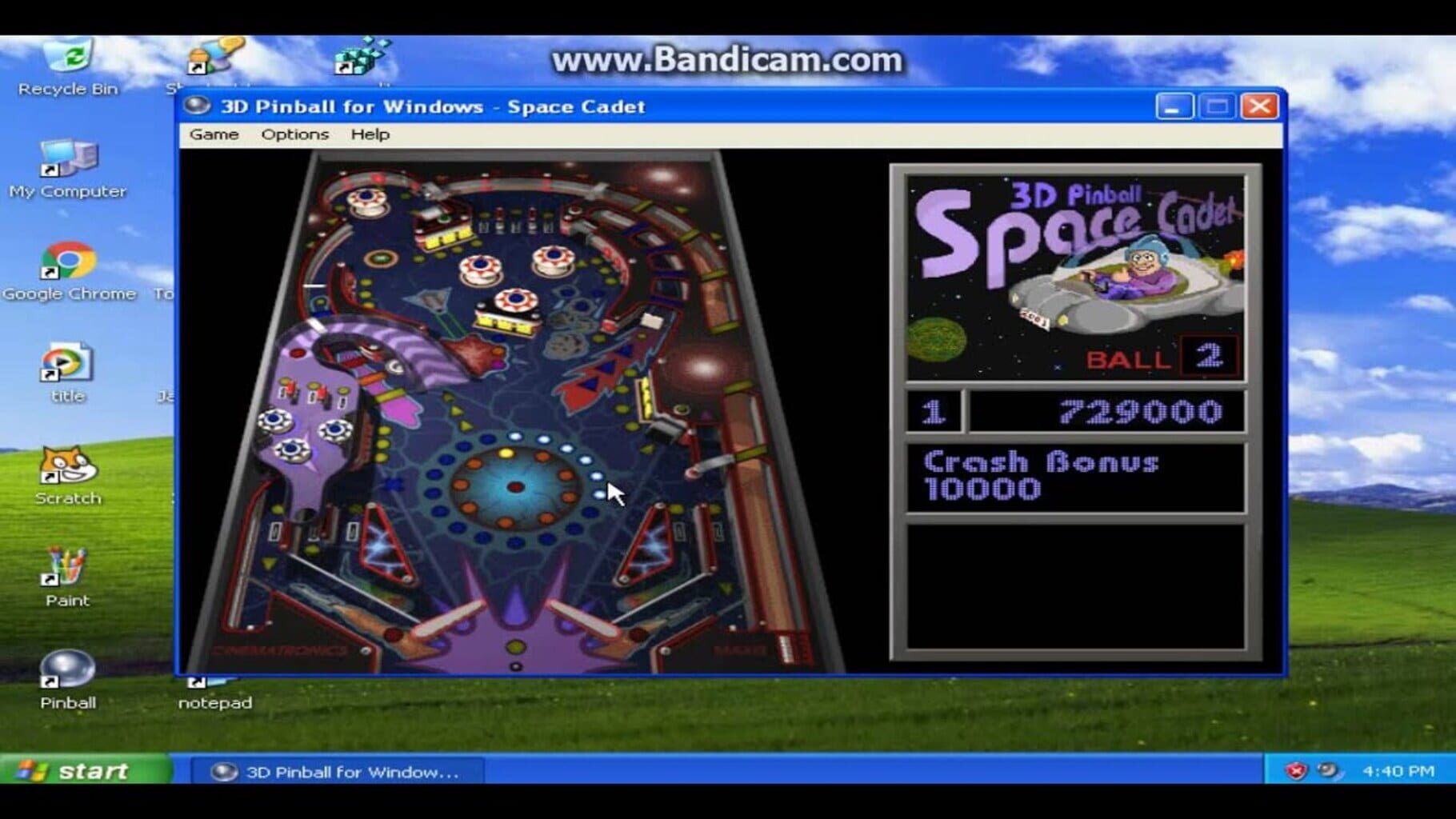

The articlegameplay, story, development, reception
Development
Cinematronics was established as a dedicated Windows developer studio during a period when video games were predominantly developed for MS-DOS. In 1994, the company began development of a Doom-like first person shooter. David Stafford proposed the game, with the violence toned down and renamed to Gluem, to Microsoft's Alex St. John for inclusion in the upcoming Windows 95 operating system.
". St. John relayed the suggestion to Stafford, who the following day presented a brief of a game titled Pinball Wizard to Microsoft, who expressed interest in seeing the game. Since it was merely a concept, the team had to create a preliminary table design within a few days which they then faxed it to Microsoft, who approved it.
Windows 95 was targeting a release in early 1995, giving the team about nine months to produce a finished product, which pressured development. In December, the launch was delayed to August 1995, giving additional time to polish the game. Six months into development, the deal with Microsoft was formalised. In May 1995, Cinematronics secured a deal with Maxis for Full Tilt! Pinball with an additional two tables.
Product manager Kevin Gliner was responsible for the game's rules, scoring, and layout. He visited penny arcades to study the design of tables and their components, and looked into the history of pinball to understand how the tables had evolved. A fully 3D game was considered, but for simplicity it was ultimately decided to make a 2D top-down game with pre-rendered 3D graphics. Ryan Medeiros, the lead visual designer, used photos of various pinball machines found in Santa Cruz Beach Boardwalk for reference.
The game's pre-rendered assets were created using TrueSpace, but were then shifted to an MS-DOS-based 3D program for easier programming. The table's design, as well as animations were created using Adobe Photoshop.
Initial programming was done in Delphi, which was later translated to C/C++ when the licensing deal with Microsoft was certain. The game also included portions of x86 assembly language. The physics engine was built by Mike Sandige, designed to be almost entirely data-driven. A scripting system was implemented to allow Sandige and Gliner to fine-tune the physics and materials of components. Particular attention was paid to the flippers, making them as realistic as possible while not being overly demanding on the hardware, and ensuring the ball would never pass through.
Following the release of 3D Pinball for Windows, Gliner received feedback from a designer of physical pinball tables, recommending adjustments such as the rollover light toggle and the flipper angle. These enhancements were incorporated into the Full Tilt! release.
On Microsoft's end, executive Jim Allchin wanted to showcase the new graphics and sound APIs in the next release of Windows NT, so it was decided to include 3D Pinball in Windows NT 4.0, despite NT being oriented towards businesses at the time. Microsoft engineer Dave Plummer was responsible for converting existing x86 portions, such as the sound engine, to C/C++, to make the game compatible with the Alpha, MIPS and PowerPC versions of NT 4.0.
Later on, Raymond Chen implemented a frame-rate cap to reduce the CPU usage of the game, which he would later describe as his proudest Windows XP feature.
Reception
Reviewing the Windows version, a reviewer for Next Generation said that while the Space Cadet table is fairly good, the other two tables suffer from cluttered graphics and weak ball physics. He gave it two out of five stars. Todd Vaughn of PC Gamer gave it a score of 86%, praising the graphics and sound effects but criticizing the limited number of tables.
3D Pinball Space Cadet was cited to be among the computer games popularly played by school children in the Philippines in the 2000s, alongside Solitaire and Minesweeper. Tutorials showing how to install it on modern versions of Microsoft Windows have been published.


