The articlegameplay, story, development, reception
Gameplay
Grand Theft Auto IV is an action-adventure game played from a third-person perspective. Players complete missions—linear scenarios with set objectives—to progress through the story. It is possible to have several active missions running at one time, as some require players to wait for further instructions or events. Outside of missions, players can freely roam the game's open world and complete optional side missions.
Composed of the fictional city of Liberty City, the world is larger in area than most earlier Grand Theft Auto series entries. At the beginning of the game, players can only explore a limited area—Bohan, Broker, and Dukes—with all other islands unlocking as the story progresses.
Players use melee attacks, firearms and explosives to fight enemies, and may run, jump, swim or use vehicles to navigate the game's world. There is a first-person perspective option when using vehicles. In combat, auto-aim and a cover system can be used as assistance against enemies. Should players take damage, their health meter can regenerate by consuming food or drinks, using medical kits, or calling for paramedics.
If players commit crimes, law enforcement may respond as indicated by a "wanted" meter in the head-up display (HUD). On the meter, a count of stars indicates the current wanted level. Gaining more stars will cause law enforcement to incapacitate players more aggressively and extends the wanted vicinity area, and is capped at six stars. The player can evade police by travelling outside the wanted vicinity area, after this the wanted meter enters a cool-down mode, law enforcement hunt for the player, and eventually recedes when they are hidden from the officers' line of sight.
The game's cover system allows players to move between obstacles, to fire blindly, aim freely, and target a specific enemy. Individual body parts can also be targeted. Melee attacks include additional moves, such as dodging, blocking, disarming an opponent and counter-attacking. Body armour can be used to absorb gunshots and explosive damage, but is used up in the process. When health is entirely depleted, gameplay stops, and players respawn at the nearest hospital.
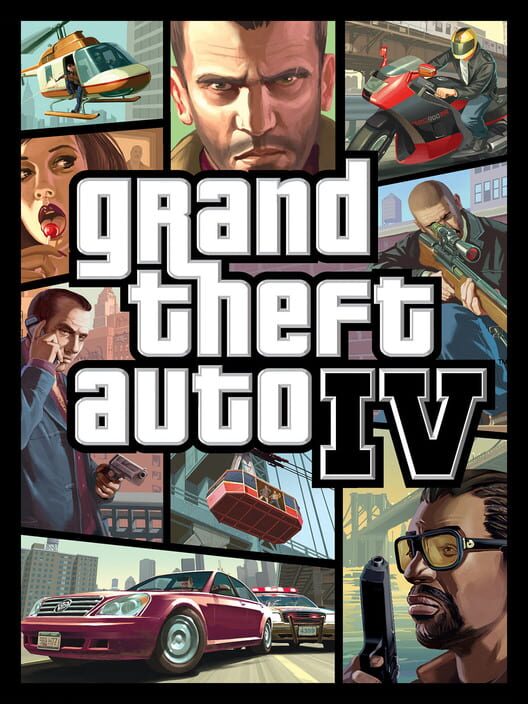
The single-player mode lets players control an Eastern European war veteran, Niko Bellic. During the story, Niko meets and befriends various new characters. While free roaming the game world, players may engage in context-specific activities such as bowling or darts, either alone or with friends. Other available activities include a vigilante mini-game, and in-game television programming.
Hanging out, answering calls, or completing missions of friends will increase that friend's respect. If their respect is high enough, the player can unlock favours; for example, Niko's cousin Roman owns a taxi service, and can send one of his cabs to take Niko to any destination without a fee. Cabs are always available during gameplay for quick travel to a destination. Throughout the course of the game, players are also faced with morality choices, which alter the storyline appropriately depending on the player's choice.
Niko has a cell phone for contacting friends and hanging out with them through activities. The cell phone is also used to access the game's online multiplayer mode, and to enter cheat codes. To access the in-game Internet, which allows Niko to send and receive emails and set up prospective dates with potential girlfriends, Niko can use Internet cafés located around the city. The game also features a subway system, allowing players to quickly traverse through the game's world.
The online multiplayer mode for Grand Theft Auto IV allows up to 32 players to freely roam across the map. Players decide which game mode they wish to play, including deathmatches and street races. Both cooperative and competitive game modes are available, split into ranked and unranked matches. For players to level up through ranks, in-game money has to be earned.
The game also features a Free Mode, in which players have the entire map open to explore, with no end goal or mission to complete. Hosts of the game can control many variables, such as police presence, traffic, and weapons. The multiplayer mode was discontinued on Windows in 2020.
Story
Grand Theft Auto IV takes place within an alternate version of Liberty City seen in Grand Theft Auto III. The design of the city focuses on a recreation of four of the boroughs of New York City: Broker (based on Brooklyn), Dukes (Queens), Bohan (The Bronx), and Algonquin (Manhattan). The setting also includes the neighbouring state of Alderney (based on New Jersey). In the story, it is explained that bridges are locked down due to a terrorist threat, and police constantly pursue players if the bridges are crossed. These barricades are lifted as the player progresses the story, allowing them to traverse uninterrupted between islands.
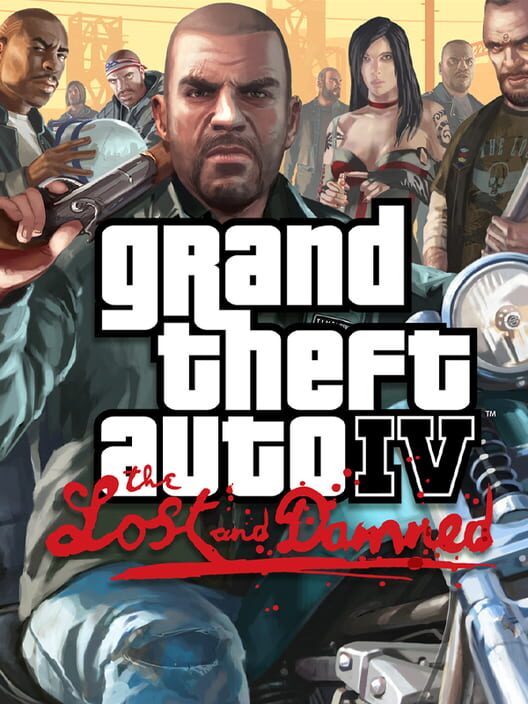
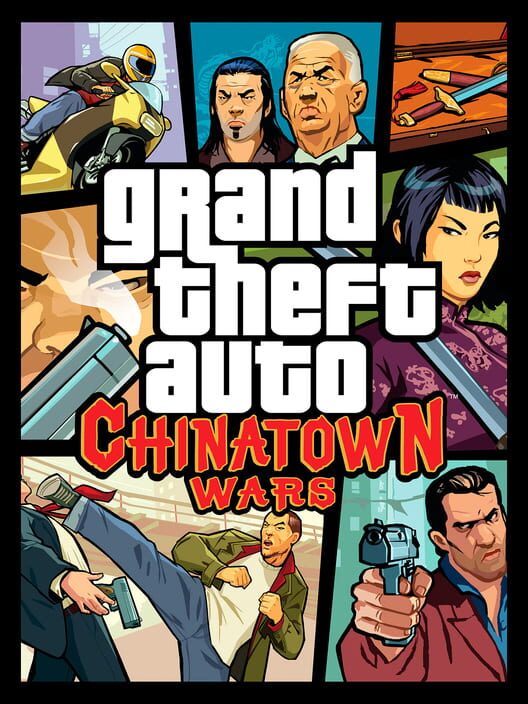
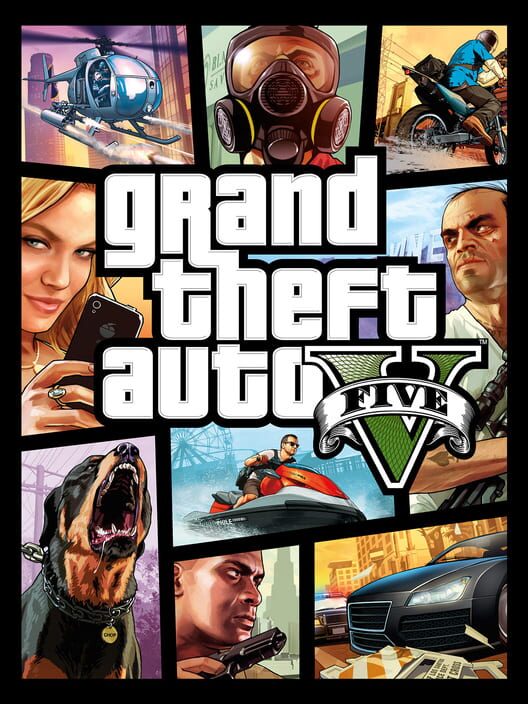
Grand Theft Auto IV is set in the fictional "HD Universe", which mirrors and parodies the real world. The previous games formed fictional universes of their own, which despite having many similarities with the HD Universe, are considered to be different continuities. Hence, the Liberty City depicted in Grand Theft Auto IV is different from its previous renditions, and the game itself serves as a reboot for the series. The new timeline established by Grand Theft Auto IV continues with two expansion packs, The Lost and Damned and The Ballad of Gay Tony, and a sequel, Grand Theft Auto V, as well as its online component, Grand Theft Auto Online. The handheld game Grand Theft Auto: Chinatown Wars is also considered part of the HD Universe because it features the same map as Grand Theft Auto IV, except for Alderney.
Niko Bellic (Michael Hollick), an ex-soldier from Eastern Europe, arrives in Liberty City aboard the cargo ship Platypus to escape his criminal past, pursue the American Dream, and search for a man who betrayed his unit to an ambush ten years prior. Reuniting with his cousin Roman (Jason Zumwalt), he discovers Roman's stories of riches and success were embellished: instead of living a life of luxury with cars and women, Roman lives in a small, dirty apartment, owns an unprofitable taxi company, has gambling debts, and often disputes with loan sharks. Niko begins assisting Roman with his problems and makes criminal contacts in the city. He befriends Yardies second-in-command Little Jacob (Coolie Ranx), and is forced to work for Vlad Glebov (Misha Kuznetsov), Roman's loan shark. Niko eventually kills Vlad upon learning he slept with Roman's girlfriend, Mallorie (Elena Harvey Hurst).
In retaliation, Niko and Roman are kidnapped by Russian mobsters on orders of their boss, Mikhail Faustin (Karel Roden), and his lieutenant, Dimitri Rascalov (Moti Margolin). Indifferent to Vlad's murder, Faustin releases them and employs Niko as a hitman, ordering him to kill the son of Russian crime lord Kenny Petrović. When Petrović threatens retaliation, Dimitri persuades Niko to assassinate Faustin and satisfy Petrović. However, Dimitri betrays him after the killing and brings Niko to his former employer, Ray Bulgarin (Vitali Baganov), who accuses him of stealing from him during a failed human trafficking job years earlier. Niko denies the allegation and a firefight ensues, allowing Dimitri and Bulgarin to escape.
Dimitri's men burn down Roman's apartment and taxi company, forcing him and Niko to flee to Bohan. While Niko works with several local drug lords, Dimitri briefly kidnaps Roman in a failed attempt to lure Niko into a trap. Later, Niko discovers that his romantic interest, Michelle (Rebecca Henderson), is an undercover government agent named Karen, who entraps him into working for her superior (Milton James). In exchange for the murders of known or suspected terrorists, the superior clears Niko's criminal record and aids him with seeking his traitor.
Roman receives a large amount of insurance money from the arson, which he uses to rebuild the business and buy an apartment in Algonquin. He also proposes to Mallorie, who accepts.
Niko befriends gangster Packie McReary (Ryan Johnston), helping him and his brothers carry out various jobs, including a major bank robbery. Niko is later hired by Ray Boccino (Joe Barbara), a caporegime in the Pegorino crime family, to oversee a diamond deal, which goes awry. Boccino repays Niko by helping him find his ex-comrade Florian Cravic, now known as Bernie Crane (Timothy J. Alex), who claims he was not the one to betray their unit.
Niko realises the traitor was Darko Brevic (Michael Medeiros), the only other survivor. He continues working for the Mafia and earns the trust of Don Jimmy Pegorino (Tony Patellis), who orders him to kill Boccino after suspecting him of being a police informant. Niko also helps Packie kidnap Don Giovanni Ancelotti's daughter to ransom her for the diamonds, but Bulgarin intercepts the exchange; in the ensuing firefight, the diamonds are lost.
After they request Niko work with Jon Gravelli (Madison Arnold), the aging head of the city's most powerful crime family, government agents find Darko in Romania and bring him to Liberty City for Niko to decide his fate. Niko is summoned by Pegorino for a final favour: to help with a lucrative heroin deal in collusion with Dimitri. Learning Dimitri is aboard the Platypus, Niko must decide to either work with Dimitri or exact revenge. If Niko agrees to the deal, Dimitri betrays him again, kills Pegorino, and sends an assassin to kill Niko at Roman's wedding, but the assassin accidentally kills Roman instead; Niko retaliates by tracking down and murdering Dimitri.
If Niko chooses revenge, he kills Dimitri, prompting Pegorino to target him at Roman's wedding but accidentally kill Packie's sister Kate (Mary Catherine Donnelly), whom Niko had been dating; Niko tracks down and murders Pegorino. In both endings, Niko learns that Mallorie is pregnant, and he promises to remain close with his family in Liberty City.
Development
Preliminary work on Grand Theft Auto IV began in November 2004, a month after the release of Grand Theft Auto: San Andreas. Rockstar president Sam Houser felt that following up San Andreas was "a nightmare". Rockstar North, the core 220-person team behind the game, co-opted studios owned by parent company Rockstar Games to facilitate development between a full team of over 1,000, including 50 employees at Rockstar NYC, 40 at Rockstar Lincoln, 10 at Rockstar San Diego, and around 600–700 working part-time internally and externally. Some key members of the development team worked 12-hour days during production, often without holidays.
The team decided to continue the numbering scheme absent from the previous two main games to represent the same leap in production as Grand Theft Auto 2 (1999) to Grand Theft Auto III (2001). Development of Grand Theft Auto IV ceased by 17 April 2008 when the game was submitted for manufacturing. Producer Leslie Benzies estimated that the budget of the development efforts exceeded US$100 million, making Grand Theft Auto IV one of the most expensive video games ever made.
The game's setting, Liberty City, is based on New York City. The team did not look at the previous renditions of Liberty City as inspiration, wanting it to retain the "general feel" but nothing else. The map is roughly three times the size of Grand Theft Auto III's. The developers originally considered using the entire state of New York, before restricting it to Manhattan, and then expanding it out again.
They considered including more suburbs with woods, and would regularly vote on which areas to include. Art director Aaron Garbut said that the team chose the setting because of the detail and variety it provided, describing New York as "an amazing, diverse, vibrant, cinematic city". Writer Dan Houser added that the team "wanted to be somewhere where we had a foothold" due to the amount of research required for the world; Rockstar Games's main headquarters are located in New York. The team consciously avoided a precise recreation of New York City to allow for more enjoyable game design, selecting the areas that they felt "characterised it the best".
Garbut wanted to capture a caricature of the city as he felt that most people were familiar with "the highlights" from film or literature but did not need to know the areas precisely. The city was not built with specific missions in mind; the area was created first, and missions implemented later.
To achieve a realistic environment, 60–70 employees from Rockstar North travelled to New York for research: first at the beginning of the project in March or April 2005 for a week and a half, and a smaller trip in 2007. Police officers who previously worked the beat drove the team around Washington Heights. A full-time research team based in New York handled further requests for information, such as the ethnic minority of a neighbourhood or videos of traffic patterns. Videos shot in New York were played on televisions at the Rockstar North offices "so while they worked they could look up and there was New York".
Benzies claimed that the team took over 100,000 photographs on location in New York, though Garbut estimates that they took around 250,000. They also studied architectural plans for apartments, used satellite images to determine city block layout, researched sales figures for models of cars, and read books that detailed the city's infrastructure, including its subways, sewers, and garbage disposal. Hove Beach is based on Brighton Beach, which Sam Houser found "pretty incredible" and unusual; the name is based on the English city Brighton and Hove, made up of the former neighbouring towns Brighton and Hove. Houser appreciated that Brighton Beach was home to several Eastern Europeans due to the nature of the game's characters.
Dan Houser described Liberty City as "the biggest character" of the game. The Grand Theft Auto IV rendition of Liberty City is more detailed and larger in size than most earlier entries in the series; although smaller than San Andreas, the setting of the previous main game, the developers considered it comparable in scope due to city's verticality, number of buildings, and level of detail. The team wanted less dead spots and irrelevant spaces, such as the wide open deserts in San Andreas. They wanted the game to be "a more focused experience" than San Andreas, and Dan Houser felt that the limited activities of New York allowed this.
The team felt that the addition of Niko's mobile phone added to the immersion of the world and represented society's shifted focus on phones. The in-game brands and products are designed over several years; the billboards were implemented in the game around six months prior to release.
The game's script, written by Dan Houser and Rupert Humphries, is about 1,000 pages. Approximately 660 actors provided voices for the game over 80,000 lines of dialogue. After conceiving the character and setting, Dan Houser spoke with his brother Sam Houser and Leslie Benzies to bounce story ideas before writing a rough synopsis, a six-paged, detailed document. Once the synopsis was reworked, the designers broke it into missions, represented by a large flow document demonstrating each section.
The writers then work on the introductions to the missions; the gameplay dialogue comes much later. Unlike previous Grand Theft Auto games, Grand Theft Auto IV does not have cinematic influences. "We were consciously trying to go, well, if video games are going to develop into the next stage, then the thing isn't to try and do a loving tribute or reference other stuff," said Dan Houser. He said that the writers wanted something "fresh and new and not something that was obviously derived from [a] movie".
Dan Houser felt that the quality of the writing had to improve alongside the advancements in graphics and technology. He noted that the improvements in facial animation allowed for slower-paced cutscenes. The unique dialogue
Reception
Grand Theft Auto IV received "universal acclaim" from critics, according to review aggregator Metacritic. It is the second-highest-rated game on the site, and the highest-rated PlayStation 3 and Xbox 360 game. Reviewers praised the narrative, open world design and combat system. Hilary Goldstein of IGN felt that the game "sets a new benchmark for open-world games", and Andrew Reiner of Game Informer wrote that the game "completely changes the landscape of gaming".
Reviewers lauded the open world design, some further complimenting the freedom that it allows the player. Seth Schiesel of The New York Times named the city the "real star" of the game. Official Xbox Magazine's Jon Hicks was impressed by the city, attributing this to the game's artificial intelligence. Robinson of Computer and Video Games considered the environment believable, and felt that the world was "utterly unmatched".
Goldstein of IGN felt that, although Liberty City is inspired by New York, it is not beholden to it. He wrote that the city "exists in its own universe and rightfully so". com directed praise at the city's "breathtaking vistas, incredibly varied scenery, and lived-in look." Conversely, Jesse Costantino of GameRevolution felt that the game lacked important features common in other open world games.
Reviewers praised the narrative. IGN's Goldstein accepted that the darker tones to the story were a break from series tradition. Hicks of Official Xbox Magazine felt surprised by the amount of depth to the story. Reiner of Game Informer wrote that the level of freedom in the game contributed to his enjoyment of the story.
The morality choices faced by players throughout the narrative were also welcomed. com's Boyer felt that they gave the game an element of "replayability". Eurogamer's Tom Bramwell considered the morality choices a fair substitute over "bosses with large health bars".
The game's characters—particularly Niko—received positive reactions from critics. Hicks of Official Xbox Magazine and Andy Robinson of Computer and Video Games both called Niko "charismatic" and "likeable", stating that they prefer him over previous protagonists of the series. George Walter of GamesRadar praised the depth of the character, and IGN's Goldstein felt that the character of Niko feels relatable when faced with difficult decisions. Jeff Gerstmann of Giant Bomb felt that Niko was "the only thing that mattered to [him]" as he progressed through the story, with the character becoming one of his favourite features of the game. Schiesel of The New York Times named Niko one of the most realised video game characters attributing this to the game's script, while 1UP.com's Boyer commended the use of character bonding during missions.
Many reviewers found the combat system was more responsive than in previous games, particularly praising the addition of the cover system. Justin Calvert of GameSpot wrote that the cover system makes the game's combat a "huge improvement" over previous games. Reiner of Game Informer agreed, writing that the targeting system makes players feel responsible for all deaths. IGN's Goldstein praised the fluidity of the cover system, and felt that the auto aim mechanic is a "great help in larger battles".
GamesRadar's Walter wrote that the cover system has "paved the way to a new style of mission". David McComb of Empire called the combat "sharp and instinctive", and Hicks of Official Xbox Magazine felt that the cover system allows players to execute an attack plan. In addition to the combat system, most reviewers noted the vehicle handling was more realistic than in previous games. Robinson of Computer and Video Games felt that the vehicle handling echoed realism, while Hicks of Official Xbox Magazine called the vehicle selection "excellent".
Costantino of GameRevolution praised the improvement of the game's mechanics, particularly the physics engine's advanced vehicle and character animations.
Reviewers praised the sound design. Goldstein of IGN praised the actors' performances and the use of licensed music. GameSpot's Calvert and GamesRadar's Walter also commended the licensed music, the latter admiring the humour of the radio's talk stations. Michael Pinson of The Pro Audio Files praised the separate features of the sound design—including the city's ambiance, licensed music, character dialogue, and vehicle and weapon sound effects—applauding the developer's use of uniting the features together. Carolyn Gudmundson of GamesRadar also retroactively praised the soundtrack, commending its suitability to the setting.
The online multiplayer mode received positive reactions from critics. Reiner of Game Informer praised the character customisation available in the multiplayer mode, and noted that it runs "just as smoothly" as the single-player game. 1UP.com's Boyer called the multiplayer modes "excellent", and IGN's Goldstein named it one of the best. Official Xbox Magazine's Hicks dubbed the multiplayer as "hugely entertaining", while Walter of GamesRadar praised the "seamless" process of entering a multiplayer match. Giant Bomb's Gerstmann and GameRevolution's Costantino felt divided about the multiplayer, the latter naming it a "fantastic idea", but feeling as though connectivity problems resulted in a "broken" experience.
==== Windows version ====
The Windows version received "universal acclaim", according to Metacritic. Reviewers liked the enhanced visuals and the additional features, but criticised the port for its inferiority over the console versions.
The in-game features added in the port were well received. The addition of the Video Editor was met with positive reactions; GameSpot's Calvert called it "a great way to get creative", while Kieron Gillen of Eurogamer criticised the unpredictability in its timing. Critics also praised the addition of the customisable radio station, which allows players to listen to their own choice of music; Tom Chick of 1UP.com named it the best f