The articlegameplay, story, development, reception
Gameplay
As Hercules, the player must complete the Twelve Deathly Labours of Hercules. The player traverses from each screen's starting point to its goal by jumping between platforms, moving along them, and climbing ropes. The platforms are not as they seem when the level begins. Some turn to fire when walked on (killing the player) and others cannot be seen until walked on.
The game can begin with any one of eleven of the twelve labours (the twelfth is always kept until the end) and then every time the player dies or completes a labour, a different random labour begins. There are fifty screens in total.
Reception
Personal Computer Games reviewed the Commodore 64 version on original release. They particularly praised the fact the game restarts with a random task and the hidden and disappearing platforms which made playing the game "...very dicy - and very exciting". They concluded "Hercules is a game that requires perseverance and patience to get started, but it's well worth the effort" giving an overall score of 8/10.
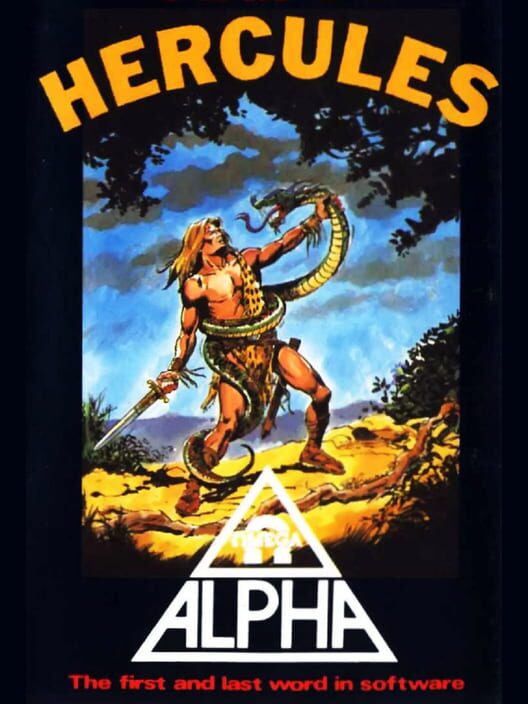
Zzap!64 also gave a positive review of the C64 version on reissue in 1986. Despite criticising the graphics and sound, the game was praised praise for being tricky, fast paced and addictive. The review concluded: "Don't judge a book by its cover–beneath the awful exterior lies a superb platform game" and awarded a score of 92%.
Reviews of the Spectrum port were at best mixed, with the poor graphics and sound called-out. Your Sinclair awarded the game 3/10 with the author claiming he gave up in frustration. Sinclair User found the game similarly "unfair" with "unspeakably bad" graphics but said it had some "neat twists" awarding an overall score of 2/5. ZX Computing was more positive, giving a rating of "good". Although acknowledging the "dreadful" presentation and "unplayable" key sequence, the reviewer claimed the game "proves the point that you don't have to have great graphics for it to be addictive".
The Yolanda remake for Atari ST and Amiga was developed by Vectordean and published by Millenium, released in August 1990. The One magazine gave the Atari ST version a positive review and score of 88%, though ST Format gave it a more pessimistic 58%. The Amiga version was given a 49% score in its review by Amiga Format..