The articlegameplay, story, development, reception
Gameplay
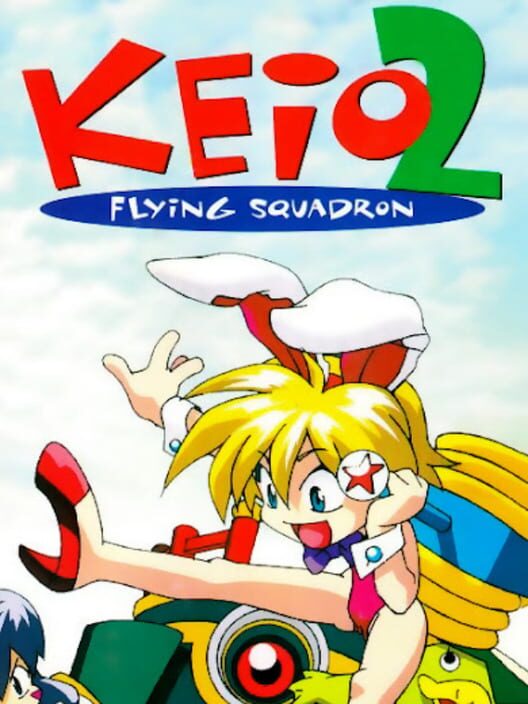
The game mainly consists of side-scrolling platformer stages. Two of the stages retain the shoot-'em-up style of the first game, but the Homing Spot Jrs. can be obtained as bonuses only. Besides the platformer and shoot-'em-up stages, there are vertically scrolling bonus stages, a rollercoaster stage and an underwater stage, classifying the game as a multi-genre platformer.
Several bonuses can be collected including three weapons:
Atami - The Hammer of Dreams - A large mallet, used only for hitting enemies.
Kinugawa - The Umbrella of Love - An umbrella, used to hit enemies, float and deflect overhead obstacles.
Kusatsu - The Arrow of Hope - A bow and arrow set, used to shoot arrows at enemies.
Rami can also bounce on the heads of enemies to defeat them, as well as Kappas to reach higher places. Being damaged without holding an item results in the loss of a life. Background objects can be pick up and thrown at enemies to defeat them. Some background objects can also have a utility use. There are three difficulty levels which alter how many enemies there are to defeat and how quickly weapons disappear after being damaged.
Points Orbs can be collected throughout the game. Defeating some enemies also rewards points, but there are some enemies that are considered passive and will instead deduct points when defeated. A reward system accessed from the main menu unlocks helpful hints and behind-the-scenes extras depending on the highest and lowest scores achieved through playing.
Story
A year has passed since the apocalyptic disaster known as the "Ark Catastrophe", which left a great crater in the center of Edo. The destruction wrought major economic consequences and while much investment was poured into the public works for the new Edo Castle, the citizens were all feeling the pinch of the recession.
Dr. Pon Eho was no exception. Although a freak of nature with an astronomical IQ of 1400, hard reality forced the genius tanuki to become a laborer in the construction of the new castle. One day, while he was shoveling away some gravel near the center of the crater, he unearthed the Secret Treasure Scroll and one of the Six Magical Orbs (called Jewels in the Japanese version). With the knowledge that the six Orbs together would bring him an enormous amount of treasure, he quickly left his job in search of the remaining five Orbs listed on the Scroll's map.
Meanwhile, Himiko Yamatai, "the 13th Queen of Yamatai-koku", makes a dramatic appearance at the Nanahikari family's dinner table and grabs the family's Magical Orb. But before she can get away, Dr. Pon ambushes her and steals it. Of course, Rami makes chase and joins the race for the great treasure, starting her on her new adventure.
Development
After Keio Flying Squadron was released to critical acclaim, the developers at Victor Entertainment started talking about developing a sequel. Production on the game began in 1994 with the title Keiō Yūgekitai 2, with director Yasushi Endo, game designer Satoru Honda, programmer Teruhito Yamaki and composer Tsukasa Tawada getting the ideas together. 3D video games were popular at the time, but the developers chose to stick to 2D, initially developing the game for the Sega CD. This was due to them having little experience in 3D game design and considering the idea of turning anime characters into polygon models terrible.
Six months later, the developers heard of Sega's plans to release the Saturn in November, so they changed course. However, they did not know the console's technical specifications, and could not really use the development equipment even when it arrived. They were so focused on learning how to make games on the Saturn that they could barely think about doing 3D polygon graphics. Over time the Saturn and PlayStation began focusing primarily on 3D polygon graphics, which angered them.
They decided that they would never use the Saturn's capabilities.
The game was going to be a graphically enhanced version of the first game, but was made into its own game with a different story. The developers felt that because the previous game was a shooter, it did not allow time to look closely at the characters onscreen, making it difficult to bring out their charm, with Rami Nanahikari being the only exception. Because of this, the game was changed into an action platformer to allow for larger sprites. The game's art and graphics were done by Naomasa Kitatani, Kenji Kawashima, Yoshiyuki Ozaki, Nobuyuki Ikigame, Daisuke Fukuda, Akito Kuroda and Masaru Yokōra, while the character designs were done by Hiromasa Ota.
The characters originally had sprites that were more in line with their anime designs, and Rami would have also carried a Frog Hammer. The game was planned to have different features, including video backgrounds, 3D bonus stages, and real photographs for most of the items that the player would pick up. The specifications for the Saturn had changed a lot at the time, so the developers spent time testing the console's capabilities. Keio Flying Squadron 2 was Victor's next big project, although they were also developing a couple of other Sega Saturn games: Metal Fighter Miku and a port of 4D Sports Boxing (later Center Ring Boxing).
The game was considered for release in February 1995. However, development continued past that month. The game was later renamed Keiō Yūgekitai: Katsugeki-hen, and the video backgrounds, 3D bonus stages and photographed items were cut. 5D due to limiting the range of movement and making parts of the platformer stages almost unusable.
The game would make use of sprite scaling, squashing and rotation, digital photography, transparency, shading and 3D elements.
The enemies in the first game originally exploded when defeated; this was changed in the sequel to them flying away only in the platformer stages. The Sumida River stage was originally going to be a platformer stage, but was changed to a shooter stage when Endo had issues implementing Kusatsu, the Arrow of Hope. Due to this, the bow and arrow set has stationary locations throughout the stage and cannot be obtained. An "extra mode" and score display were added late in development before the game was finalized.
The bonus stages were originally planned as a series of minigames based on Japanese fairy tales, such as Urashima Tarō and Momotarō, but the idea was dropped due to time constraints. Sasuke Sarutobi, a ninja monkey, was planned to appear as an enemy in the game, but was cut. The Martial Arts Tournament was planned to have seven participants, but five of them ended up being scrapped, with only Benkei Musashibō and Missionary Xavier making the final cut. They include:
Kojirō Sasaki - A handsome young swordsman who wields his 3+1⁄2-inch long sword Bizen Nagamitsu, though he usually carries a drying pole on his back instead. He was also to have a penguin-like swallow as his subordinate.
Kurama-Tengu - An old man whose true identity is the Great Tengu of Mount Kurama, prohibited from television broadcasting. He rides (or rather, wears) a horse named Pakaran-kun.
Hanzō Hattori - The leader of the Iga Shinobu-gun. He was given his name apparently due to being half-yin and yang. He never takes off his shinobi shōzoku in order to hide his appearance.
Shishido Baiken - A Kusarigama master. On his head is a perch carved from a plum tree. He puffs his back instead of his cheeks when blowing purple smoke.
Goemon Ishikawa and Oyabun Gama - A cleanliness-loving outlaw and his fire-breathing toad. Goemon spends 16 hours a day in the bath and the remaining eight hours sleeping. Therefore, all transportation is dependent on Gama.
In contrast to the first game's fast-paced score, Keio Flying Squadron 2's soundtrack had a "relaxed"-sounding tone. Tawada wanted each stage to have their own different music, with the platformer stages having patterns that ranged from sounding Sonic the Hedgehog-esque to Disney-esque. The musical instruments, which included koto, shamisen, percussion instruments and drums, were recorded using the Yamaha SY99.
The game features animated cutscenes produced by Studio Pierrot, who also produced the cutscenes in the first game. The Japanese voices were recorded and directed by Susumu Aketagawa at Magic Capsule and Avaco Creative Studio. Rami was the only character in the first game with spoken dialogue during gameplay, but this time the enemies and bosses also had dialogue. In response to overwhelming requests, Miho Kanno, who was appearing in advertisements for the Victor V-Saturn and releasing singles under Victor's music label at the time, reprised her role as Rami, reuniting with Jōji Yanami and Keiko Yamamoto, who reprised their roles as
Reception
Upon release, Keio Flying Squadron 2 was met with average critical sentiments.
Ryan Lockhart, Dave Halverson and Casey Loe of GameFan praised the game for its graphics and music, with Halverson stating, "Few will play Keio Flying Squadron 2, as only the craziest gamers search out and buy import games." Sega Saturn Magazine's Sam Hickman felt that the game had very generic and overly easy gameplay, but was still somewhat fun to play, largely due to the intriguingly strange graphics. However, she concluded that most people would not find it worth the retail price. Total Saturn called it a "playable, refreshing game after the mayhem of Nights into Dreams".
Marcus of Mean Machines stated, "Quality platform games are difficult to come across these days and, while the difficulty is level here is obviously pitched towards younger players, there's enough trickery and Japanese kitsch to keep older ones amused." GamesMaster's Alex Cox deemed it "a good, solid, mental platformer that'll give you a laugh if nothing else". Ryan Butt of Saturn+ admitted that it was mostly a platformer, likening the ability to pick up and throw objects to Astal. However, he praised the game for its "cunning puzzles and sick, deranged humour factory that make playing through to the end compulsory".
Lucy Longhurst of Cybernet said that the game would "keep any platform-loving gamer going for quite a while", adding that it "should have an even wider appeal with its cute characters, fast action and funky gameplay". In 1998, Saturn Power rated the game 88th on their Top 100 Sega Saturn Games, summarizing, "A bizarre Japanese platform game that, somehow, manages to impress all that come into contact with it. The graphics are fairly primitive, but the gameplay's excellent."
In 2000, the game received a 7.7413/10 score in a reader survey conducted by the Japanese Sega Saturn Magazine, raking among Saturn titles at number 469.