
The articlegameplay, story, development, reception
Gameplay
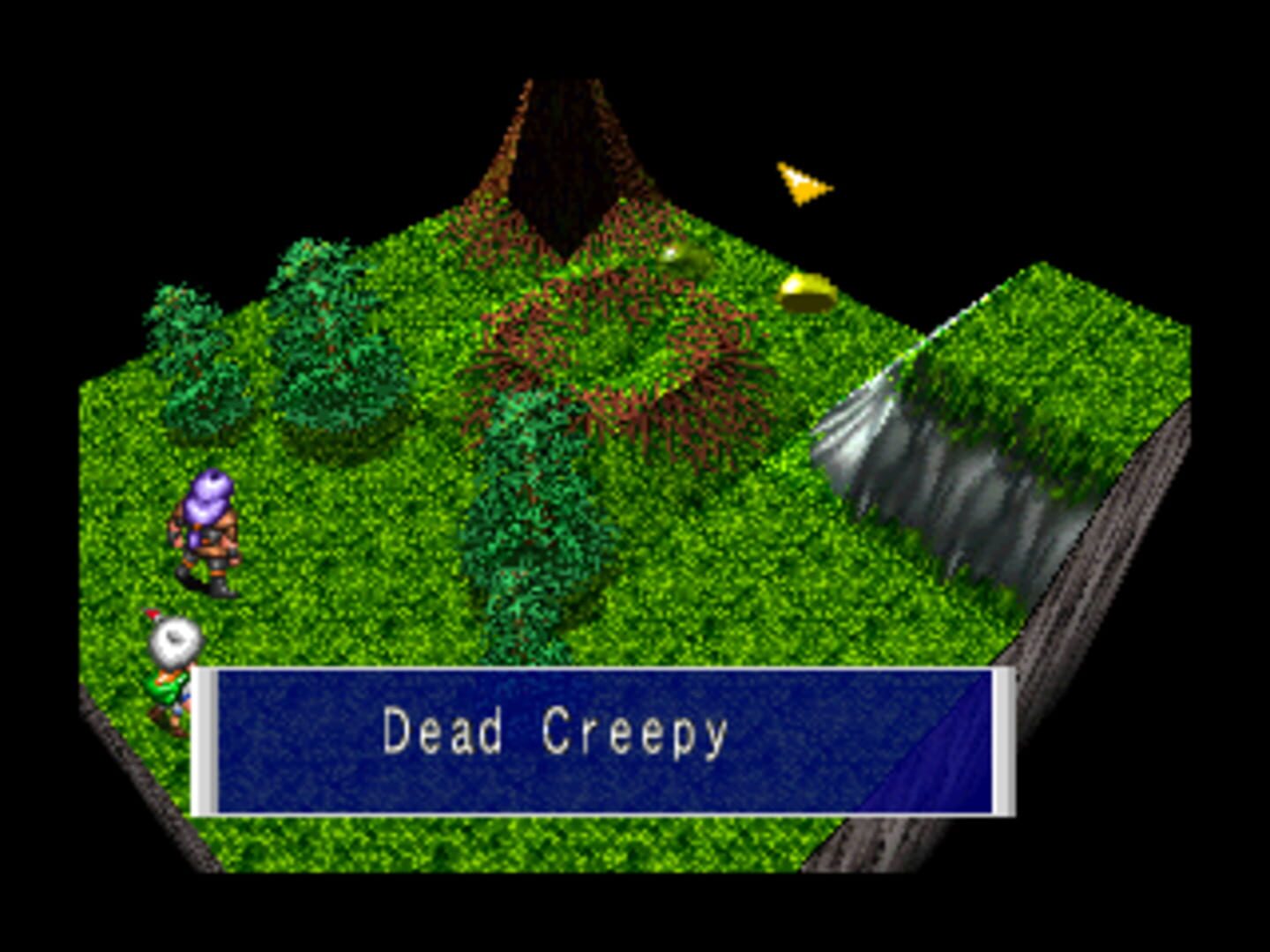
Lucienne's Quest is a standard Japanese role-playing game. The player controls the main character Lucienne as she adventures from town to town with others to find a cure for Ago, a man cursed as a werewolf. The game has a day/night cycle, which affects when Ago is in human or wolf form, changing his strength in battle. At each town, Lucienne can take on quests to help the town's citizens, buy new equipment, and explore dungeons.
Every few towns, the player gains a new party member and the plot thickens. When exploring towns and dungeons, the player can destroy objects in the environment to clear paths and get items.
Development
Lucienne's Quest was developed by Microcabin for the 3DO. a. a. Blazing Heroes).
It was released on 14 September 1995 in Japan, and later localized by Panasonic for a March 1996 release in North America. The Japanese version requires the kanji buffer RAM only found in Japanese 3DO systems, making it one of the few games that cannot be played on systems from other regions. The game was ported to the Sega Saturn with changes to the graphics, controls, and camera, and released on 31 May 1996 exclusively in Japan.
Reception
Lucienne's Quest garnered mixed reviews. Critics found the story not as substantial and fulfilling compared to other RPGs, commenting that it resembled a series of sidequests which the characters had no compelling reason to undertake. The game's writing and dialogue was criticized for its lengthiness and juvenile humor, with a Next Generation critic describing it as "the literary equivalent of having a conversation with a hyperactive 10-year-old." Ryan Lockheart writing in GameFan felt that the light-hearted story lent itself positively to the game's charm, and was overall much more receptive of Lucienne's Quest.
He blamed the poor dialogue on the localization effort, saying that Lucienne was more arrogant and mischievous in the original Japanese version, while the English version characterizes her as absent-minded and stupid. Regarding the game's simplicity, critics also considered it excessively short, with most saying they were able to complete it in slightly less than ten hours. Lockheart explained that Lucienne's Quest does have a considerable amount of content, and the short length is due to the game being balanced such that the player does not need to spend any time on grinding.


