
The articlegameplay, story, development, reception
Gameplay
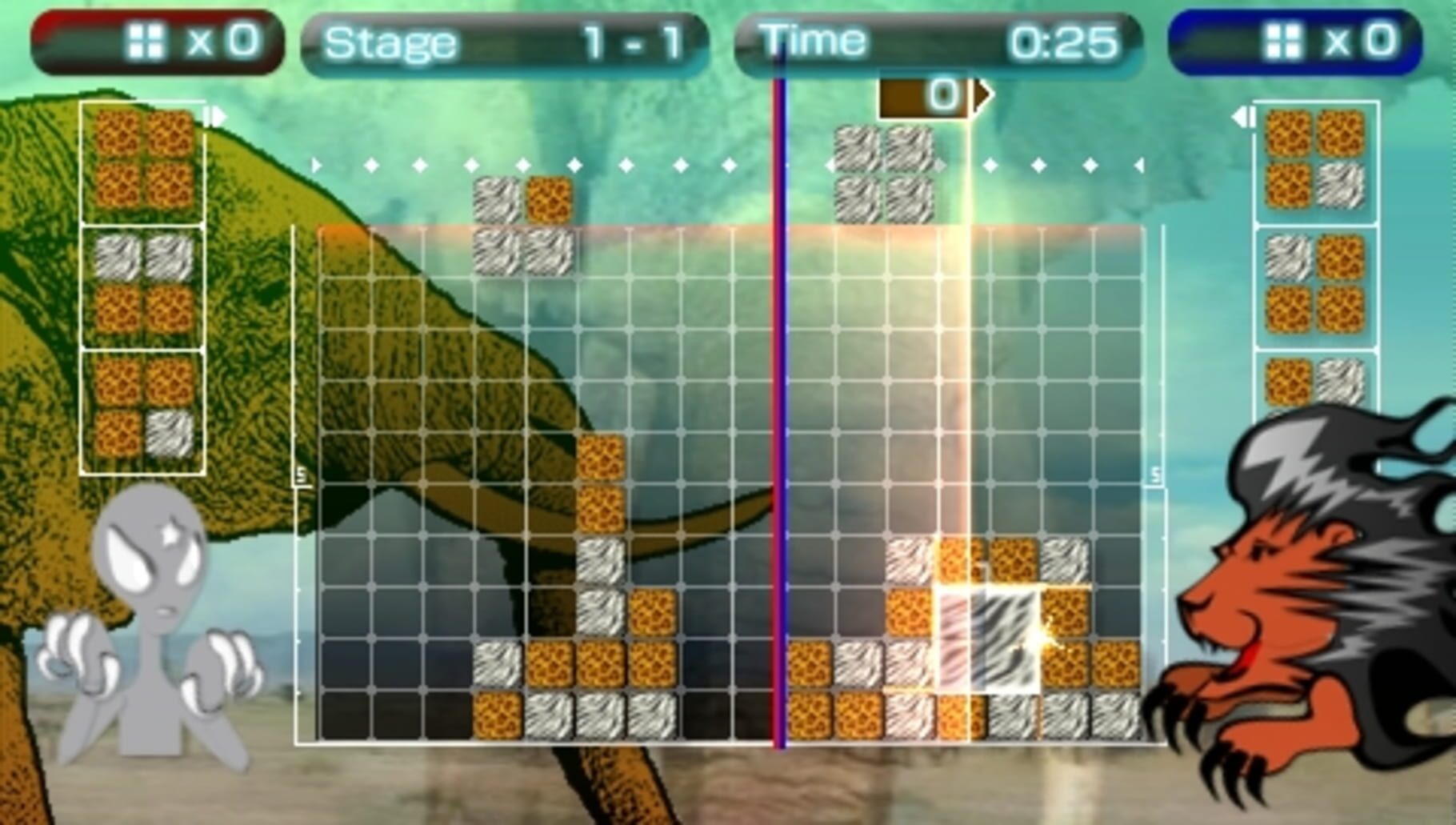
Lumines II uses the same core gameplay of its predecessor Lumines: Puzzle Fusion with new features included. The objective is to move, rotate, and drop blocks to form 2×2 squares or larger of the same color (referred to as a colored square). A vertical line known as the Time Line sweeps across the field from left to right and erases the colored squares; awarding points to the player's overall score. Erasing four or more squares will add a bonus multiplier to the player's overall score. Players lose when the blocks reach the top of the board.
All the modes from its predecessor return: Challenge mode, Time Attack, Puzzle, VS CPU, 2P VS mode (renamed Duel mode). Challenge mode has been modified and expanded to four classes: B, A, S, and Enduro. Class B is designed for beginners, Class A for intermediate players, and Class S is for advanced players. These classes can be played up to three full laps.
The Enduro class uses all the skins and can only be unlocked after completing at least one lap of the first three classes. Time Attack adds a new feature that allows players to record and save their playthrough to be viewed in the Replay Theater.
Lumines II introduces three new modes: Mission mode, Skin Edit mode, and Sequencer. In Mission mode, players are given various tasks to complete, such as erasing all existing blocks using two squares or a specific number of blocks in a set of time. Skin Edit mode allows players to create their custom playlist using skins previously unlocked in Challenge mode. Skin Edit mode is divided into two settings: Single Lap where players can select up to ten skins and compete for the top score; and Endless Lap where players can select as many skins as they like and can play endlessly without a time limit.
The Sequencer allows players to create original background music and sound effects from one of four base music types. With each base music, players can save up to 20 original music sequences with each base music used. Up to four skins created from the Sequencer can be ported into Skin Edit Mode. Lumines II also introduces the option to customize the HUD and a tutorial with tips and strategies as well.
Development
Lumines II was developed for the PSP by Q Entertainment with Tetsuya Mizuguchi as the producer and Katsumi Yokota involved in the design and soundtrack alongside Takayuki Nakamura. During development, Mizuguchi was influenced by music videos and wanted to incorporate music videos into the game. To showcase his vision for Lumines II, the development team needed to find music and videos with the right tone, mix, and energy to incorporate into the game. When Mizuguchi couldn't find a music video involving people cheering, he produced his own that resembled hand-drawn animation.
For the development of Lumines: Puzzle Fusion, audio had to be completed before finalizing the skin's design. Yokota decided to do a different approach with Lumines II and Lumines Live!. Instead, skin designs took priority to provide more concrete suggestions for the audio. Yokota stated this made greater variation possible for the music tracks.
100 songs were initially planned during development of the game. Mizuguchi emphasized the content in Lumines II over the first one with more skins and songs than the original. He further explained that he wanted to push the UMD to its limits. Mizuguchi also emphasized that he wanted the game to have its own original atmosphere and stylistic experience, different from the original, and compared the game to a party with himself as a party organizer.
Reception
The game received "favorable" reviews according to the review aggregation website Metacritic. In Japan, Famitsu gave it a score of 31 out of 40.
A common compliment from reviewers was the new features introduced in the game. Pocket Gamer praised the new features introduced in Lumines II, specifically the Sequencer and called it "brilliant". IGN gave compliments to the new features and claimed it managed to expand on just about every facet of its predecessor. GameDaily also noted Lumines II improved on the original while staying true to the franchise's spirit.
GamePro found the Mission mode enjoyable and noted it to be challenging for both newcomers and veteran players. GameSpot also gave the game a favorable review, although had minor criticisms of the new modes for not feeling fresh. One particular feature that was criticized was the skins that use music videos for their respective licensed songs, due to not able to enjoy them as much as during gameplay. PALGN appreciated the Skin edit mode and Sequencer features allowing them to customize the order of the skins and also create their own beats.
The song selection received mixed reviews. Pocket Gamer noted that the enjoyment of the game depended on the song selection, but also stated that it is still possible to be entranced by the music one normally hates by being entranced by the gameplay. Eurogamer was more critical, criticizing the inclusion of western songs, calling the original game the better option. PALGN was also disappointed in the song selection for a western audience, but felt it didn't ruin the game.
GameSpot noted that Lumines fans may be put off by newer artists, but noted the soundtrack is robust, well-around, and able to appeal to a larger audience. Game Informer shared similar sentiment to GameSpot, stating that the soundtrack isn't made up of "Top 40 Countdown" and uses underground music alongside returning songs. GameDaily stated that the songs from the "tried-and-true" music artists were considerably old and didn't have the same impact from when initially released, while noting that the songs work well with the overall feel of the game.
GameZone criticized the game, stating "When a game is as much to play as the first Lumines then it's hard to accept limited imitations packaged as new editions." However, Edge gave it six out of ten, saying, "Memories of Mizuguchi's original may hold more value than anything offered here, making for an unusual proposition. Highly enjoyable as it is, Lumines II is tough to recommend."
Lumines II won the Special Class award and Song Collection in the 2006 NAVGTR Awards. The song implemented into the game, Heavenly Star by Genki Rockets, was nominated for Best Song in the 2006 Spike TV Video Game Awards and 2006 NAVGTR Awards.


