
The articlegameplay, story, development, reception
Gameplay
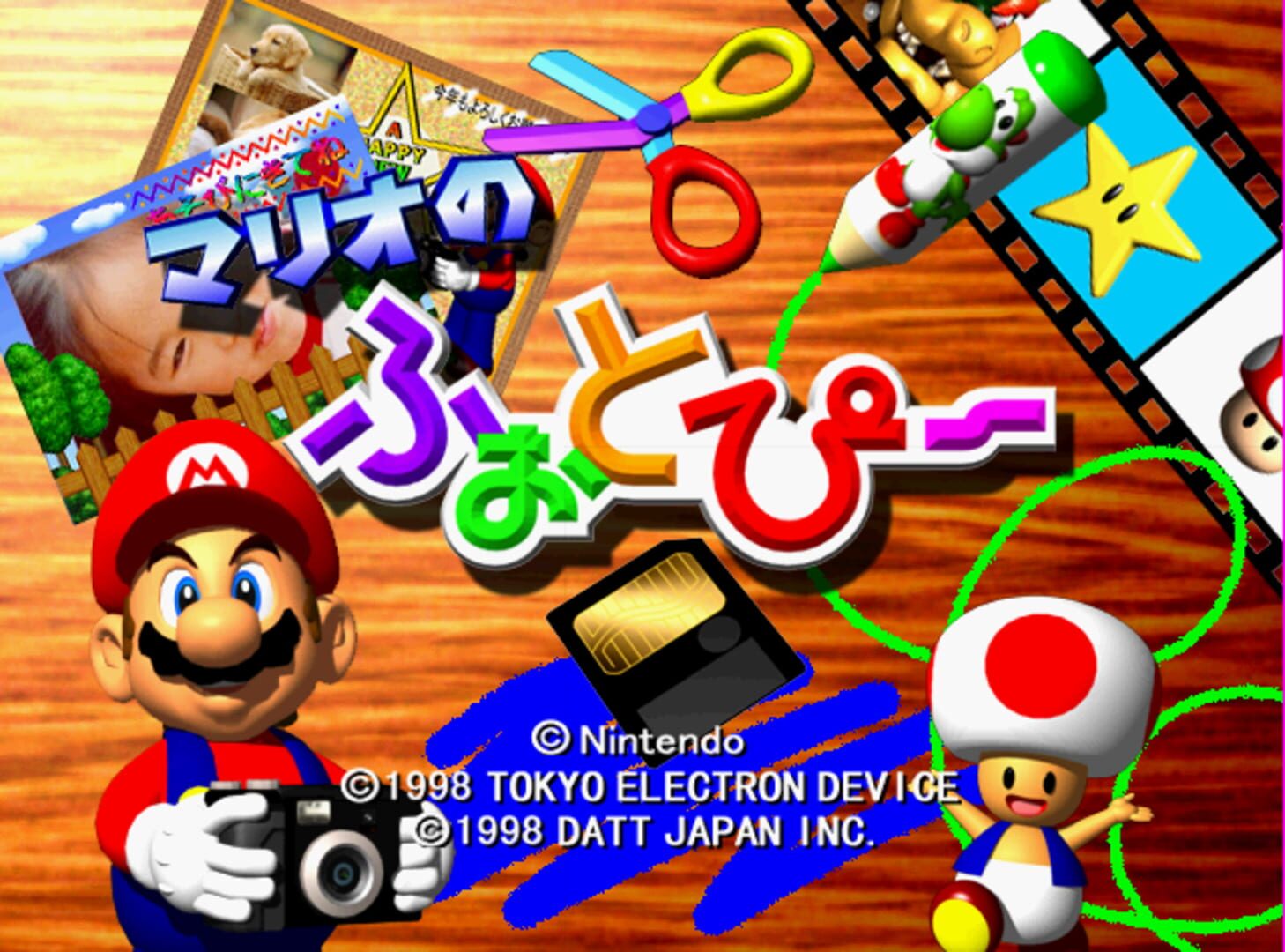
Mario no Photopi is a gamified image editing tool, encouraging user-generated content. The cartridge features two slots on top for SmartMedia memory cards to be inserted, allowing the import of any Exif image saved to the memory card by other compatible devices such as digital cameras. Most of the game's features will not function unless it detects a card.
Once imported, these images can be retouched using the included Mario series clip art, borders, fonts, and other graphics to create new compositions. The composition's layout can become a postcard, name card, poster, or slideshow. A minigame generates a playable tile-flipping puzzle based on the composition. Completed compositions can be exported to the memory card, allowing them to be imported to a personal computer or Fuji printing kiosk such as at a shopping mall.
Development
During the 1990s, the adoption of personal computers (pasukon) in Japanese households was hindered by the high cost, a lack of robust Japanese language support, and the limited physical space of typical residences. Purikura (originally "Print Club") is a Japanese arcade phenomenon since the mid-1990s where users decorate photo stickers, later called the foundation of the modern selfie. Mario no Photopi was developed in 1997 to supplant the pasukon.
Development was a joint effort supervised by Nintendo, which contributed some character graphics; the software developer Datt Japan, which created the game application; the memory manufacturer and distributor Hagiwara Syscom; the publisher Tokyo Electron Device, which integrated the SmartMedia slot into Nintendo's Game Pak cartridge design; and printer maker Fuji Photo Film Co., Ltd.
On December 2, 1997, Mario no Photopi was preannounced with optional compatibility with the upcoming and long awaited 64DD floppy drive, which was expected to launch in March 1998. Compared to a SmartMedia card's then-typical 2 MB, the 64 MB floppy disk was intended to hold a user's entire photo album and therefore further supplant Japan's market demand for a much more expensive personal computer and printer. The 64DD's drastic launch delays forced the removal of all 64DD functionality from the game. From September 30 to October 3, 1998, the game was publicly demonstrated at Hagiwara Syscom's booth at World PC Expo '98.
Reception
At the World PC Expo '98 prerelease demonstration, Kumio Yamada of PC Watch expressed mistrust of the product's file format in favor of an open standard like JPEG. He praised the convenience of the gamepad driven user interface for image slideshows and management, and he especially enjoyed editing custom photos with Nintendo's characters.
Vice retrospectively called the game "one part Photoshop, one part Mario Paint". Its rarity reportedly makes it "a piece of Nintendo lore" and "something of a holy grail among collectors". Mario no Photopi is so obscure even compared to 64DD releases (including Mario Artist: Paint Studio's loosely estimated 7,500 sales), that SVG said "sales figures are impossible to find".
In 2017, a hobbyist released the "Cardless Hack", an unofficial patch that removes the requirement for a SmartMedia card to be present, allowing the game to be played through emulators.