Ludography
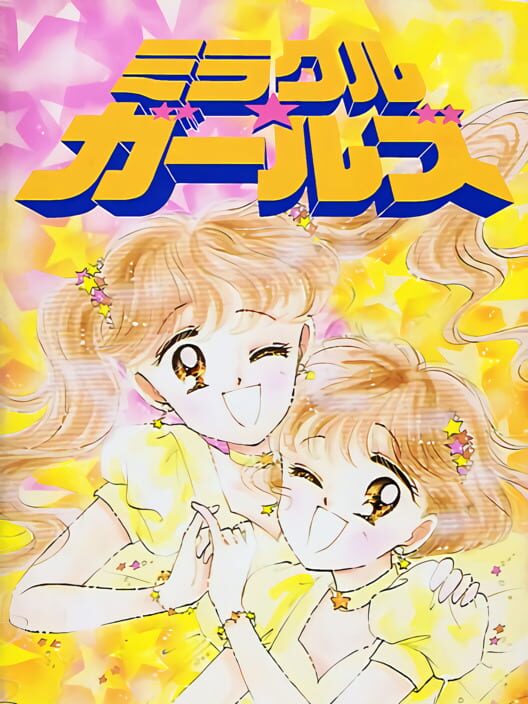
Miracle Girls cover

1993 · Action · Adventure

Miracle Girls

Nintendo exclusive

Mikage and Tomomi Matsunaga are not exactly your ordinary junior high school students. The two girls have a well kept secret - they are the 'Miracle Girls', and they both share extraordinary powers allowing them to communicate telepathically or to vanish into thin air and teleport themselves at will. The game begins in a school campus, just as the girls and four of their friends are about to start their lunch break. Suddenly, a glowing ball of light appears and teleport them into a distant and strange world.

Furthermore, her friends have now mysteriously disappeared and the two girls embark on a long journey to find out who is behind all these strange events... The player can either play as Mikage or her twin sister Tomomi, and they both come equipped with the most unusual weapon - candies.

Also known as
ミラクル★ガールズ · Miracle★Girls
Released
22 October 1993
Platforms
SNES
Genres
ActionAdventureMagical girlPlatformerRomance
Developers
—
Publishers
—
Perspective
Bird view / IsometricSide view
Themes
ActionFantasy
Country
Japan
Languages
Japanese

About

Miracle Girls (Japanese: ミラクル★ガールズ, Hepburn: Mirakuru Gāruzu) is a Japanese manga written and illustrated by Nami Akimoto, with the first volume being released on July 6, 1991. It was Akimoto's third work, and her longest running. It was a commercial hit and would see the creation of 12 more volumes. The manga is about two twins with opposite interests and talents, the athletic tomboy Tomomi and the intellectual girly girl Mikage, who have combined ESP abilities (telepathy and teleportation) when they link their pinky fingers together. Their boyfriends Hideaki and Yuuya feature prominently, as well as their teacher Shinichirou, a paranormal investigator obsessed with the twins' psychic powers.

It falls under the Magical girl genre, and has some comedic elements. It was adapted into an anime series by Japan Taps in 1993, starting in January and finishing in December of that year. Tokyopop licensed the manga for English release in North America in the year 2000.

Keywords

  • anime
  • minigames
  • boss fight
  • food-themed stage
  • japan only
  • retroachievements
  • fan translation - english

Media

The articlegameplay, story, development, reception

Story

Manga Book 1:

Tomomi and Mikage Matsunaga are identical twins with special powers. Together, they are able to teleport and communicate telepathically. The athletically challenged Mikage begs Tomomi to switch identities with her for her school's sports day track meet, where she and Tomomi are teamed with Mikage's arch enemy Yuya Noda, in the relay race. Tomomi, however, finds herself drawn to Yuya.

Tomomi's success in the relay causes the captain of the track team, Hideaki Kurashige, to try to recruit Mikage. So, once again, the sisters switch identities. However, the science teacher, Shinichiro Kageura, finds out about their psychic powers, and begins to stalk Tomomi. Sensing that Mikage (who was really Tomomi) has been behaving strangely, Yuya visits them at home.

Anime Episode 1:

Tomomi and Mikage are twin high school girls with powers hidden from everyone but themselves and their boyfriends: They can communicate with each other telepathically, and if they hold hands, they can teleport. Tomomi, the elder twin, is a tomboy with a knack for sports, and Mikage, the younger twin, is a brilliant academic and is in the chemistry club. One day, they receive big news: Mikage's boyfriend, Kurashige, is transferring to England to further his education; in addition, the ESP fanatic Kageura, the chemistry teacher, is getting married. Though she is initially heartbroken, Mikage recovers and wishes Kurashige well.

At Kageura's wedding reception, Kurashige gives her a pocketwatch as a going-away gift. Meanwhile, four flowers, two in England outside of a castle and two in Japan outside of the twins' house, suddenly begin to shine and bloom.

Reception

Adam Arnold of Animefringe praised the manga series, particularly for the detailed an expressive eyes, and the story "light-hearted and fun to read". A writer at The Anime Review said on the anime "Miracle Girls reminds me of plenty of other better shows". On the website MyAnimeList, out of 1.6k rating, the Miracle Girls anime achieved a 7.5 out of 10. A writer at the Video Game Den gave the game adaptation a 3/5 stars, stating "The game doesn't do anything wrong nor spectacular, but I recommend everyone to try it, so long as they can get past the boss battle minigames and the cutscenes".

Releases by platformdates and regions as published

Releases by platform
PlatformReleasedRegions
SNES22 October 1993Japan

Title IDsone per regional release, with its latest update

Title ids and disc serials by release
PlatformTitle IDRegionLatest update
SNESSHVC-QPJapan—

Editions and related releases

Derivative works
Miracle Girls

Games like this

Collections2 collections

Description adapted from its source, CC BY-SA 4.0.