
The articlegameplay, story, development, reception
Gameplay
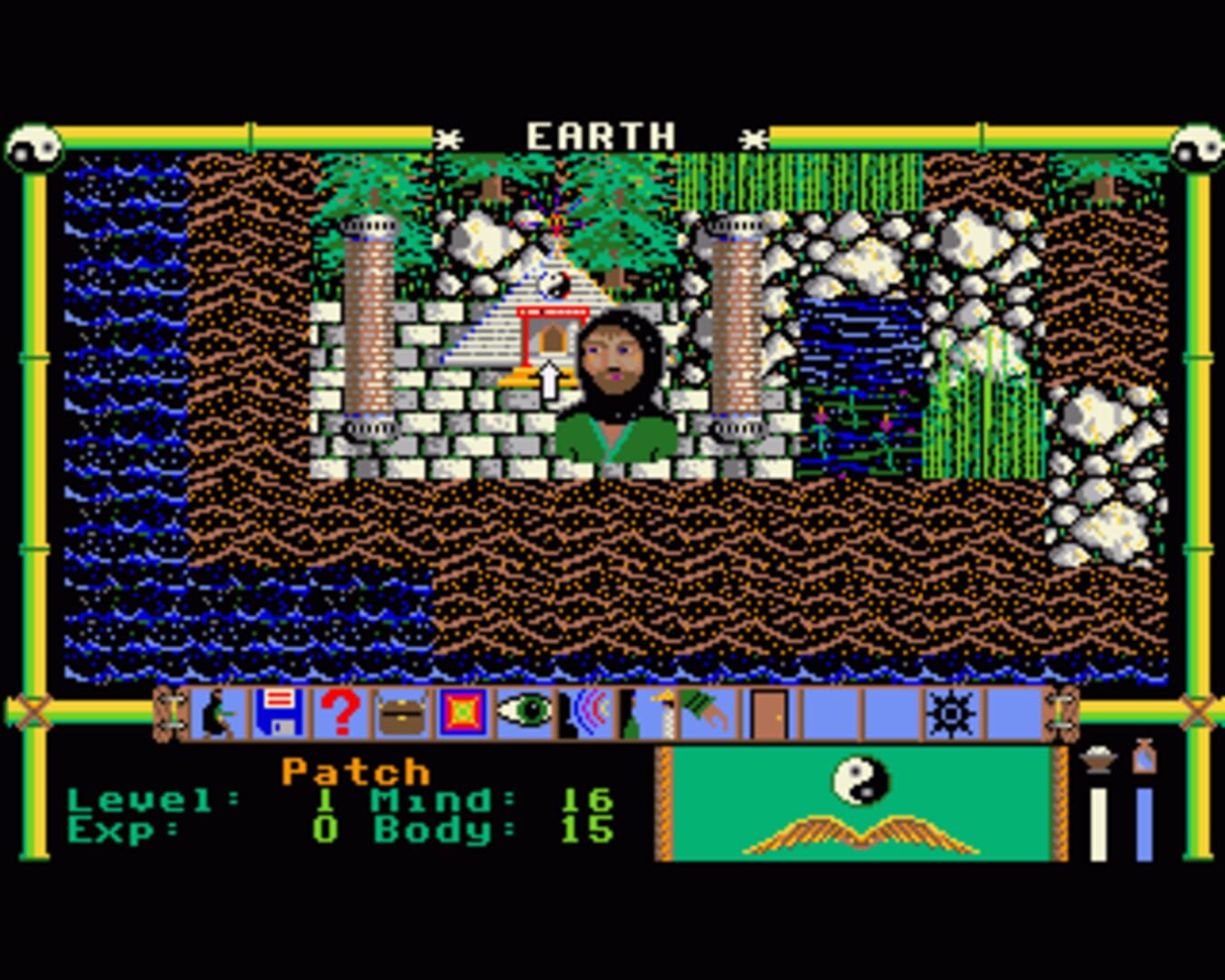
The player's objective is to guide the protagonist to recover the Orb of Celestial Harmony from the villain Kaimen. To do so, the protagonist must train his body and soul in the tradition of Chinese warriors: to "walk the path of Moebius the Windwalker."
The action takes place on the four elemental planes: Earth, Water, Air, and Fire, which the protagonist must traverse in order to recover the Orb. Although its gameplay is similar to that of standard RPGs, there are some differences: in addition to familiar character statistics such as dexterity, the protagonist has karma, a crucial attribute that goes up or down constantly depending on his deeds. Frighten a citizen with a sword, and karma will drop; defeat monsters in battle, and it will rise. Combat also takes place in a 2D side-scrolling view similar to fighting games, with a wide range of available attacks, including shuriken and fireballs if the character is experienced enough.
Reception
COMPUTE! called Moebius "yet another program worth raving about" from Origin Systems, and a worthy follow-up to Ultima IV. It stated the game had excellent graphics, "challenging and functional" arcade combat, and "many hours of enjoyment" from the puzzles.
Computer Gaming World stated in 1986 that the game was "sort of an outgrowth or continuation of the best parts of Ultima with special emphasis on graphic detail ... The addition of a fully animated combat system was frosting on the cake". The magazine's Charles Ardai stated in 1987 that the martial-arts and RPG portions of Moebius "don't fit together very well, but each is individually enjoyable". Info gave the Commodore 64 version three stars out of five, stating that the "ambitious game ...
has a decent storyline and the action is challenging". The magazine criticized Moebius's "Apple conversionitis, with blocky graphics, jerky animation, and a clumsy keyboard user interface". The game was reviewed in Dragon #141 (1989) by Hartley, Patricia, and Kirk Lesser in "The Role of Computers" column. The reviewers gave the game 4½ out of 5 stars.
Steve Fuelleman reviewed Moebius: The Orb of Celestial Harmony in Space Gamer/Fantasy Gamer No. 78. Fuelleman commented that "Overall, the game is excellent, in spite of the graphic animation and frustrations of play, or perhaps because of them. They lend an interesting flavor to the game and keep you on your toes.
The graphics are good, and the animation doesn't overshadow the plot. This one is a gem, and the flaws only add a little more fire to it. Not only a must have, but probably one you would like."