The articlegameplay, story, development, reception
Gameplay
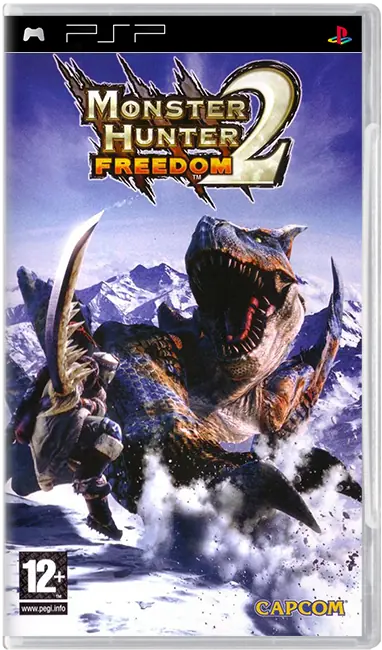
Most Quests in Monster Hunter Freedom 2 involve killing one or two 'Boss' class monsters. Smaller quests at the beginning will involve gathering items and killing small creatures.
Quests are generally divided into three difficulty levels: those from the Village Chief, known as 'Elder' quests; those for a lower Hunter Rank (HR3 or lower) from the Guild; those for hunters who have obtained higher Hunter Ranks (HR4 or above), also from the Guild, and lastly there are Treasure hunting Quests given by Treshi the Treasure Hunter. e. if an HR5 player initiates a quest requiring an HR of 4, HRs 4, 5 and 6 may join while HRs 1, 2 and 3 may not). There are also quests offered by the village's Training School.
Quests offered by the Training school require no items or equipment; pre-made equipment and item sets are supplied. Treasure hunting quests are gathering quests with rare items that you cannot keep but are awarded points to add to your ending score, which you are rewarded for.
The quests that are taken from the Village Elder are quests specific to single player, so they are also sometimes considered "lower" rank quests. Monsters inside these quests are weakened in terms of their hit points to suit a single hunter quest, but they only offer basic materials that can only create weapons of lower rarity.
Lower Hunter Rank quests from the guild offers the same materials as Elder quests, but they allow up to 4 Hunters via ad-hoc play or XLink Kai. Monsters have slightly increased hit points in this type of quest.
Higher Hunter Rank quests are considered the most difficult in the game, and are the equivalent of 'G' rank missions in Monster Hunter Freedom and Monster Hunter G. Besides considerable hitpoint increases, monsters have greatly increased damage and can feature new attack moves, making them harder to defeat. Many of the rarest materials can only be found in this type of quest. These rare materials can be used to create rare and powerful equipment that can kill monsters easier, but in return you will start in a random area and supplies will not be delivered until the battle is nearly done.
Downloadable quests often provide special materials that can create bonus equipment that cannot be created otherwise.
Reception
Monster Hunter Freedom 2 received "average" reviews according to video game review aggregator Metacritic.
As of March 31, 2008, the game has sold 2.15 million copies, according to Capcom. As of July 9, 2008, the game has sold 1,701,980 copies in Japan, according to Famitsu. As of January 4, 2009, the re-release of Monster Hunter Portable 2nd G under the "Best" brand, has sold 271,000 copies in Japan. Monster Hunter Portable 2nd G was the best-selling game of Japan in 2008, selling 2,452,111 in that year (expect "PSP the Best"), beating other major titles such as Pokémon Platinum and Wii Fit. Famitsu also gave the 2nd G version a score of all four nines for a total of 36 out of 40.