Ludography
Mystic Ark cover

1995 · Produce! · Adventure · Puzzle

Mystic Ark

Nintendo exclusive

Seven heroes from seven different Worlds. Seven heroes who were brought to a mysterious temple on a remote island and transformed into statues. Seven heroes who are chosen to bring harmony back to the universe: Miriene the witch (wizard), Lux the tetsujin (a race of iron people), Reeshina the grappler (monk), Tokio the ninja, Kamio the ogre, and Mesia the priestess. The seventh hero is you, the protagonist of the game - the knight Remeer or the female warrior Ferris.

Also known as
7th Saga 2
Released
14 July 1995
Platforms
SNESSatellaview
Genres
AdventurePuzzleRole-playing
Developers
Produce!
Publishers
Enix
Modes
Single-player
Perspective
Bird view / Isometric
Themes
FantasyScience fictionHistorical
Country
Japan
Languages
Japanese
Composers
Akihiko Mori

About

Mystic Ark (ミスティックアーク, Misutikku Āku) is a 1995 role-playing video game developed by Produce! and published by Enix for the Super Famicom. The video game was only released in Japan. Mystic Ark has strong similarities to the games The 7th Saga and Brain Lord, also developed by Produce and distributed by Enix. The game was being localized for a North American release under the title 7th Saga II, but the release was cancelled.

›Story

Seven heroes from seven different Worlds. Seven heroes who were brought to a mysterious temple on a remote island and transformed into statues. Seven heroes who are chosen to bring harmony back to the universe: Miriene the witch (wizard), Lux the tetsujin (a race of iron people), Reeshina the grappler (monk), Tokio the ninja, Kamio the ogre, and Mesia the priestess. The seventh hero is you, the protagonist of the game - the knight Remeer or the female warrior Ferris.

Your first task will be to release your companions from the statues they are locked in. You must travel to the Cat World and to retrieve an important artifact. But your main objective is to visit all the seven Worlds and to find seven mystic arks - the items that will re-unite those Worlds and bring peace to them.

Keywords

  • pirates
  • medieval
  • ninja
  • turn-based
  • backtracking
  • silent protagonist
  • spiritual successor
  • ogres
  • block puzzle
  • damsel in distress
  • party system
  • original soundtrack release

Media

Mystic Ark screenshot 1

The articlegameplay, story, development, reception

Gameplay

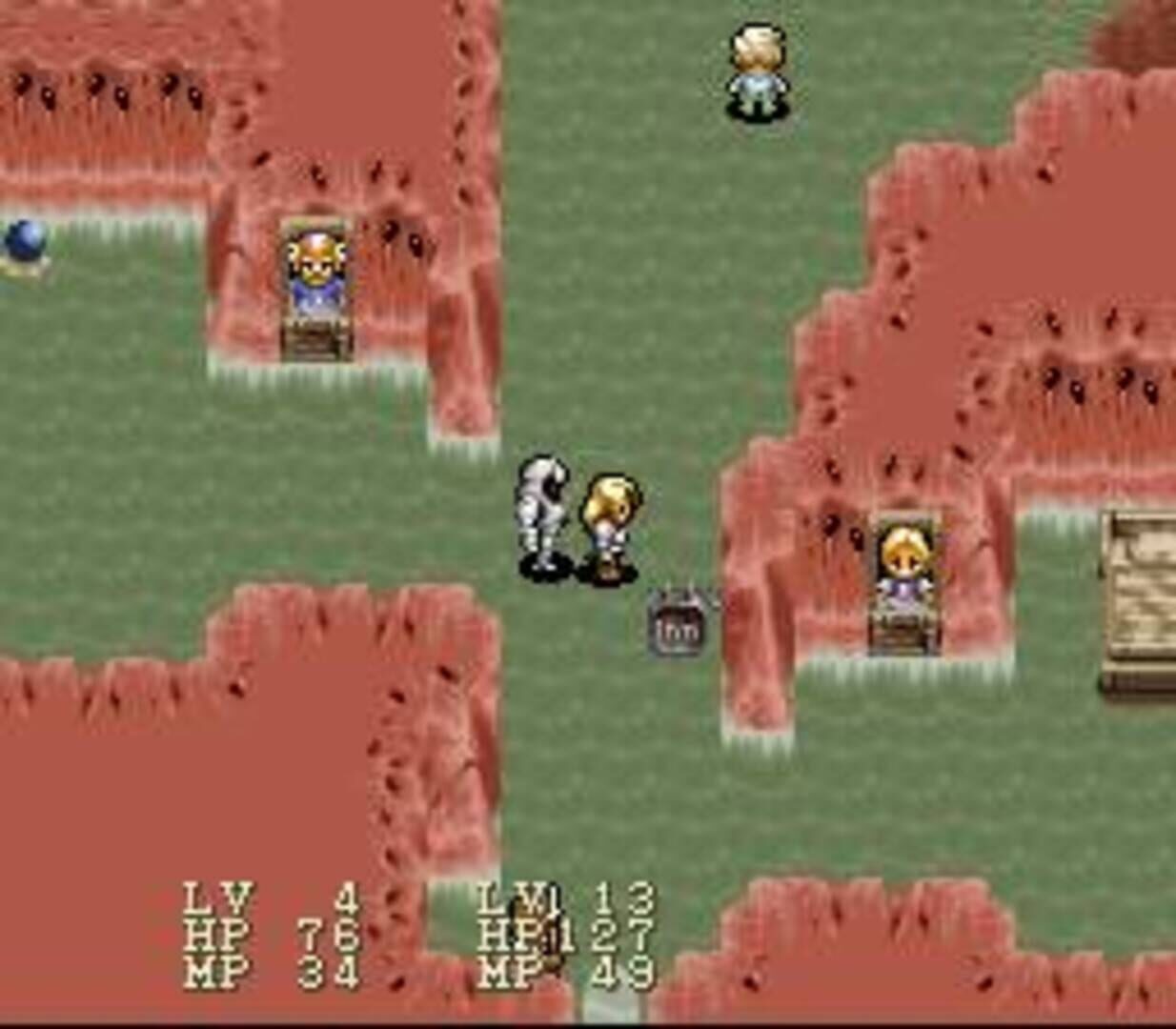
The game plays mostly as a standard Japanese role-playing game. The player controls the main character from an overhead perspective as the player traverses many worlds with towns and dungeons. The game features random battles that when the player wins will receive experience points that when accumulated will allow the player to reach the next level of experience.

When certain levels of experience have been gained the player will learn spells or techniques. The unique feature of the gameplay is that when the player receives two certain arks, the power ark and the wisdom ark, the player is then allowed to pick two partners of their liking that are located within the temple as figurines.

Story

The game's plot involves one of two characters that the player can choose, Remeer or Ferris. The chosen hero awakens in a temple, on an unknown island. As the player explores the temple, it is discovered that, in order to make it home, he/she must travel to different worlds that lie within the temple and find the different arks that lie within each world. When the player retrieves all the arks, he/she is given access to the final area of the temple, to face the final boss and finally return home.

Each different world has its own specific storyline, involving Miriene the witch, Reeshine the grappler, Lux the tatsujin, Kamiwoo the ogre, Meisia the priestess and Tokio the ninja. As such, the game plays out more of an anthology of stories with the temple tying the story as a whole together.

Reception

According to Famitsu, Mystic Ark sold over 48,067 copies in its first week on the market and approximately 75,939 copies during its lifetime in Japan. The Japanese publication Micom BASIC Magazine ranked the game first in popularity in its October 1995 issue, and it received a 22.9/30 score in a readers' poll conducted by Super Famicom Magazine.

Releases by platformdates and regions as published

Releases by platform
PlatformReleasedRegions
SNES14 July 1995Japan
Satellaview31 December 1995Japan

Title IDsone per regional release, with its latest update

Title ids and disc serials by release
PlatformTitle IDRegionLatest update
SNESSHVC-AEAJ-JPNJapan—

Games like this

Collections1 collection

Platform libraries

Description adapted from its source, CC BY-SA 4.0.