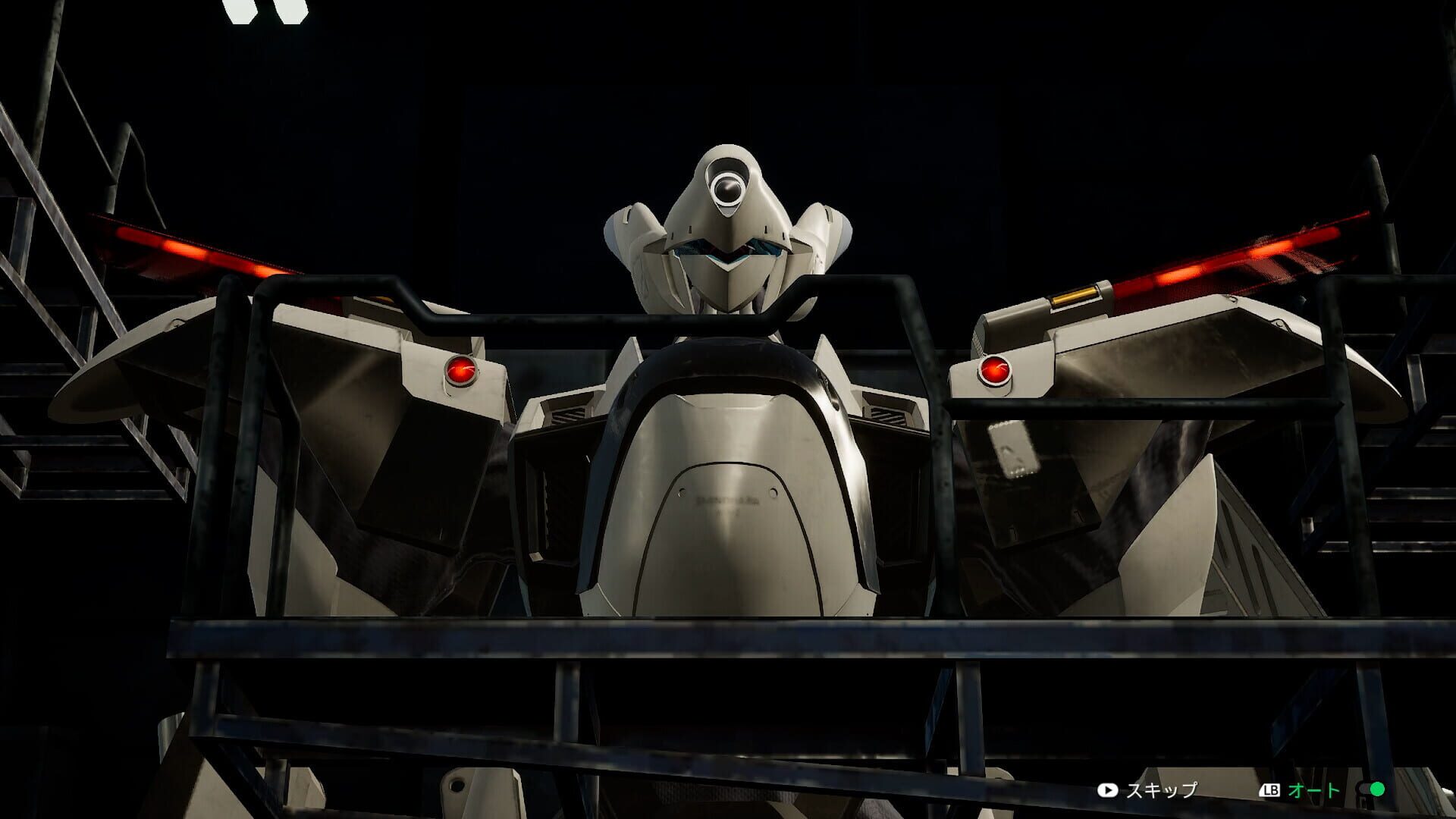

The articlegameplay, story, development, reception
Story
The story takes place in what was, at the time of release, the near future of 1998–2002. Mecha called "labors" are used in heavy construction work. The Tokyo Metropolitan Police has its own fleet of patrol Labors ("patlabors"; as opposed to patrol cars) to combat crimes or terrorism and deal with accidents involving labors. The story arcs usually revolve around Tokyo Metropolitan Police Special Vehicle Section 2, Division 2.
Labor pilot Noa Izumi is the protagonist of the series, but all of Division 2 play roles. Detectives Hata and Kusumi are the main protagonists of the third Patlabor film.
Due to being released simultaneously, the manga, TV series, and feature films all take place in separate continuities. The movie timeline includes the Early Days OVA and the three animated Patlabor films. The TV timeline includes the original TV series as well as the New Files OVA. Masami Yūki's manga is separate from both, although some TV episodes and the third film draw their plots from it.
The Next Generation series and film take place in 2013, with an entirely new cast (except for Shige and Buchiyama in maintenance), but the new members of SV2 have similar names and personalities to the old ones. Some of its episodes reference the TV series, and the final episode and movie are a direct sequel to Patlabor 2.
The Patlabor EZY series is set in the TV timeline. Now set in the near future of 2033, Labors have become largely automated, and the Special Vehicles Section must continue to work as a Labor police force without becoming obsolete. Brash pilot Towa Kuga and her backup Kippei Atori are the protagonists, but, like the original series, the show features an ensemble cast of all Division 2.
Development
Patlabor was originally produced by the artist collective known as Headgear, whose five members are Masami Yūki, Mamoru Oshii, Akemi Takada, Kazunori Itō, and Yutaka Izubuchi. Although their involvement varies between Patlabor projects (for instance, Oshii was largely uninvolved in creating Patlabor EZY), works belonging to Headgear split all their profits five ways regardless of contributions.
The concept originated with Yūki in the mid-1980s and was developed during low-stakes 'anime planning' sessions with friends like future Headgear member Akemi Takada. In response to grim, militarized mecha anime like Gundam and other shows directed by Yoshiyuki Tomino, Yūki began to conceptualize a more lighthearted type of mecha anime:
Instead of police cars, patrol robots roam around, firing giant revolver pistols left and right. However, no one dies (or if they do, it's not shown). It's not some exaggerated story about the fate of Earth or humanity, but a more grounded, realistic near-future story. A world where anything goes—monsters, mad scientists, master thieves, mystery, horror, action! But fundamentally, it's a story of a "local police officer," centering on the joys and sorrows of a civil servant ...
Yūki, Izubuchi, and writer Isao Hiura attempted to pitch the concept as a TV anime, with potential for toy manufacturer sponsorship: the main Labor would be a transforming police car or a combination of a police car and a mecha. Although the project was unable to find sponsorship then, it became more commercially feasible later in the decade with the expansion of the OVA format, which didn't require the same levels of sponsorship as TV features but carried lower risk than a full theatrical feature.
The original Mobile Police Patlabor series (renamed to Patlabor: The Early Days in 1995) was forced to make several creative decisions to keep costs low: the retail price was set at only 4,800 yen (rather than the 10,000 yen many other OVAs sold at) so as to recoup costs solely through video sales rather than relying on toy sponsorships, and only six episodes were produced rather than a standard 13-episode cour. Many of the action sequences which the Headgear members imagined for the Labors could not be realized then, although some were later produced in the TV series and films. Yūki's manga serialization, which began in Weekly Shōnen Sunday just a few weeks after the first OVA episode was released, was originally meant to serve as promotional material for the OVA; Patlabor's success meant it continued running for six years, until 1994.
After strong sales of the original OVA, Headgear produced the first Patlabor movie in 1989, directed by Oshii and marking the start of the franchise's work with animation studio Production I.G.. The same year, the TV series began airing, concluding in September 1990 after 47 episodes; a second OVA of 16 episodes, Patlabor: The New Files, was released in 1990 with the home video discs of the series. The second movie, released in 1993, was largely seen as a closure to the series.
The third movie, set chronologically between the first two movies, was originally conceived as an OVA before being produced by Madhouse as a full-length movie in 2002. Accompanying it in theaters was a series of shorts called Mini-Pato, using novel papercraft CGI to depict the characters and explain aspects of the world.
Reception
Patlabor has garnered particular acclaim for its grounded, near-future setting and rounded characters. Critic Naoya Fujita calls its "unique appeal" a vision of the future "not as something thrilling, but as a continuation of mundane, everyday life". Against the backdrop of other mecha shows from the time, Patlabor's popularity—especially that of its episodic works such as the OVAs and TV series—was the way in which it featured "ordinary people navigating their way through a world steeped in everyday reality". The movies, which focus on heavier themes and, in the case of Patlabor 2, contemporary social issues like the role of the JSDF and martial law, are seen as some of director Mamoru Oshii's finest work; Tim Maughan of Reactor Magazine described Patlabor 2 as one of the most important anime films for anyone to watch, an "unmissable, if challenging, work ...
due to its uncompromising approach to its political themes and its breathless, stark cinematic beauty". However, the slow pacing of Patlabor has been criticized, given that for a mecha anime "the characters spend most of the story outside these machines".
A report commissioned by Japan's Agency for Cultural Affairs credits Patlabor: The Early Days with revitalizing the OVA format for mecha anime and establishing the standard six-episode OVA format. In proving that OVAs could be financially viable through lower budgets and the inclusion of commercials on the disc, Patlabor was a business framework that since became the industry standard for OVAs, and later the roots of "late-night anime."
The manga received the 36th Shogakukan Manga Award for shōnen in 1991. Patlabor: The Early Days and Patlabor 2 were both nominated for the Seiun Award.
Patlabor's realistic mecha design has influenced several other robots both in fiction and in reality. When Japan's National Institute of Advanced Industrial Science and Technology (AIST) were developing humanoid robots, they invited Yutaka Izubuchi to create the exterior design and look of the robot because of his work on Patlabor. Guillermo del Toro has cited the series as an influence for Pacific Rim.


