
1996 · Namco · Racing
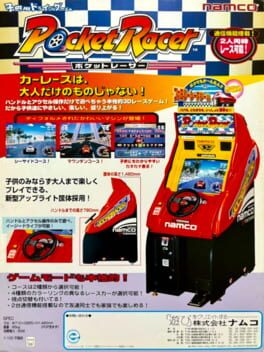
Pocket Racer
Pocket Racer is a spin-off arcade game released exclusively in Japan in 1996. Gameplay is near identical to the original Ridge Racer, but all the cars have instead been replaced with "super-deformed" Choro-Q-esque vehicles. A similar concept was included with Ridge Racer Revolution, titled Buggy Mode, which served as the inspiration for Pocket Racer.
- Released
- 31 December 1996
- Platforms
- Arcade
- Genres
- Racing
- Developers
- Namco
- Publishers
- Namco
- Modes
- Single-player
- Perspective
- First personThird person
- Themes
- Action
About
Ridge Racer is a 1993 racing video game developed and published by Namco for arcades. It is the first installment in Namco's Ridge Racer series. It was released initially on the Namco System 22 arcade system board and ported to the PlayStation home console in 1994. Ridge Racer was notable for being the first arcade video game with 3D texture-mapped graphics, with its System 22 hardware capable of texture mapping and Gouraud shading.
Development took eight months, and the game is based on a trend among Japanese car enthusiasts, which involves racing on mountain roads while drifting around corners. The first home version was released in Japan in 1994 as a launch title for the PlayStation; the versions for North America and Europe were released in 1995, also as a launch title for both regions. While an accurate conversion, its frame rate was halved to 30 per second (25 for PAL) due to PlayStation hardware limitations. Ridge Racer played a major role in establishing the new system and gave it an early edge over its nearest competitor, the Sega Saturn; it was considered a rival to Sega's Daytona USA.
Keywords
- drifting
- time trial
- checkpoints
- arcade cabinet
- car racing
- mountain
Media
The articlegameplay, story, development, reception
Gameplay
Players choose a course, a car, a transmission (automatic or six-speed manual), and a song. The cars' specifications vary: some have a high top speed, others have better acceleration or handling, and some present a balance of the three. Certain cars are named after other Namco games such as Solvalou, Mappy, Bosconian, Nebulasray, and Xevious. The racetrack can be observed from a first-person perspective or, for the PlayStation version, from a third-person perspective.
Namco's NeGcon controller can be used to play the game. Because Ridge Racer is an arcade-style racing game, collisions cause no damage, and merely slow the player down. There is a time limit, which ends the race if counted down to zero.
Development
At the Japan Amusement Machinery Manufacturers Association (JAMMA) 1992 Amusement Machine Show (AM Show) in Japan, held during 17–19 August, Namco debuted a racing game called SimRoad or Sim Drive for the Namco System 22 arcade system board. It was a sequel to Eunos Roadster Driving Simulator, a Mazda MX-5 driving simulation arcade game that Namco developed with Mazda and released in 1990. Its 3D polygon graphics stood out for the use of Gouraud shading and texture mapping. After a location test at the show, where it was previewed in the November issue of Electronic Gaming Monthly, SimRoad had a limited Japanese release in December 1992, but did not get a mass-market release. It served as a prototype for Ridge Racer.
Ridge Racer had a development cycle of eight months. The development team was under pressure to complete it before their rivals, and designer Fumihiro Tanaka commented that "the other company" (Sega) was in the same position. Ridge Racer was originally planned to be an F1 racing game, but the concept was replaced with one based on a trend among Japanese car enthusiasts at the time. Namco Bandai's general manager, Yozo Sakagami, explained that they liked racing on mountain roads and did not want to slow down around corners, so drifted around them instead.
Reception
In Japan, Game Machine listed Ridge Racer as the most successful upright/cockpit arcade game of November 1993. It went on to be the highest-grossing dedicated arcade game of 1994 in Japan. In North America, Play Meter listed Ridge Racer as the third most popular arcade game in February 1994. In the United Kingdom, it was London's top-grossing arcade game in early 1994.
Upon release in arcades, Ridge Racer received critical acclaim, particularly for its graphics and sound. Following its AM Show demonstration in August 1993, Edge magazine said that the game's custom-designed real-time texture mapping and rendering system pumps out the most photorealistic image ever seen in the arcades. He also said that Namco managed to put Virtua Racing from Sega firmly in the shade with the release of own title. RePlay magazine praised the graphics, calling it "the first" video game with "next-generation computer texture-mapping" graphics.
Releases by platformdates and regions as published
Games like this
 79
Toy Story Racer
2001 · Game Boy Color, PlayStation
Racing · Time trial
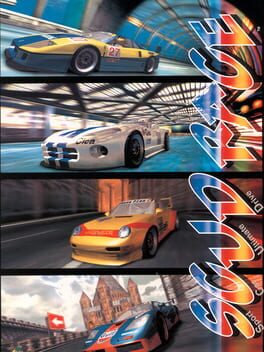
Scud Race
1996 · Arcade
Racing · Drifting

Thumb Drift
2016 · Android, iOS
Racing · Drifting
 PlayStation exclusive
Kaidō Battle 2: Chain Reaction
2004 · PlayStation 2
Racing · Drifting
 PlayStation exclusive
Wangan Trial
1998 · PlayStation
Racing · Drifting
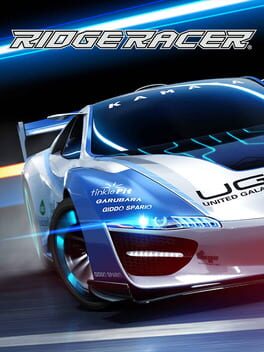 64
Ridge Racer
2011 · Nintendo Switch, PlayStation +4
Racing · Drifting
- PlayStation exclusive64
Ridge Racer
2011 · PlayStation Vita
Racing · Drifting
 PlayStation exclusive
Side By Side Special
1997 · PlayStation
Racing · Drifting
Collections2 collections
Publishers
- Namco gamesArcade-based games › Namco console-based systems
Genres
- Racing gamesList › 1990s
Description adapted from its source, CC BY-SA 4.0.