
The articlegameplay, story, development, reception
Gameplay
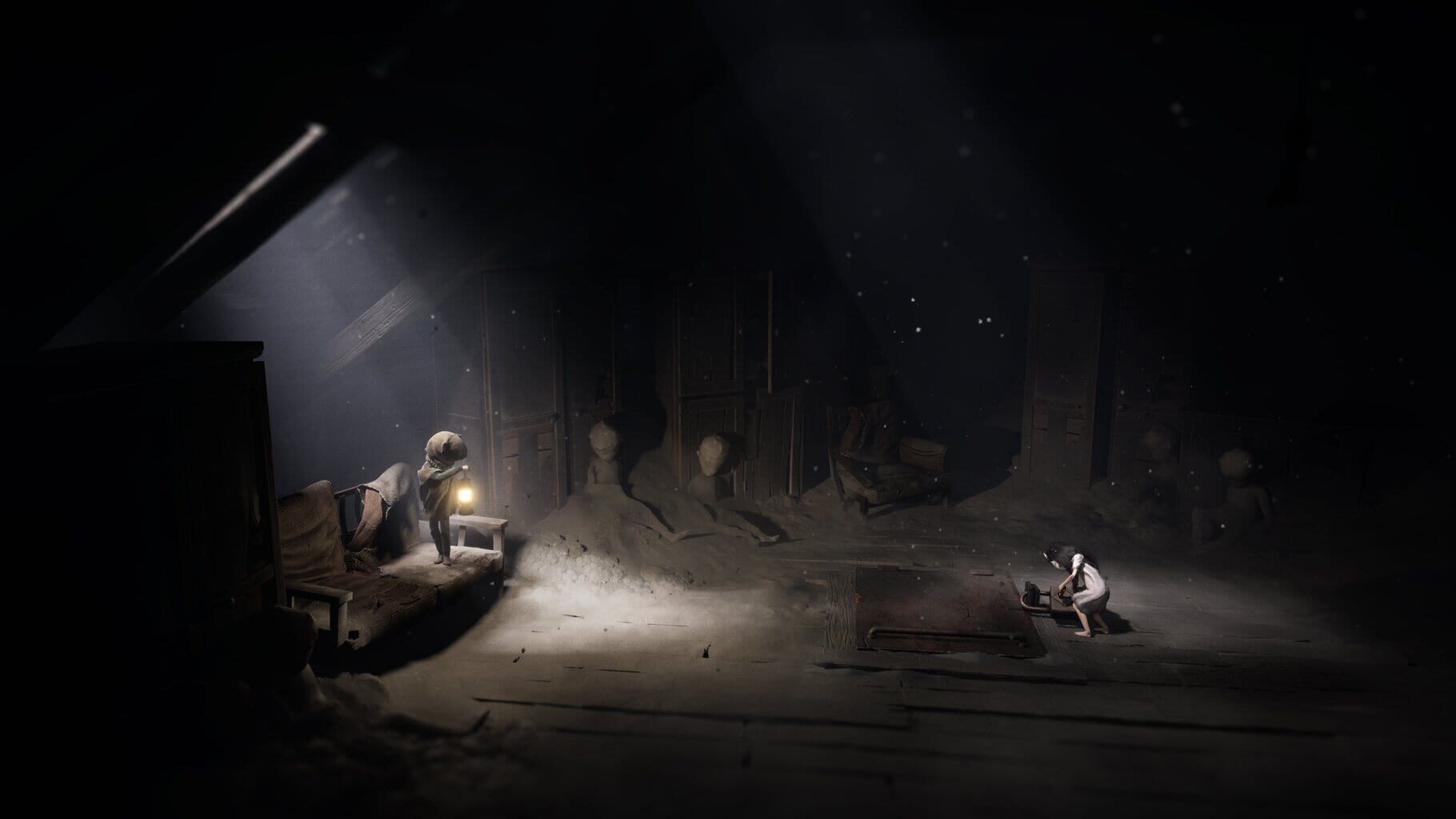
Reanimal is a survival horror game, stealth game, and a cinematic platformer. The player must explore the game's setting—a mysterious island beset by war, monsters, and flooding—escape, outsmart, and fight enemies, and solve various environmental puzzles in order to progress. They also have access to a boat, which enables them to explore locations off the critical path in a nonlinear manner. The game supports both single-player and two-player online or local cooperative multiplayer, with the first player controlling the Brother and the second controlling the Sister.
In single-player, the second companion is controlled by artificial intelligence. The game also has many collectibles in the form of posters that unlock concept art in the main menu, hats and masks that both characters can equip, and coffins that unlock a secret ending.
Story
The Boy, who wears a sack mask and noose around his neck, awakens at sea from a dream of himself, his sister, and their three friends peering down a well. He uses a speedboat to retrieve the Girl, his sister, who wears a white nightgown and rabbit mask. They pilot to shore and reach the island they lived in, which has heavily flooded and decayed and shows signs of war. Throughout their journey, the Girl suffers from stomach pains and has visions of a sheep at the bottom of the well from the Boy's dream, growing and eventually crawling out. They can also find five coffins that reveal shadowy figures when opened; the first four show the Boy and the three friends being killed, and the fifth shows a fleeing rabbit.
The siblings rescue their first friend Hood from Sniffer, a lanky, grotesque humanoid who can teleport by crawling in and out of corpses, and escape him and the living suits of skin made from his captured victims. As the group travels more of the island, they encounter the bloated, water-dwelling Boomers and witness their second friend, Bandage, being snatched by a monstrous pelican. The siblings follow it to a lighthouse, freeing Bandage and trapping the pelican in a burning barn. With one friend left to find, the four children head to a dilapidated orphanage.
Development
Reanimal was developed by Swedish company Tarsier Studios, the creator of the Little Nightmares series. After they were acquired by Embracer Group in 2019, the studio in 2021 announced that they will be working on a new intellectual property instead of continuing the series. Franchise owner Bandai Namco Entertainment entrusted Supermassive Games to develop Little Nightmares III, while Tarsier worked on Reanimal. The team considered Reanimal to be a spiritual successor to the Little Nightmares series, though it was designed to be "more terrifying" than its predecessors. The game is developed with Unreal Engine 5.
Unlike the Little Nightmare series, Reanimal utilizes a dynamic game camera that constantly keeps both characters in frame. The goal for the studio was to "maximise claustrophobia and tension" and created a shared sense of horror if players are playing the game cooperatively. Narratively, the game relies heavily on environmental storytelling, though both protagonists in the game are voiced. The team wanted to evoke both a sense of adventure and sense of dread, and they were inspired by games such as It Takes Two, The Legend of Zelda: The Wind Waker and Silent Hill 2.
Reception
Reanimal received "generally favorable" reviews, according to review aggregator website Metacritic. Review aggregator OpenCritic assessed that the game received strong approval, being recommended by 82% of critics. Shortly after launch, the game was review bombed on Steam due to players being frustrated that the Friend's Pass was then not available there. Several hours later, Tarsier Studios announced the Friend's Pass was now available on Steam.
Susanne Möller of Sveriges Television's Kulturnyheterna rated the game five out of five, calling it "really unpleasant in the best of ways" and a bit reminiscent of the films of Roy Andersson. She said it mixes grotesque evil with childlike innocence and uses the environment for storytelling that remains enigmatic. She said the camera is used cleverly to enhance the horror, but occasionally causes annoyance with its behaviour.


