
The articlegameplay, story, development, reception
Gameplay
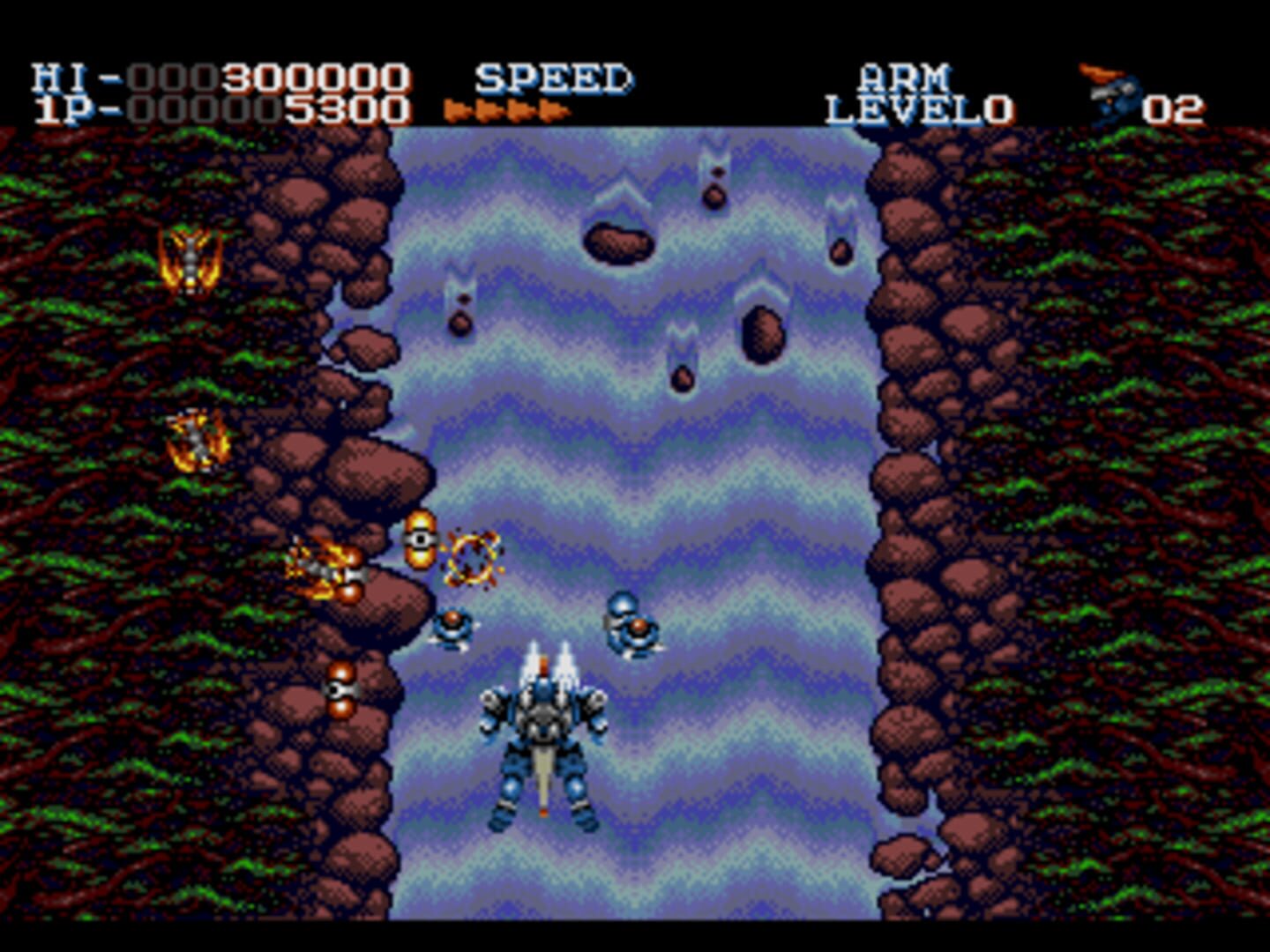
Robo Aleste follows the traditional vertically scrolling shooter style, with the player flying forward and enemies coming from the front, sides, and rear. At the end of each level is a boss, which the player must defeat to move on. Each boss is one of the enemy warlords. Like most scrolling shooters, there are several weapons which can be collected and powered up.
The main kunai shot and the three subweapons from Musha Aleste return, joined by new power levels for the main shot and a new subweapon. The sideship system has been completely redesigned: the player is always accompanied by two indestructible units, which also fire subweapons themselves. The ability to give the sideships commands has been replaced with a new subweapon that hits in many different directions. Additionally, the sideships can be launched at enemies.
Story
The plot of the game refers to the Sengoku era feudal Japan being given giant mecha. The player takes control of one such mecha, the Aleste, piloted by a man named Kagerou, as he fights other feudal lords.
Kagerou (Shadow) is the sole surviving member of Oda "Demon King" Nobunaga's robot ninja army, the White Fang. The Aleste is an 8-metre tall mechanized steam-powered mech. At the start of the game, Nobunaga's home is razed to the ground by Kurogane, who is a frequent end-of-level boss throughout the game and the older brother of Kagerou. Nobunaga survives, Kagerou defeats Kurogane and resumes his mission to bring down the anti-Oda alliance.
Reception
Robo Aleste garnered generally favorable reviews from critics. 0955 out of 10 in public polls taken by Mega Drive Fan and the Japanese Sega Saturn Magazine respectively. Famitsu's four reviewers found the game to be fun, feeling that it carried the same flow as other Aleste entries, but noted that the game's slow loading times was detrimental to its overall longevity. GameFan's four reviewers regarded it as one of the best shooters of 1993, lauding the visual presentation for making use of the Sega CD's hardware, audio, and fast action.
Mega's Neil West commended the animated cutscenes and CD-quality sound, but criticized its gameplay and in-game visuals, questioning its requirement of the Mega-CD add-on. MegaTech's Mark Holmes and Paul Glancey disagreed, giving positive remarks to the detailed graphics, sound, and addictive gameplay, but noted its difficulty and the presentation was seen as basic due to limited options and short level intermissions.


