

- 78/100
- Players34 ratings
More scores
- Metacritic usersuser score
- 85/100
- GameFAQsJust Right
- 3.64/5
- Player reviews
- 93% positive860 reviews
- Steam Deck
- Playable
- Runs on
- Windows, Mac, Linux
- Price
- US$5.99
Where to get it
1999 · Adventure · Role-playing
Silver
Sega console exclusive
An RPG set in a medieval land where all the women have been kidnapped and it is up to you to get them back. What starts as a mission to save the women soon turns into a battle against good and evil to the death.
- Released
- 31 August 1999
- Platforms
- DreamcastLinuxWindowsmacOS
- Genres
- AdventureRole-playing
- Developers
- —
- Publishers
- Suntendy Interactive Multimedia Co.,Ltd.
- Modes
- Single-player
- Perspective
- Bird view / IsometricText
- Themes
- ActionFantasy
- Country
- United Kingdom
- Age ratings
- ESRB TCLASS_IND 16USK 12
- Languages
- English, French, German, Italian, Portuguese (Brazil), Russian
- Time to beat
- 13hmain story16hcompletionist
About
Silver is a 1999 video game developed and published by Infogrames for Microsoft Windows and Mac OS, and ported by Spiral House to the Dreamcast in 2000. The game is a fantasy-themed action-roleplaying game where players lead the protagonist David in a small party of three to defeat the tyrannical sorcerer Silver, who has kidnapped his wife Jennifer. The game features three-dimensional graphics and is presented in a top-down perspective, with prerendered backgrounds. The developers aimed to create an engaging combat system, in which players command attacks using the direction of the computer mouse or analog stick, and focused on real-time combat in contrast to the turn-based design of console role-playing games of the time. Prior to release, the game received pre-release anticipation that the title could become a competitor with Japanese role-playing games, including the Final Fantasy series, and fill a gap in the catalog of role-playing games available on the Dreamcast.
Upon release, Silver received mixed reviews, with critics praising the combat system, environment design and audio. However, many critics felt that the execution of gameplay elements led to frustration, including the game's party management during combat, location-based save system, and map design. The performance of the development team prompted the publisher to support them to found an independent studio, Spiral House, to create ports of Infrogrames titles for other systems. A sequel to Silver was briefly developed by Spiral House, but discontinued.
›Story
The evil sorcerer Silver kidnaps women from all over Jarrah to choose a new wife. David, whose wife was among the kidnapped women, joins the rebels and embarks on a quest to find the eight magic orbs and defeat Silver once and for all. During his adventures, he meets several people who help him and might even agree to fight by his side.
Players say
Media
The articlegameplay, story, development, reception
Gameplay
The objective of gameplay is to explore the game world to collect eight orbs throughout the game world to gain the power to defeat the sorcerer Silver. Controlling up to three characters, players can recruit various characters they meet throughout the game into their team. Players navigate and use items with point-and-click interaction on the PC and the controller on the Dreamcast. An icon-based pie menu providing access to the character options, inventory, items, and special moves on both systems.
In the PC version, party members can be selected individually or all together, and players can change freely between them at any time. The Dreamcast version features control of one character at a time only. The game simplifies role-playing game mechanics, with two stats for hit points for health and magic points to cast spells. Player statistics and levels increment automatically when progressing the plot by defeating a boss, requiring no player input or use of experience points.
Story
Silver is set in the island region of Jarrah, which is ruled by the tyrannical sorcerer Silver from his fortress, Metalon. The story follows David, a young man living peacefully in the Forest of Verdante with his wife Jennifer and his grandfather. When Silver decides to take a new bride, his forces abduct women across Jarrah, and Jennifer is captured by Silver's son, Fuge. David and his grandfather pursue her but arrive too late to rescue her, learning instead of a growing resistance movement opposing Silver's rule. Their journey soon turns tragic when Fuge murders David's grandfather and reveals his role in the death of David's father, leaving David to continue on his quest alone.
David joins the resistance, which seeks to overthrow Silver, but repeatedly fails to intercept the ship carrying the captured women. An ancient prophecy reveals that Silver can only be defeated using eight magical spheres, each tied to a different aspect of Jarrah and hidden across the islands. David and his allies travel through a variety of hostile regions, including frozen caverns, underwater ruins, and corrupted cities, to recover the spheres, often battling powerful guardians. As the quest progresses, Silver's forces strike back, and the resistance is nearly destroyed by a trap orchestrated by Fuge. David eventually confronts and kills Fuge, rescuing the captured resistance leader and stabilizing what remains of the group.
Development
Silver was developed by the United Kingdom division of Infogrames, based in Manchester. Development of Silver commenced in 1995, and was conceived by Warren Lancashire, who left the project early in development. Producer Lee Claire was hired by Infogrames twelve months into development, supported by a 25-person team consisting of former members of Ocean Software acquired by the company, including lead programmer Bobby Earl, lead environment designer Jack Wikeley, and lead character designer Christian Johnson. Clare stated the real-time combat design was made as a response to turn-based which seemed "naturally the next step away from turn-based RPGs of the time", including console releases in the Final Fantasy and Phantasy Star series.
The developers originally explored turn-based combat, with Wikeley stating that it "soon became apparent this didn't make for exciting gameplay". The visual design of Silver was inspired by Dune II and Heart of Darkness. The game's environment design features 3D characters, with all backgrounds prerendered using 3D Studio software. Claire recounted that the team was under a "lot of pressure" from Infrogrames to publish Silver by Christmas 1999, despite lacking the staff to script levels in the time available.
Reception
Pre-release reception of Silver was positive. Preview coverage widely compared the game to Final Fantasy, and was purported to be a Western killer competitor for the series, with Edge stating the game featured "epic proportions usually expected from Japanese games of this kind". The developers stated games such as Final Fantasy VII had been released after development commenced and similarities to the series were only coincidental. Critics also praised the scope of the game's locations, its visual design and combat control scheme.
Pre-release coverage for the Dreamcast also highlighted it filled a gap of few role-playing video games for the system. IGN was impressed by the ECTS preview, praising the graphics and sound as "polished", and considering the real-time combat would "appeal to those who want a little more swing in their combat". Describing the game as visually "on course to be the best-looking RPG to date", Chris Anderson of PC Zone expected that Western players "will surely take to real-time combat more readily than to the sometimes tedious turn-based action typical of games in this genre". Total Control praised the real-time combat and visual presentation, although cautioned that the game's simpler design may not appeal to computer computer role-playing game players and games in this style had not been as successful on the platform.
Releases by platformdates and regions as published
Games like this
 78
Sunday Gold
2022 · Windows
Adventure · Role-playing
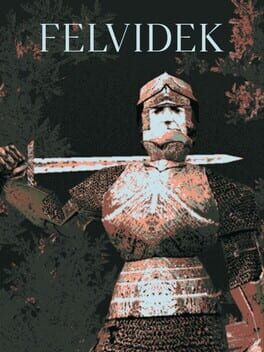 90
Felvidek
2024 · Windows
Role-playing · Dark fantasy
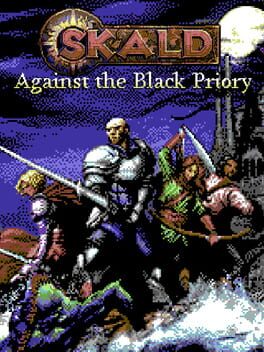 83
Skald: Against the Black Priory
2024 · Windows, macOS
Adventure · Role-playing
 Nintendo exclusive79
Dungeons of Dreadrock
2022 · Android, Nintendo Switch +2
Adventure · Role-playing
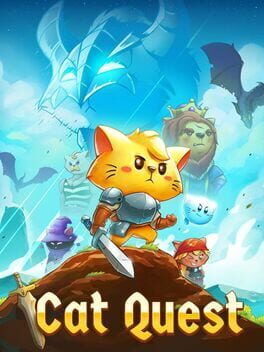 77
Cat Quest
2017 · Android, Linux +5
Adventure · Role-playing
 74
Cookie Run: Kingdom
2020 · Android, iOS
Role-playing · Often paired
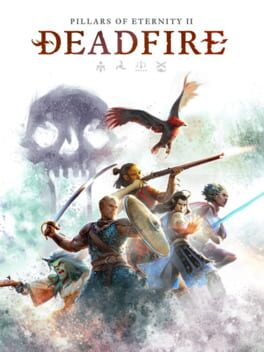 84
Pillars of Eternity II: Deadfire
2018 · Linux, Nintendo Switch +4
Adventure · Role-playing
 Sega exclusive87
Golvellius
1988 · MSX, Master System +1
Role-playing · Often paired
Collections1 collection
Platform libraries
- Dreamcast gamesLicensed games
Description adapted from its source, CC BY-SA 4.0.