
The articlegameplay, story, development, reception
Gameplay
Sonic the Hedgehog 2 is a side-scrolling platform game. It features a story similar to the first Sonic the Hedgehog: Doctor Robotnik, a mad scientist, seeks the Chaos Emeralds to power his space station, the Death Egg, and traps the animal inhabitants of West Side Island in aggressive robots. As Sonic the Hedgehog, the player embarks on a journey to collect the Chaos Emeralds and stop Robotnik. The player character can run, jump, crouch, and attack by curling into a ball.
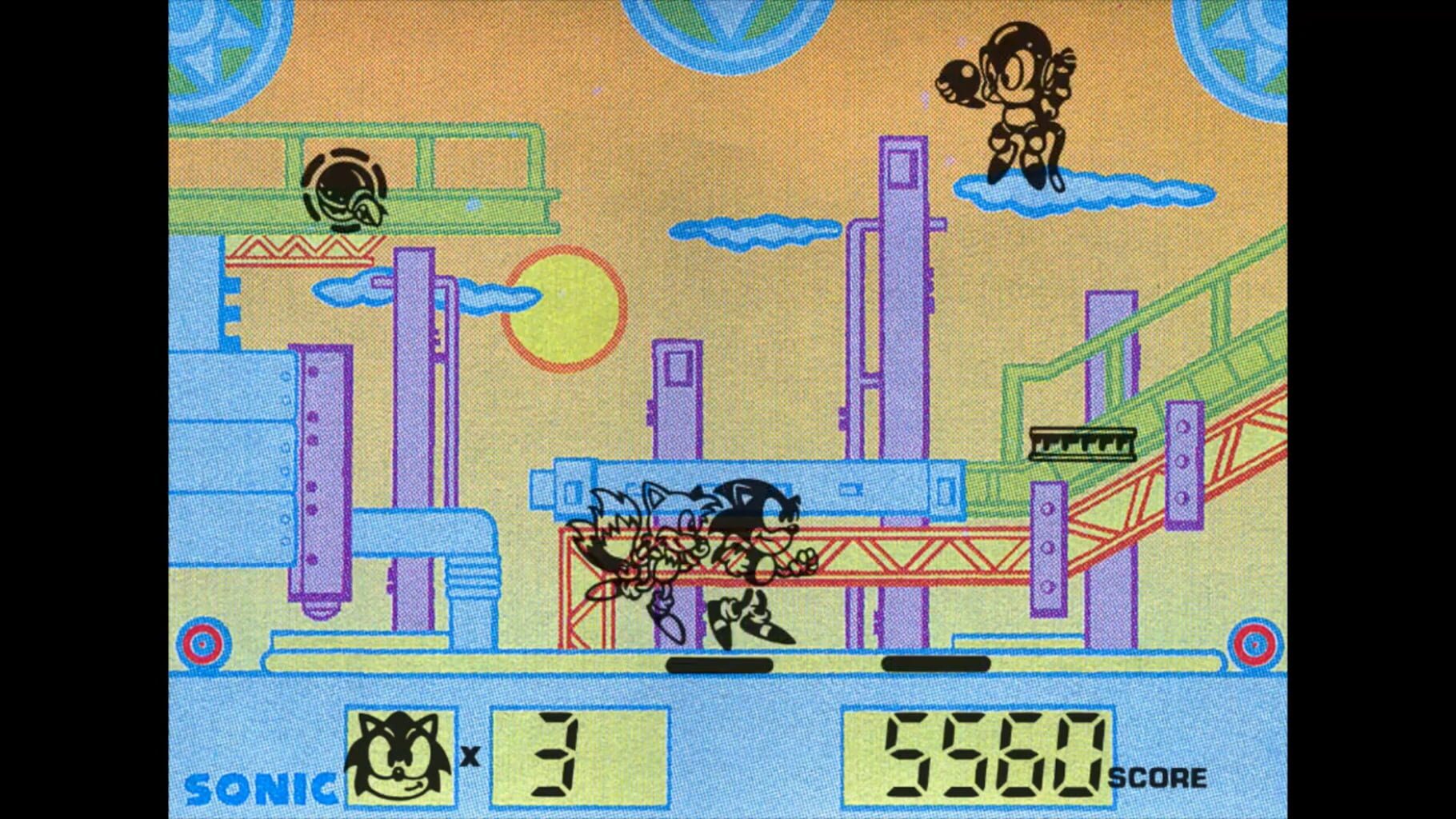
Sonic 2 introduces the spin dash, which allows the player to curl while stationary for a speed boost, and Miles "Tails" Prower, a fox with two tails who acts as Sonic's sidekick. In the default single-player game mode, the player controls Sonic and Tails simultaneously; a second player can join in at any time and control Tails separately. The player can also choose to play as Sonic or Tails individually.
Development
The original Sonic the Hedgehog was published by Sega for the Sega Genesis in June 1991. It was developed by Sonic Team, led by the programmer Yuji Naka, the artist Naoto Ohshima, and the designer Hirokazu Yasuhara. Sonic greatly increased the Genesis's popularity in North America and is credited with helping Sega gain 65% of the market share against then-industry leader Nintendo, making Sega a formidable competitor. After the release, the team disbanded: Naka quit Sega due to disagreements over his salary, dissatisfaction over the time and effort it had taken to finish Sonic, and a lack of support from management, while Yasuhara moved to America to join Mark Cerny's California-based Sega Technical Institute (STI).
Cerny had established STI during the development of Sonic the Hedgehog because Sega wanted to develop more games in America. His aim was to establish an elite studio that would combine the design philosophies of American and Japanese developers. During a trip to Japan, Cerny visited Naka's apartment, listened to the reasons why he left, and convinced him to join STI in America to fix the problems he had with Sega in Japan. Other members of the Sonic development team joined Naka. Ohshima stayed in Japan to work on Sonic CD (1993), so Yasushi Yamaguchi replaced him.
Reception
Sonic the Hedgehog 2 received acclaim. Numerous critics considered it better than the first Sonic. Electronic Gaming Monthly (EGM) wrote that it could "best be described with a lot of 2s", being twice as long and fun as its predecessor. Reviewers noted Sonic 2 was similar to Sonic the Hedgehog in appearance and gameplay.
The similarities did not bother Electronic Games, which said the level variety and multiplayer made it an improvement, but Mega and GamesMaster considered them a detriment. In particular, GamesMaster felt that Sonic 2 was just more of Sonic the Hedgehog and did not improve much.
Legacy
Sonic 2 was a major factor in keeping Sega competitive during the console wars of the 16-bit era in the early 1990s, and GameSpot and IGN described it as the game that solidified Sonic as a major franchise. It boosted Genesis sales enough to nearly equalize Sega with Nintendo and cemented Sonic as a video game mascot on par with Nintendo's Mario. Further, the Sonic 2sday promotion has been credited for originating the concept of the "street date" in the video game industry, in which games are made available worldwide in all stores on the same day. The practice was uncommon before Sonic 2's release and became a widespread industry trend in the following years.
Sonic 2 introduced many elements that defined the Sonic franchise. Game Informer wrote that it "expanded the formula in myriad ways, giving Sonic new moves like the spin-dash, bigger stages to explore with more branching paths, and more inventive boss battles." USGamer said that much of the series' most-loved elements originated in Sonic 2 with the introduction of Tails, Super Sonic, and casino levels. Tails became one of the most popular Sonic characters; according to Nilsen, Sega found that Tails was as popular as Sonic because he received nothing but praise through its 800 number phone line. Tails starred in two spin-offs, Tails Adventure and Tails' Skypatrol, for the Game Gear in 1995.


