The articlegameplay, story, development, reception
Development
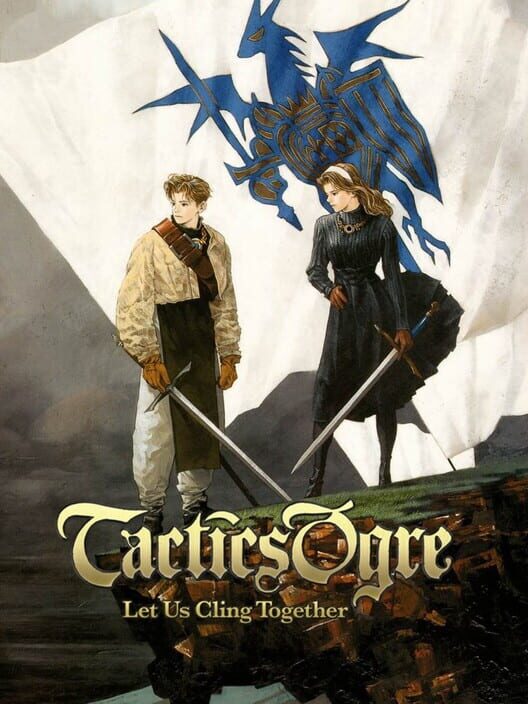
The original Tactics Ogre was developed by Quest Corporation as part of the Ogre Battle series, directly following the success of Ogre Battle: March of the Black Queen. Production was led by series creator Yasumi Matsuno, who acted as director, writer and designer. Following the release of Tactics Ogre, Matsuno and a number of staff members moved to Square (predecessor of Square Enix) and developed Final Fantasy Tactics (1997), going on to develop multiple titles in its universe of Ivalice. Quest Corporation continued production on the Ogre Battle series until it was purchased and absorbed into Square following the release of Tactics Ogre: The Knight of Lodis (2002). Matsuno remained at the company until 2005, when he left during the production of Final Fantasy XII citing ill health.
Concept work for a remake of Tactics Ogre began in May 2007 at Square Enix following the release of Final Fantasy Tactics: The War of the Lions, an updated port of Final Fantasy Tactics for the PSP. A remake had been demanded both by fans and staff, with Square Enix approving it when suggested by Hiroshi Minagawa, one of the original game's artists. At this early stage, it was to be a faithful remake with minimal changes. Minagawa wanted to reassemble as much of the original staff as possible for the project.
This included bringing back Matsuno, who by this time was working in a freelance capacity with Sega and PlatinumGames on MadWorld. Matsuno initially refused, but when Minagawa changed the plan so the remake would include changes for modern audiences, he agreed to join the project. Minagawa described Matsuno's presence on the remake's development team as "essential".
Minagawa took on the role of director. His main role was to organize the in-house staff and coordinate with the team divisions. Matsuno returned as designer and writer. Other returning staff included original artist Akihiko Yoshida, and composers Hitoshi Sakimoto and Masaharu Iwata.
Matsuno played a role in gathering the original staff after coming on board. It took a year to get all the staff together for the project and ensure their schedules were free, then three years to develop the game. It was produced by Eisuke Yokoyama, who had previously worked on Final Fantasy XII: Revenant Wings. The programmer was Takashi Katano.
Alongside the returning staff members, the team included people who had worked on Ogre Battle 64: Person of Lordly Caliber and Tactics Ogre: The Knight of Lodis, some who had worked on the Final Fantasy Tactics series, and staff members completely new to the series. Minagawa commented that the new staff members, fans of the original game, remembered the smaller details better than the original developers. The "compact" nature of the team allowed small detailed adjustments to the game without causing problems.
Rather than describing it as a remake or a remaster, Matsuno defined the remake as a "re-imagining" of the original title. The PSP was chosen as the game's platform to provide an "intimate" viewing experience, and to give players with busy lives easy access to it. The gameplay was rebalanced compared to the original, increasing the party size, adding new recruitable characters, altering weapon statistics, and reworking the class system to be both more varied and be independent of units to allow for continued use after a unit's death. The developers included additional tutorial information compared to the original, but incorporated it contextually so it was not forced on players while also allowing genre beginners to enjoy the game. Character recruitment was also rebalanced, although it ended up being more difficult than in the original.
During the second half of production, the Chariot and World systems were added in at Matsuno's suggestion, giving players more freedom to both rectify mistakes and play other story routes. The Chariot system was meant as a tool for beginners, but the gameplay was adjusted so there was a random element that would alter the actions of enemies, preventing players from exploiting the system. This also carried over into any attempts by players to use save states, preserving the general challenge. An early plan was for players to be able to go back 100 moves in the Chariot system, but was deemed too generous and reduced to the final count of fifty. Minagawa felt that he and Matsuno were able to include almost everything they wanted to, comparing it to an omnibus edition of the original game.
While keeping the graphics faithful to the Super Famicom original, the team stopped short of making the game look "cheap" by reproducing the graphics without any updates. The increased resolution and hardware specifications of the PSP allowed the UI displays to be expanded, and the text to be redone for legibility. The fields and stages were rebuilt in 3D, with 2D character sprites overlaid and painted to appear like classic pixel art. The artwork was managed by Yoshida, but much of the character art and other artistic elements were reworked by Tsubasa Masao, an artist known for his work on Metal Gear Acid and Final Fantasy: The 4 Heroes of Light.
Masao's work focused on redesigning the characters while retaining recognizable features from their original designs, including facial features and general clothing. Minagawa also helped with the art design.
While the original game featured 300,000 characters of writing, the remake's expansions pushed this number to over 700,000, more than the script for Final Fantasy XII. In addition to new work, Matsuno was also able to rewrite his earlier work. He wrote the additions to the main scenario himself, but due to the volume of work he created rough scenarios for a team of writers to work on for side content, doing small rewrites where necessary. The team included Kazuhiro Kataoka, who had worked on Ogre Battle 64; Yuichi Murasawa and Kyoko Kitahara, who had written both Tactics Ogre: The Knight of Lodis and titles within the Ivalice series; Motoharu Tanaka, who
Reception
Upon its debut in Japan, the remake reached the top of game charts, recording sales of over 176,000 units during the first week. It had a sell-through rate of roughly 65%. By the end of 2010, it was the 48th best-selling game of the year, with sales of over 257,000 units. In North America during February 2011, it was the top-selling PSP title in the region according to data collected by The NPD Group.
Speaking in April, Matsuno described the game as a commercial success. Tactics Ogre: Reborn was the highest selling physical game during its first week of release in Japan, moving 36,783 units on Switch, 12,668 units on PlayStation 4, and 7,805 units on PlayStation 5 for an opening week total of 57,256 retail copies sold.
On review aggregator website Metacritic, Tactics Ogre received a score of 87 points out of 100 based on 49 critic reviews. It was named as the "Best PSP Exclusive" by GamesRadar during their 2011 Platinum Chalice Awards. In GameSpot's Best of 2011, it was awarded "Best Remake".
Japanese gaming magazine Famitsu principally gave praise to the gameplay additions and greater accessibility for casual players. com, awarded the website's highest score, lauding the gameplay additions and technical superiority compared to the earlier PlayStation port and citing it as a masterpiece despite potential problems with lowered difficulty. Eurogamer's Simon Parkin noted the size and occasional difficulty spikes in Tactics Ogre as potential negatives, but otherwise praised it as a good remake. Adam Beissener of Game Informer enjoyed the game overall, but felt some of the alterations had padded character progression.
GameSpot's Kat Bailey called it "the best tactical RPG available on the PSP today", giving praise to much of its content and design. GamesRadar's Nathan Grayson praised the title as mechanically superior to many later titles in the genre, additionally noting the remake's additions which allowed it to be enjoyed by younger players.
GameTrailers enjoyed the expansions to the narrative and gameplay, praising it for the breadth of content for players. Patrick Kolan of IGN was very positive about the expansions and how well the original gameplay held up, but found the interface difficult to manage, an issue made more evident by the amount of unit management required. Kimberley Ellis of PALGN held the game up as an example for good remakes, praising it as a solid genre entry for the platform despite small issues with its interface and battery life. Ryan King of Play noted a lack of innovative features in its story and gameplay, but praised it as "one of the most competent, solid, well-put-together J-RPGs you will ever play", comparing it to a compressed refinement of its genre.
RPGamer's Zach Welhouse gave general praise to the game and its additions, additionally noting the localization, but disliked the graphics and noted issues with its story delivery undermining some of the major plot developments. Bryan Grosnick of RPGFan cited it as an excellent game for the hardcore genre fan, noting its nostalgic approach to the original alongside its additions, but faulting the slow pace of its battles.
The narrative was praised and positively compared to Matsuno's other work, though King criticised it for a lack of innovation within its genre, and Ellis found the writing style made the story progress slow despite strong narrative payoffs. The gameplay saw general praise for its enjoyability, balance and depth compared to many later titles and series. The lowered difficulty compared to the original was a common point of commentary, mainly praising but also noting that hardcore fans might dislike the change, but still noting high challenge. The artificial intelligence was also noted for erratic behavior, and there was criticism for the minimal integration of multiplayer.
Several outlets praised it as a technically superior English version to the earlier PlayStation release. The additions of the World and Chariot systems were praised for the expansions brought to the game. The graphics were seen as faithfully recreated if lacking spectacle compared to other titles on the platform, while the music saw generally positive responses.