
The articlegameplay, story, development, reception
Gameplay
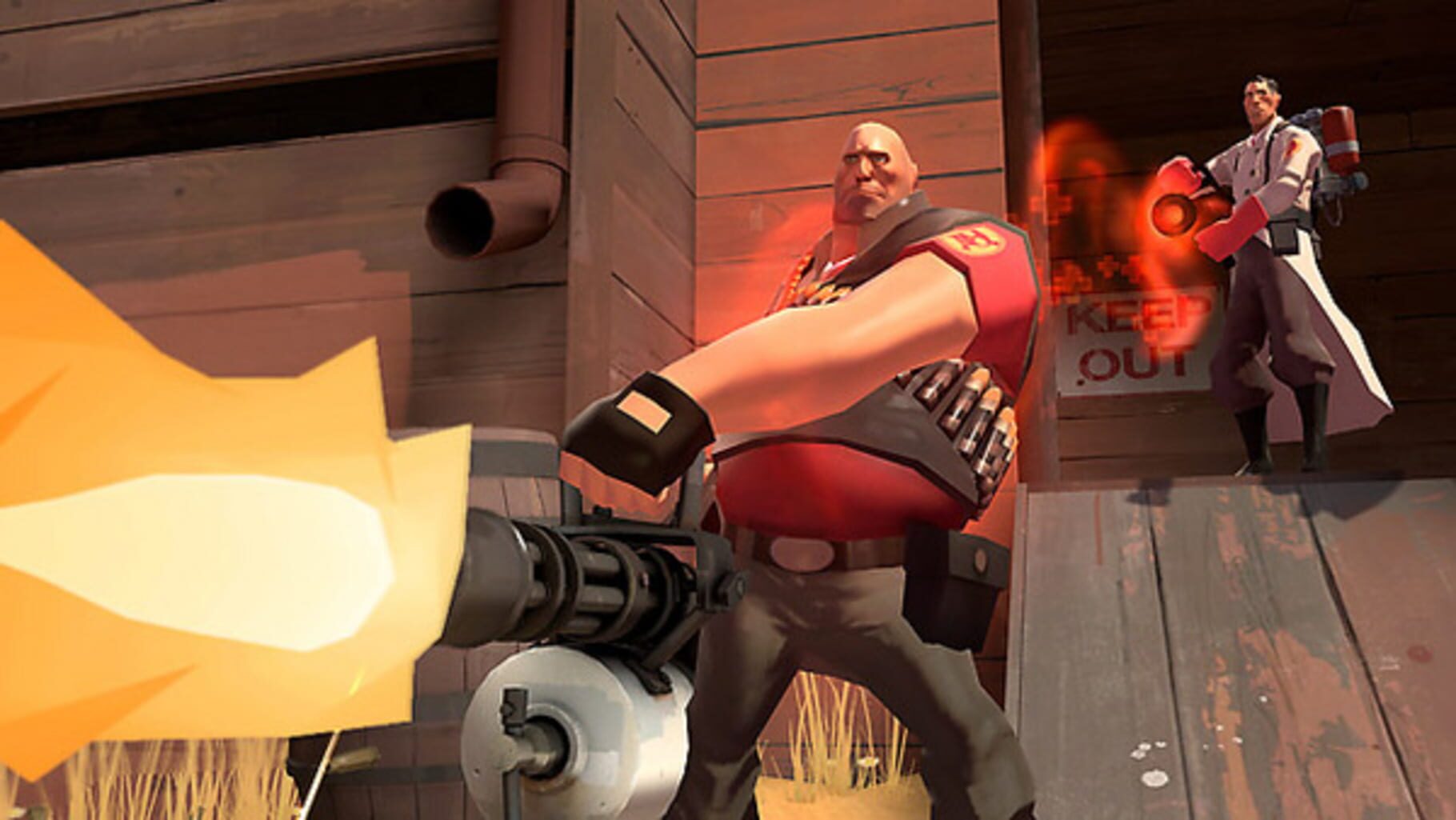
In most game modes, two teams, RED (Reliable Excavation and Demolition) and BLU (Builders League United), compete for a combat-based objective. Players can choose to play as one of nine character classes in these teams, each with its own unique strengths, weaknesses, and weapon sets (additional weapons can be obtained via periodic free item drops, achievements, crafting, unboxing, or direct purchase from the in-game store). In order to accomplish objectives efficiently, a balance of these classes is required due to how these strengths and weaknesses interact with each other in a team-based environment. Random critical hits cause some weapons' base damages to occasionally triple.
Although the abilities of a number of classes changed from earlier Team Fortress incarnations, the basic elements of each class remained, those being one primary weapon, one secondary weapon, and one melee weapon. The game was released with six official maps, although over one hundred maps have since been included in subsequent updates, including community-created maps. When a player chooses a game-mode for the first time, an introductory video is played, showing how to complete its objectives. During matches, the Administrator, voiced by Ellen McLain, announces the teams' current objectives over loudspeakers.
The player limit for one match is 16 on the Xbox 360 and PlayStation 3, and was initially 24 on the Windows edition. In 2008, the Windows edition was updated to include a server variable that allows for up to 32 players, and a 2023 update increased the server maximum to 100 players.
Team Fortress 2 is the first of Valve's multiplayer games to provide detailed statistics for individual players, such as the total amount of time spent playing as each class, most points obtained, and most objectives completed in a single life. Persistent statistics tell the player how they are performing in relation to these statistics, such as if a player comes close to their record for the damage inflicted in a single round. Team Fortress 2 also features numerous achievements for carrying out certain tasks, such as achieving a certain number of kills or completing a specific objective. Sets of class-specific achievements have been added in updates, which can award weapons to the player upon completion. This unlockable system has since been expanded into a random drop system, with which players can also obtain items simply by playing the game.
==== Core game modes ====
Team Fortress 2 contains five core game modes.
Attack/Defend (A/D) is a timed game mode in which the BLU team's goal is to capture RED's control points. The number of control points varies between maps, and the points must be captured by the BLU team, usually in sequence. To capture a control point, a player must stand on it for a certain amount of time, with more players increasing the speed it is being captured at. RED, who cannot capture points, must prevent BLU from capturing all the control points before the time-limit expires. Once a point is captured, the time-limit will be extended by several minutes.
Capture the Flag (CTF) is a mode in which RED and BLU must steal the opposing team's flag (an intelligence briefcase) and prevent their own intelligence from being stolen. When the intelligence is dropped by the carrier, it will stay on the ground for 1 minute before returning to its original location if it is not picked up again. A team's intelligence can be carried only by the opposing team. The first team to capture the enemy's intelligence three times wins.
Control Points (CP) is a timed game mode where there are several control points placed around the map, with three (3CP) or five (5CP) control points in total depending on the map. The game will start off with only the middle control point being available for capture, with the other control points split equally among both teams. Once this middle control point is captured, a team can begin capturing the enemy team's points in respective order. The time limit is extended on the capture of a control point by either team. For a team to win, they must capture all the control points within the time limit.
King of the Hill (KOTH) is a timed game mode that contains a single control point at the middle of the map that can be captured by both RED and BLU. Should the opposing team capture the point from the team that had it before, their timer will stop and the opposing team's timer will begin or resume. The point can be recaptured by each team as many times as is possible. The first team to control the point for 180 seconds (not necessarily continuous) wins.
Payload (PL) is a timed game mode where BLU must push an explosive cart along a track, while RED must prevent the cart from reaching their base. To push the cart, at least one BLU player must be in range of the cart, with more players increasing the push speed. Maps have multiple 'checkpoints' along the track; each checkpoint reached by the cart awards the BLU team with additional time. If the cart is not pushed by BLU for some time, it will begin to roll back to the last achieved checkpoint. RED players can obstruct the cart from being pushed by being within range of it.
==== Alternative game modes ====
There are several alternative game modes in Team Fortress 2. These modes consist of a small number of maps and detach from the core game modes in some way.
Arena is a special game mode in which players do not respawn upon death. A team can win either by eliminating all opposing players, or by claiming a single capture point that opens after a certain time has elapsed. This mode is currently unavailable through matchmaking, but is still accessible through community servers.
Mannpower is a mode in which players have access to a grappling hook and assorted power-ups laid around the map that grant unique abilities. While not bound to any specific mode, all current official Mannpower maps use a variation of Capture the Flag. In Mannpower's variation of Captu
Development
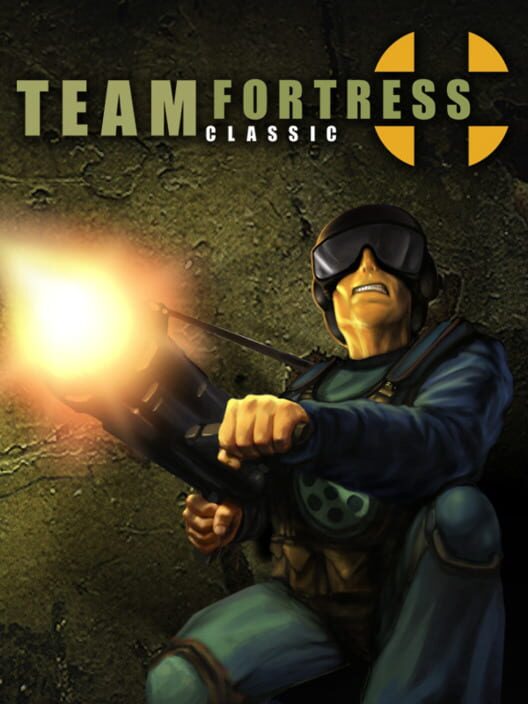
The original Team Fortress was developed by the Australian team TF Software, comprising Robin Walker and John Cook, as a free mod for the 1996 PC game Quake. In 1998, Walker and Cook were employed by Valve, which had just released its first game, Half-Life. Valve began developing Team Fortress 2 as an expansion pack for Half-Life using Valve's GoldSrc engine, and gave a release date for the end of the year. In 1999, Valve released Team Fortress Classic, a port of the original Team Fortress, as a free Half-Life mod. Team Fortress Classic was developed using the publicly available Half-Life software development kit as an example to the community and industry of its flexibility.
Valve originally planned Team Fortress 2 to have a modern war aesthetic. It would feature innovations including a command hierarchy with a Commander class, parachute drops over enemy territory, and networked voice communication. The Commander class played similarly to a real-time strategy game; the player viewed the game from a bird's-eye perspective and issued orders to players and AI-controlled soldiers. The Commander class was eventually abandoned because players would simply disobey the orders.
Team Fortress 2 was first shown at E3 1999 as Team Fortress 2: Brotherhood of Arms, where Valve showcased new technologies including parametric animation, which blended animations for smoother, more lifelike movement, and Intel's multi-resolution mesh technology, which dynamically reduced the detail of distant on-screen elements to improve performance. The game earned several awards including Best Online Game and Best Action Game.
In mid-2000, Valve announced that Team Fortress 2 had been delayed for a second time. They attributed the delay to development switching to its new in-house engine, Source. Following the announcement, Valve released no news on the game for six years. Walker and Cook worked on various other Valve projects; Walker was project lead on Half-Life 2: Episode One and Cook worked on Valve's content distribution platform, Steam.
Team Fortress 2 became a prominent example of vaporware, a long-anticipated game that had seen years of development, and was often mentioned alongside another much-delayed game, Duke Nukem Forever. Walker said that Valve built three or four different versions of Team Fortress 2 before settling on their final design. Shortly before the release of Half-Life 2 in 2004, Valve's marketing director, Doug Lombardi, confirmed that Team Fortress 2 was still in development.
Valve reintroduced Team Fortress 2 at the EA Summer Showcase event in July 2006. Departing from the realistic visual design of other Valve games, Team Fortress 2 features a cartoon-like visual style influenced by 20th-century commercial illustrations and the artwork of J. C. Leyendecker, Dean Cornwell, and Norman Rockwell, achieved through Gooch shading.
The game debuted with the Source engine's new dynamic lighting, shadowing, and soft particle technologies alongside Half-Life 2: Episode Two. It was the first game to implement the Source engine's new facial animation features. Valve abandoned the realistic style when it became impossible to reconcile it with the unrealistic gameplay, with opposing armies having constructed elaborate bases directly adjacent to each other.
Valve designed each character, team, and equipped weapon to be visually distinct, even at range; for example, the coloring draws attention to the chest area, bringing focus on the equipped weapon. The voices for each of the classes were based on imagining what people from the 1960s would expect the classes to have sounded like, according to the writer Chet Faliszek.
The map design has an "evil genius" theme with archetypical spy fortresses, concealed within inconspicuous buildings such as industrial warehouses and farms to give plausibility to their close proximities; these bases are usually separated by a neutrally themed space. The bases hide exaggerated super weapons such as laser cannons, nuclear warheads, and missile launch facilities, taking the role of objectives. The maps have little visual clutter and stylized, almost impressionistic modeling, to allow enemies to be spotted more easily. The impressionistic design approach also affects textures, which are based on photos that are filtered and edited by hand, giving them a tactile quality and giving Team Fortress 2 its distinct look.
The bases are designed to allow players to know immediately where they are. RED bases use warm colors, natural materials, and angular shapes, while BLU bases use cool colors, industrial materials, and orthogonal shapes.
During the July 2006 Electronic Arts press conference, Valve revealed that Team Fortress 2 would ship as the multiplayer component of The Orange Box. A conference trailer showcasing all nine of the classes demonstrated for the first time the game's cartoon-like visual style. Valve's president, Gabe Newell, said that the team's goal was to create "the best-looking and best-playing class-based multiplayer game". A beta release of the entire game was made on Steam on September 17, 2007, for customers who had pre-purchased The Orange Box, who had activated their Black Box coupon, which was included with the ATI HD 2900XT Graphics cards, and for members of Valve's Cyber Café Program.
Team Fortress 2 was released on October 10, 2007, both as a standalone product via Steam and at retail stores as part of The Orange Box compilation pack, priced at each gaming platform's recommended retail price. The Orange Box also contains Half-Life 2, Half-Life 2: Episode One, Half-Life 2: Episode Two, and Portal. Valve offered The Orange Box at a ten percent discount for those who pre-purchased it via Steam before the October 10 release, as well as the opportunity to participate in the beta test.
Since the release of Team Fortress 2, Valve has continually released free updates and patches through Steam for Windows, macOS, and Linux users; though most patches are used f
Reception
Team Fortress 2 received widespread critical acclaim, with overall scores of 92/100 "universal acclaim" on Metacritic. Many reviewers praised the cartoon-styled graphics, and the resulting light-hearted gameplay, and the use of distinct personalities and appearances for the classes impressed a number of critics, with PC Gamer UK stating that "until now multiplayer games just haven't had it". Similarly, the game modes were received well, GamePro described the settings as focusing "on just simple fun", while several reviewers praised Valve for the map "Hydro" and its attempts to create a game mode with variety in each map. Additional praise was bestowed on the game's level design, game balance and teamwork promotion. Team Fortress 2 has received several awards individually for its multiplayer gameplay and its graphical style, as well as having received a number of "game of the year" awards as part of The Orange Box.
Although Team Fortress 2 was well received, its removal of class-specific grenades, a feature of previous Team Fortress incarnations, was controversial amongst reviewers. IGN expressed some disappointment over this, while conversely, PC Gamer UK approved, stating "grenades have been removed entirely—thank God". Some further criticism came over a variety of issues, such as the lack of extra content such as bots (although Valve has since added bots in an update), problems of players finding their way around maps due to the lack of a minimap, and some criticism of the Medic class being too passive and repetitive in its nature. The Medic class has since been re-tooled by Valve, giving it new unlockable weapons and abilities.
Team Fortress 2 was nominated in the categories of "Outstanding Achievement in Art Direction" and "Outstanding Achievement in Animation" at the 11th Annual Interactive Achievement Awards; as part of The Orange Box compilation, it was awarded with "Computer Game of the Year" (shared with Half-Life 2: Episode Two and Portal).
With the "Gold Rush Update" in April 2008, Valve had started to add fundamentals of character customization through unlockable weapons for each class, which continued in subsequent updates, most notably the "Sniper vs. Spy Update" in April 2009, which introduced unlockable cosmetic items into the game. Further updates expanded the number of weapons and cosmetics available, but also introduced monetization options, eventually allowing it to go free-to-play. To this end, Team Fortress 2 is considered one of the first games to offer games as a service, a feature which would become more prevalent in the 2010s.
After release, the game gained a strong following on YouTube, which proved instrumental in rallying support for combatting the bot crisis. The wide availability of the in-game assets has led to a wide range of Team Fortress fan works across Source Filmmaker, Garry's Mod, and Blender. Such work typically made use of sentence mixing to voice characters, though some would come to include original voice acting as well. The Saxxy Awards, which were held annually from 2011 to 2018, featured many Team Fortress-related works, and the community has also received attention for internet phenomena like the "Gmod-infused pisstake" Heavy is Dead.
Praise has been directed towards The Winglet, a Source animator on YouTube responsible for the crossover TF2 vs Overwatch and the action comedy series The Fedora Chronicles, including the latter's 20-minute third installment "Live and Let Spy". The 2023 fan-film Emesis Blue received acclaim as a feature-length work of mainstream psychological horror.
Fans of Team Fortress Classic have made a total conversion mod of Team Fortress 2 titled Team Fortress 2 Classified (formerly known as Team Fortress 2 Classic), which seeks to marry gameplay elements and concepts from both entries alongside scrapped ideas from the sequel's development cycle and several entirely original additions.
In 2020, some content creators in the Team Fortress 2 community began using 15.ai, an artificial intelligence text-to-speech tool that could replicate the voices of the characters. The technology lead to viral content like Spy Is a Furry, The RED Bread Bank, and remakes of other animations like Heavy is Dead. The tool's ability to generate speech with emotional inflections saw significant use in TF2 fan content creation.