
The articlegameplay, story, development, reception
Gameplay
The player chooses one of seven playable characters, all of whom separately embark on a quest to locate seven magical runes. As the player progresses through the game from one town to the next, they encounter the other six characters on multiple occasions. The player may partner with one of the other playable characters to fight as a team, and they may also fight against other playable characters for the runes.
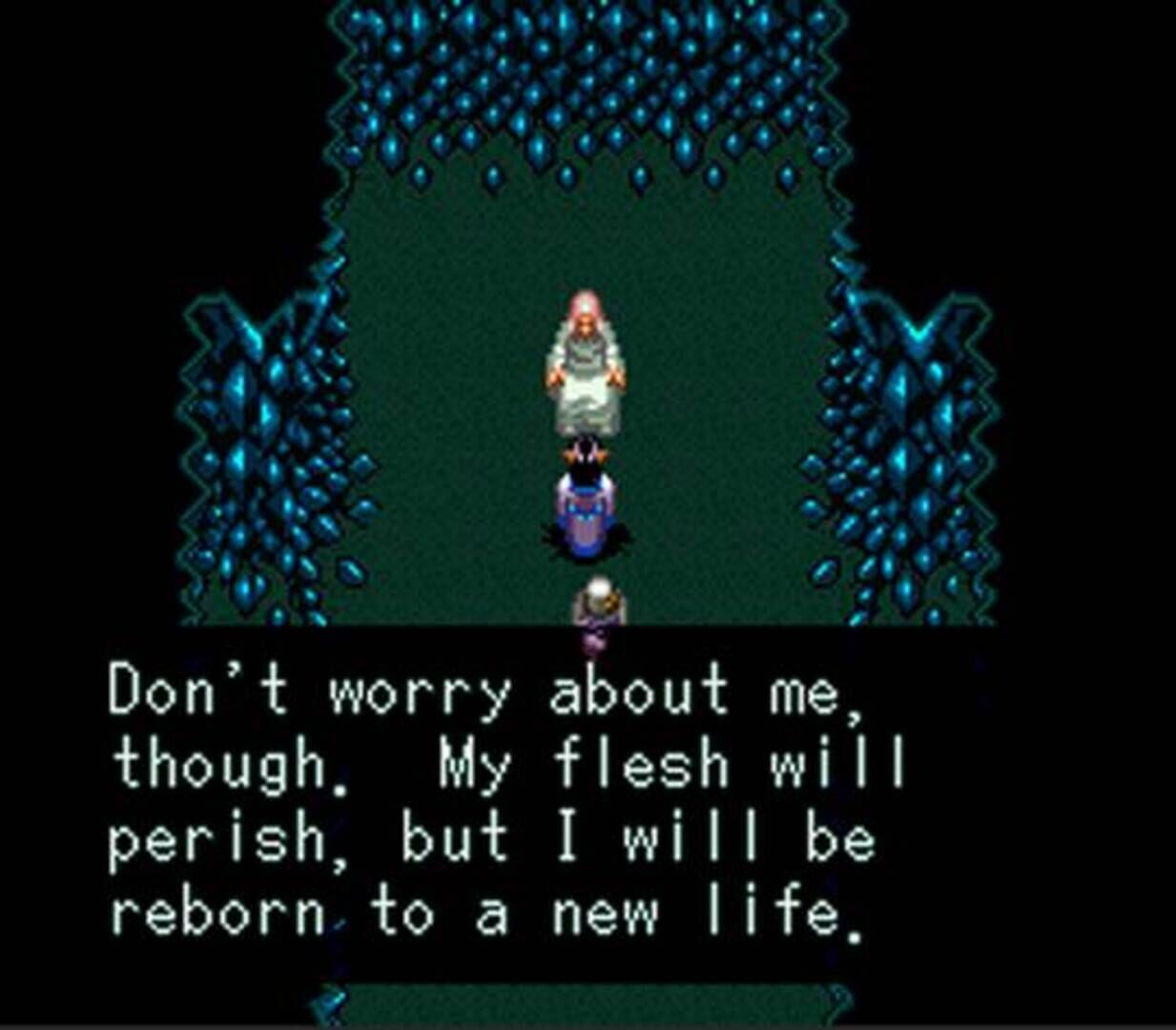
Notable unique innovations include the use of a crystal ball "radar" in the game's HUD that allows players to see enemies approaching their character in dungeons and in the overworld. This means that combat is not totally random, as players may theoretically avoid enemies. However, combat is often difficult to avoid as enemies are numerous and move extremely quickly at random, and terrain features that may aid in evasion or navigation are absent in the crystal ball. The game also uses Mode 7 graphic effects to create the transition between exploration screen and battle screen.
Story
The game takes place on a world called Ticondera. Five thousand years before the beginning of the story, a divine being named Saro defeated an evil entity named Gorsia with the power of seven runes. In the years since then, the runes have been scattered across the globe. Lemele (Remeer in the Japanese version), the son of Saro, was born 100 years before the beginning of the game, and became a hero when he defeated the demon Gariso. Now 100 years old, Lemele has become the benevolent and powerful ruler of the world.
The seven characters are recruited from various walks of life and corners of the globe by the elderly King Lemele. After five years of training at his palace, Lemele dispatches his seven apprentices in a quest for the seven runes. Each rune possesses a great power that can be used by the person who wields it. The one who collects all seven runes will become Lemele's heir. To find the runes, the king gives each character a Crystal Ball to assist them in their search.
Reception
According to Famitsu, The 7th Saga sold 5,144 copies in its first week on the market and 9,064 copies during its lifetime in Japan. The game received a 20.27/30 score in a 1993 readers' poll conducted by Super Famicom Magazine, ranking among Super Famicom titles at the number 179 spot. It received a mixed reception, holding a rating of 64.38% based on four reviews according to review aggregator GameRankings.
GamePro applauded the game's graphics, animation, music, sound effects, and non-linearity of the plot, but criticized the combat and puzzles. The reviewer elaborated that the enemy monsters are tactically too similar to each other, making the player's choices of action essentially meaningless, which in combination with the frequent rate at which enemies are encountered makes combat quickly become a chore rather than fun. He also felt that the limited dialogue would disappoint fans of story-driven RPGs like Final Fantasy IV. Mike Weigand of Electronic Gaming Monthly was enthusiastic about its Mode 7 effects and non-linear gameplay.


