The articlegameplay, story, development, reception
Gameplay
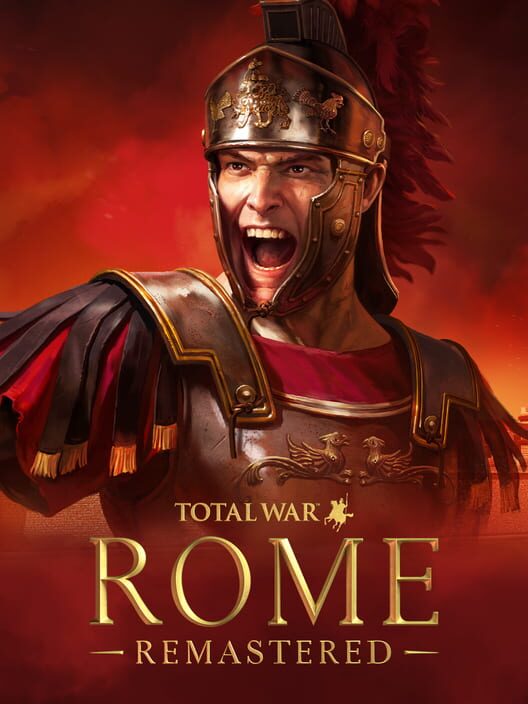
As with previous games in the Total War series, Rome: Total War has two primary modes of play: a turn-based, single-player campaign that takes place on an overhead map of the world and a real-time battle system that occurs on 3D battlefields.
Control over territory in the game is represented by capturing and holding a settlement in that territory. New cities are conquered by either training soldiers in cities that are already in the player's control and then using those soldiers to besiege enemy cities or by bribing the city into switching sides. Apart from simply expanding one's faction, cities can have positive or negative effects on a nation. For example, well-managed cities can provide the faction that control them with valuable tax income, but poorly managed cities may cost the player more money in maintenance than they make in taxes.
Cities have a variety of buildings that may be built or upgraded, such as temples, barracks, and amphitheatres. Buildings have different effects on the city; for example, aqueducts improve public health and decrease urban squalor, which in turn makes the inhabitants of the city happier. If cities grow too unhappy, they may revolt and either return to a faction that previously controlled them or become a part of a generic "rebel" faction.
Each faction starts with a set of family members. The head of the family is the leader of the faction; any male above the age of 16 can be designated as the current leader's heir. Males above the age of 16 can govern settlements and command armies as generals. Male family members can be added through births between married family members, adoption, or marriage with a female family member.
Family members eventually die; natural causes, battles, assassinations, diseases, and natural disasters can all cause a character's demise. Family members can develop character traits from life experiences or heredity. These traits can have both positive and negative effects on the character's stats, which in turn affect their battlefield performance, how well they manage their settlements, and how persuasive they are in negotiations. The stats of family members can also be affected by members of their personal retinue.
Agents are special types of characters that can be recruited in cities with the proper buildings. Agents can also acquire traits and retinue members. There are three types of agents: spies, diplomats, and assassins. Spies can be used to gather intelligence about the composition of armies, infiltrate foreign cities, and serve in a counter-espionage role in the players own cities.
When besieging an enemy city, spies stationed within that city have a chance to open the gates. Assassins can assassinate characters and commit sabotage in settlements. Spies and assassins can both be killed during their missions. Diplomats can offer a variety of diplomatic deals to other factions, such as alliances, tributes, and trade rights.
They may also attempt to bribe foreign armies, cities, agents, and family members into either defecting or, if the soldiers being bribed are not "compatible" with the other faction, deserting.
In addition to the turn-based campaign, Rome: Total War also features 3D, real-time battles. Battles can be played as a part of the larger campaign, as a custom battle against the AI, as a preset "historical battle" based on a real-life military engagement, or as a multiplayer battle against other players. As opposed to the campaign, which features an overhead map of the world, battles take place on individual battlefields. The terrain of the battlefield can play a key role in how the battle plays out.
In most cases, the ultimate goal of the battle is to defeat the enemy forces by either killing or routing all of their troops; in a siege, the attacker can also achieve victory by capturing and holding the town center for a period of time. In battles, the player commands a variety of soldiers that are arranged into units. The game features a variety of units for battle, which may be broadly categorised into infantry, cavalry, archers, and siege weapons. Different units have different morale, hit points, and general combat skills.
If a unit's morale drops too low, its soldiers try to flee the field. Units can create different formations that alter how they perform in combat; for example, many spearmen units can form the phalanx formation, while many Roman units can form the testudo. Both of these formations sacrifice mobility in favour of defensiveness. The player can also employ complex tactics to help them achieve victory; for example, soldiers can ambush enemies from a nearby forest or flank them to avoid a frontal engagement.
Development
A demo featuring a playable version of the Battle of River Trebia, with the player taking the role of the general Hannibal, was released on August 23, 2004, and is freely available for download.
Prior to release, a preliminary version of the game engine was used in two series of TV programs: Decisive Battles by the History Channel, where it was used to recreate famous historical battles, and Time Commanders by BBC Two, where teams of novice non-gamers commanded ancient armies to replay key battles of antiquity. Military historians fine-tuned the game engine specifically for these television shows, ensuring maximum historical accuracy. Both series also used the same music track as the battles in Rome: Total War.
Jeff van Dyck composed the original music soundtrack for the game and received a BAFTA Interactive Awards nomination for his work. Some of the vocals, including the song "Forever" played during the game's credits, were performed by his wife, Angela van Dyck. Angela also wrote the lyrics for the song "Divinitus," which was written in quasi-Latin.
In May 2014, GameSpy's multiplayer services were shut down, and as a result, the game was migrated to Steamworks as of Patch 1.51.
The iPad version of the game, developed by Feral Interactive, was announced on August 12, 2016 and released on November 10, 2016. The iPhone version was released on August 23, 2018. an Android version was announced on November 8, 2018, and was officially released on December 19th, 2018.
Rome: Total War allows for the manipulation of some game resources, including its text files and textures, which has led to the creation of modifications. Among the most notable are Europa Barbarorum and Roma Surrectum, both of which aim to introduce more historical accuracy and rework how the factions are played.
Reception
According to The NPD Group, Rome: Total War was the 20th-best-selling computer game of 2004. It maintained this position on NPD's annual computer game sales chart for the following year. 8 million by August 2006. At the time, this led Edge to declare it the country's 40th-best-selling computer game, and best-selling Total War title, released since January 2000.
3 million units in the United States by August 2006. By 2013, Rome: Total War alone had totaled 876,000 sales in the region. It also received a "Platinum" sales award from the Entertainment and Leisure Software Publishers Association (ELSPA), indicating sales of at least 300,000 copies in the United Kingdom.
Rome sold at least 100,000 units in the German market by December 2004.
The game received "universal acclaim", according to the review aggregation website Metacritic. Many reviewers regarded it as one of the best strategy games of all time; it won numerous awards and high scores from gaming websites and magazines alike.
PC Gamer (UK): All time 5th best PC game "95%"
IGN: Editor's Choice Award, 4th Best PC Game of all Time, 14th Best Game of all Time."IGN's Top 100 Games (#20-#11)". IGN. 2005. Archived from the original on July 16, 2005.
PC Gamer (US): Editor's Choice, Best Strategy Game of 2004
GameSpot: Editor's Choice, PC Game of September, Strategy Game of 2004
Adrenaline Vault: Seal of Excellence
GameSpy: Editor's Choice
E3 2003 Game Critics Awards: Best Strategy Game
Computer Games Magazine named Rome: Total War the fifth-best computer game of 2004. The editors wrote, "If there's a magic formula for how to make a great strategy game, Creative Assembly has it down pat." The editors of Computer Gaming World nominated Rome as their 2004 "Strategy Game of the Year (Real-Time)", although it lost to Warhammer 40,000: Dawn of War. It was nominated for GameSpot's year-end "Best Graphics, Technical" award. During the 8th Annual Interactive Achievement Awards, the Academy of Interactive Arts & Sciences awarded Rome: Total War with "Strategy Game of the Year", along with receiving nominations for "Outstanding Innovation in Computer Gaming" and outstanding achievement in "Original Musical Composition", "Sound Design" and "Online Gameplay".