
The articlegameplay, story, development, reception
Gameplay
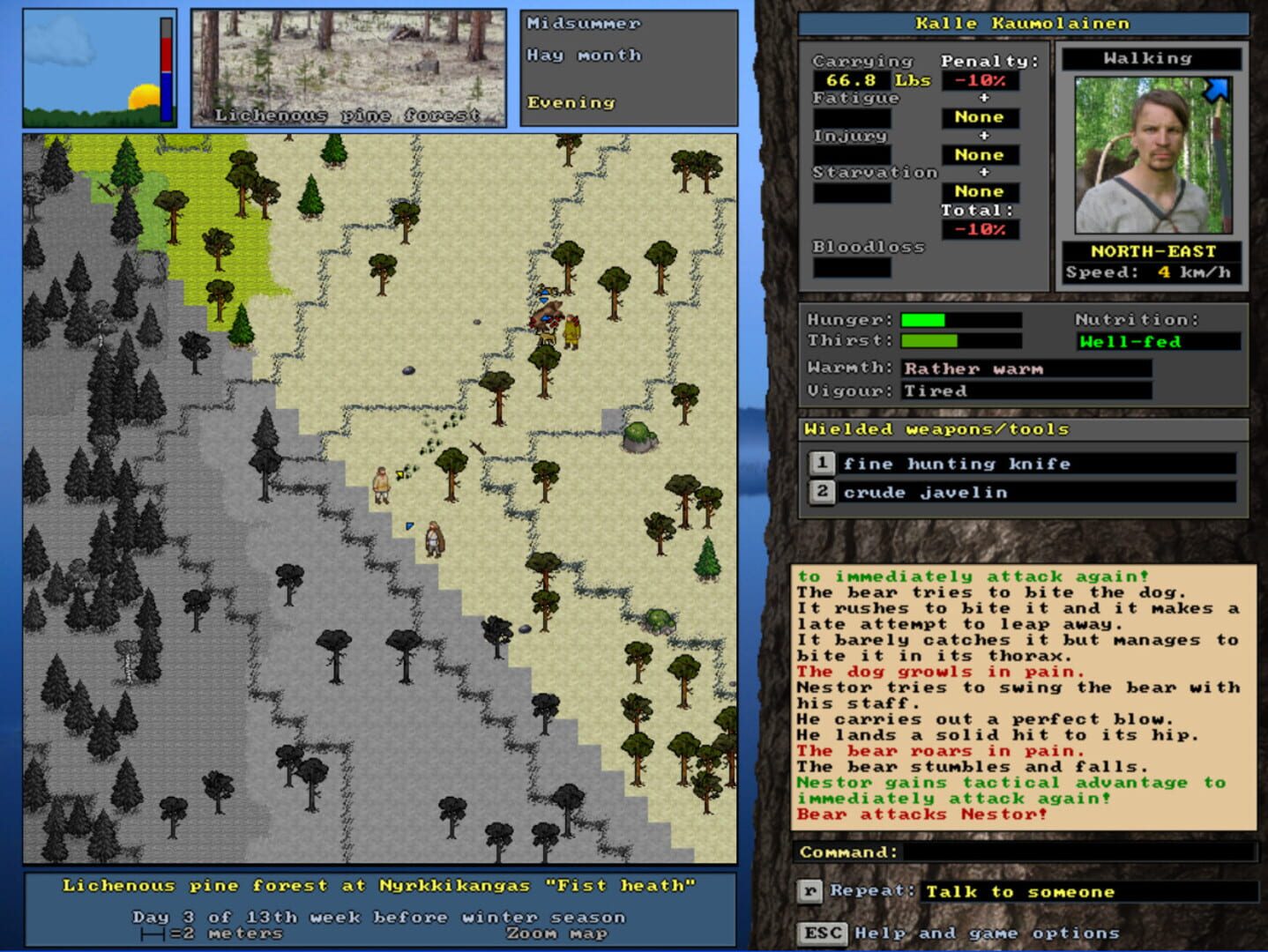
UnReal World features aspects from Finnish mythology and folklore; the game simulates a harsh environment where survival is the main challenge for most players. The player can choose from ten Finnish cultures with occupations including fisherman, hermit, trapper and tradesman.
The game has both real time and turn-based elements; unexpected events like a snowstorm and tornadoes can lead to a quick death of the player character. The game simulates a lot of details like frostbite of individual body parts. The player can roam freely in the world and interact with the different animals, vegetation and environment, such as by hunting, skinning, and constructing shelters.
Development
The first major version of UnReal World was completed in 1992 and resembled a more traditional roguelike game (like ADOM). The ASCII game world was medieval fantasy with elves, orcs, mages, magic potions, and dungeons. Development of the game continued through 1995 and, along the way, saw a complete rewrite in C.
Features were established in the first releases that would become the essence of the modern game. These included varied combat options and aimed attacks, a split UI layout, open ended game play, random generation of wilderness, villages, and dungeons and their features, wilderness skills (such as fishing, tracking, and foraging), and the introduction of "early cultures" which replaced the high-fantasy style races and classes.
Reception
UnReal World has been praised for its depth, realism, atmosphere and immersion, and value. In 2015, Rock, Paper, Shotgun listed UnReal World as the 26th best role-playing game on PC.


