
The articlegameplay, story, development, reception
Gameplay
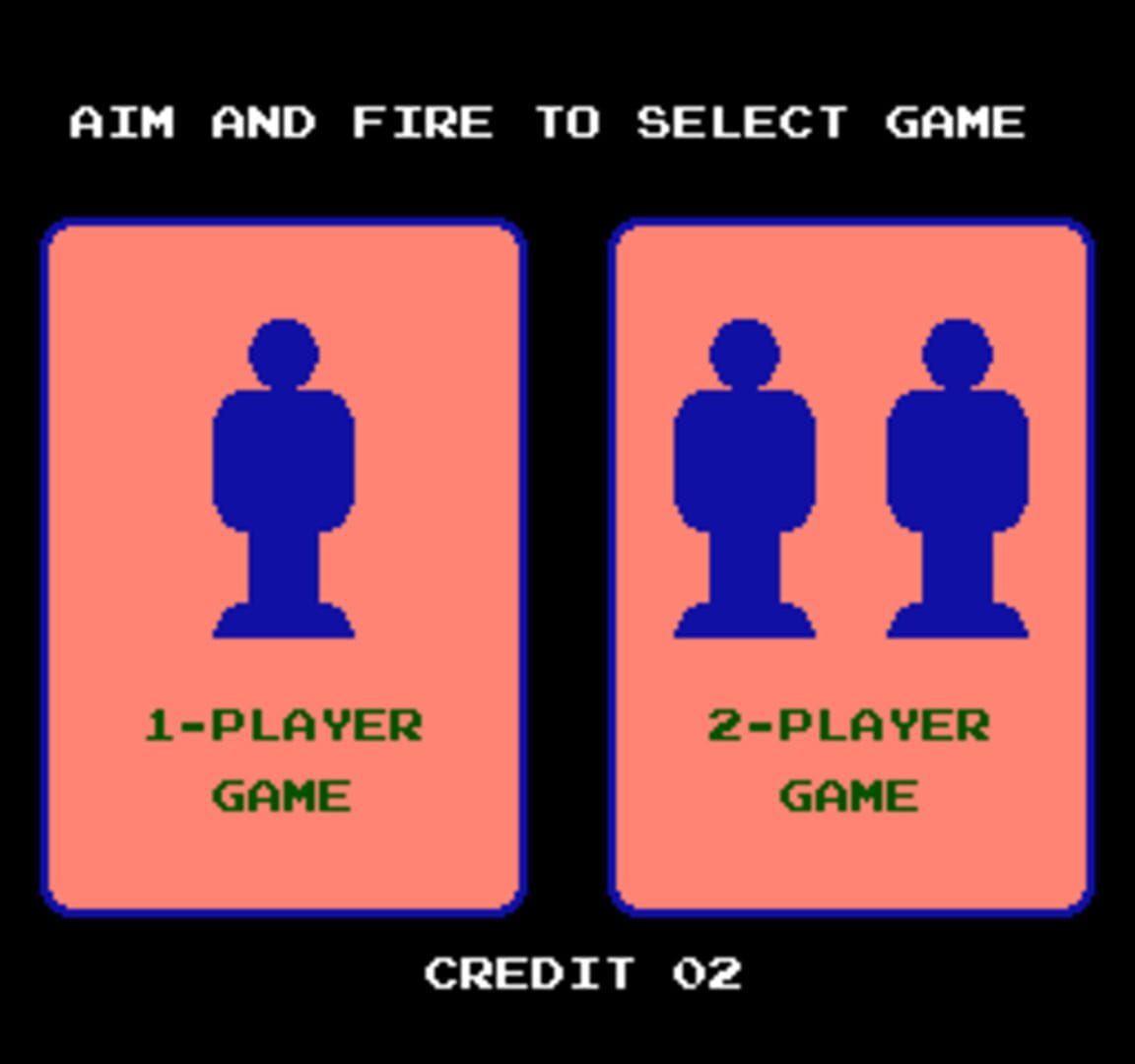
Duck Hunt is a first-person shooter game with moving on-screen targets, firing the NES Zapper light gun at a CRT television screen. The player selects the game mode, one or two targets appear, and the player has three attempts to hit them before they disappear. Each round totals ten targets.
The player must hit a minimum number of targets to advance to the next round or else get a game over. The difficulty progresses with faster targets of an increasing minimum number. The player receives points per target and bonus points for shooting all ten targets per round. The highest scores are tracked per session.
Development
Duck Hunt was inspired by a 1976 electronic toy version titled Beam Gun: Duck Hunt, part of the Beam Gun series, designed by Gunpei Yokoi and Masayuki Uemura for Nintendo. Nintendo Research & Development 1 developed both the NES Zapper and the NES version of Duck Hunt. The game was supervised by Takehiro Izushi, and was produced by Gunpei Yokoi. The music was composed by Hirokazu Tanaka, who did music for several other Nintendo games at the time.
The music was represented in the classic games medley on the Video Games Live concert tour. Designer Hiroji Kiyotake with Shigeru Miyamoto created the graphics and characters.
Reception
In North America, Vs. Duck Hunt became the third top-grossing arcade game on the RePlay arcade charts in November 1985, below Vs. Hogan's Alley at number one. The two popularized light gun video games by 1985. It was bundled with the Nintendo Entertainment System console in 1985, with 28.3 million copies sold worldwide.
Upon release in arcades, Eddie Adlum of RePlay magazine praised Duck Hunt and Hogan's Alley as the "cream on the cake" among Nintendo VS. System and for successfully capturing the experience of older electro-mechanical gun games into video game format. He said that Duck Hunt and Hogan's Alley "sported simulated handguns on a wire cable and pop, pop, pop, you do your thing just like in the old days only at video targets".
Legacy
Duck Hunt's nameless non-playable hunting dog has been referred to in media as the "Duck Hunt Dog" or the "Laughing Dog", notorious for smugly laughing at the player for missing ducks. The dog is on GamesRadar's list of "the 12 most annoying sidekicks ever", GameDaily's list of characters "we wish we could kill but can't", GameSpy's "top 10 dogs in gaming", and MTV's award for the greatest video game canine. The dog makes a cameo appearance in the NES Zapper game Barker Bill's Trick Shooting, where he can be shot.
In Wii Play (2006) and its sequel Wii Play: Motion (2011), some elements from Duck Hunt and Hogan's Alley are in the mini-games "Shooting Range" and "Trigger Twist", in which some of the various targets are ducks and cans.


