
The articlegameplay, story, development, reception
Gameplay
The goal of Lady Bug is to eat all flowers, hearts, and letters in the maze while avoiding other insects. The player is represented by a red, yellow, and green character resembling a ladybug and the enemy insects' appearance varies by level. The border of the maze acts as timer, with each circuit signaling the release of an enemy insect from the central area, up to generally a maximum of four. The speed of the circuit increases on stages 2 and 5.
There are eight different enemy insects, and a different one is introduced on each of the first eight levels. Beginning on level 9, each level has four different enemies.
Reception
According to Electronic Games magazine, Lady Bug did "just all right in the arcades" but became popular as a console cartridge. It said the ColecoVision version is "proving to be one of the most successful home videogames ever".
The arcade game was recognized for its originality within the maze game genre. In January 1983, the fourth Arcade Awards gave it a Certificate of Merit as runner-up for Most Innovative Coin-Op Game, stating that the "addition of turnstiles to the labyrinth" made the game "a fascinating contest packed with strategic nuances never before equalled in this particular genre of coin-op". Electronic Games called it "the most wonderful blend of strategy and maze-chase thrills ever concocted".
Legacy
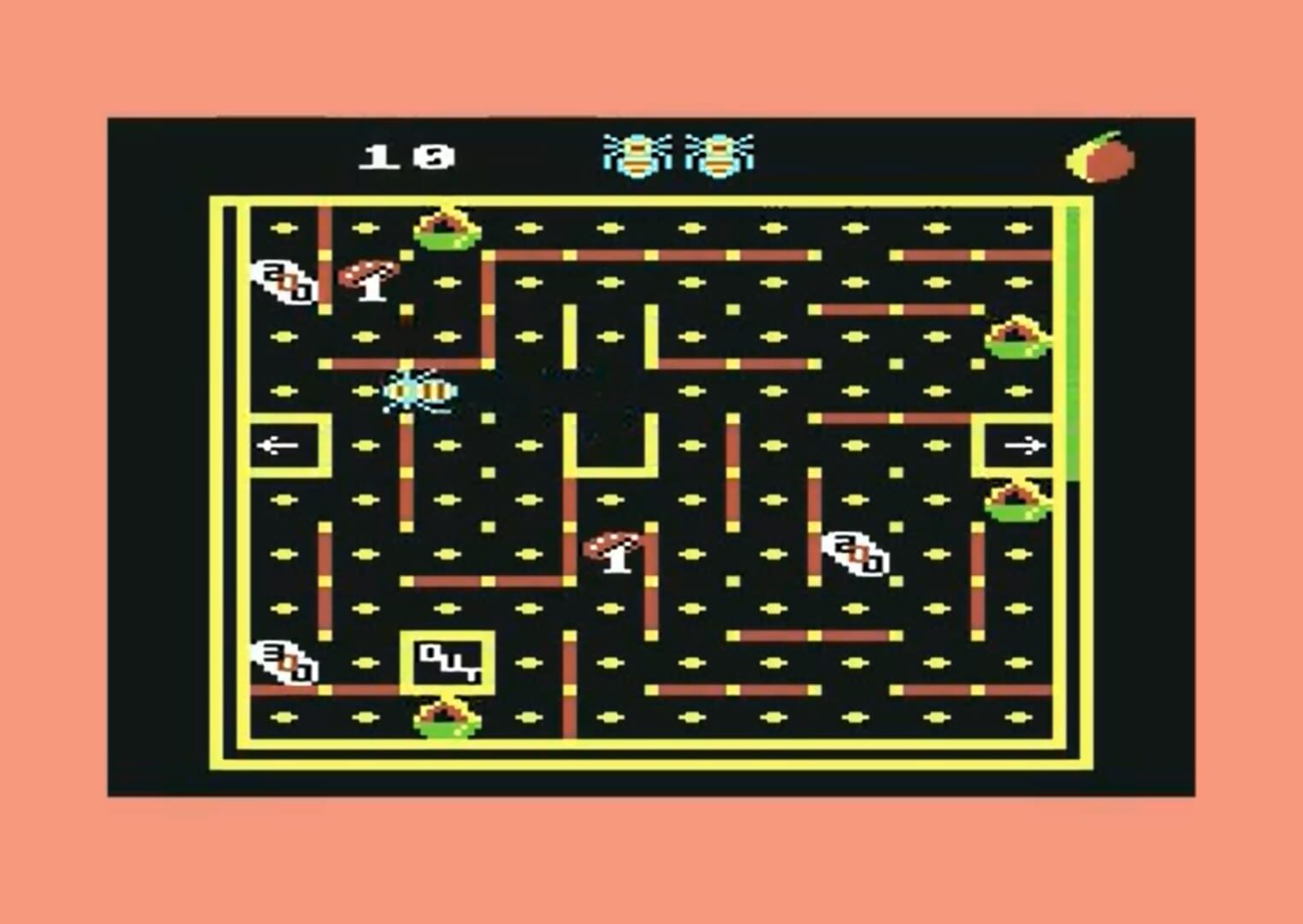
Doodle Bug is a 1982 clone for the TRS-80 Color Computer. Bumble Bee replaces the main character with a bumblebee and the enemies with spiders; it was released in 1983 and 1984 by Micro Power for the BBC Micro, Acorn Electron, and Commodore 64.
Doodle Bug (1985) for the VIC-20 (unrelated to the TRS-80 Color Computer game) and Drelbs (1983) for the Atari 8-bit computers both have mazes with turnstiles in them.


