The articlegameplay, story, development, reception
Gameplay
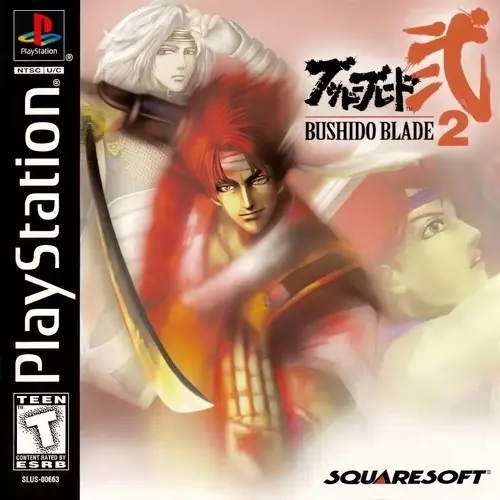
Bushido Blade 2 expands on some of the aspects of Bushido Blade, while limiting or removing others. The story mode is changed from one large connected level to a series of skirmishes, each set on a different map. Dual sword attacks have been added. Playable characters are chosen from groups which represent two opposing schools of assassins, the Shainto and Narukagami, and are armed with swords or polearms of varying types.
In addition to the chosen character, the player encounters support characters during each game. Completing a stage while playing as a support character unlocks that support character for play in all modes.
The fights in Bushido Blade 2 mark the progress of the chosen character who—depending on the character—either fights to regain a legendary sword, or to destroy the opposing school. Levels involve a pattern of fighting several generic ninja followed by a boss, who is one of the playable characters from the opposing school.
Two characters in Bushido Blade 2 are exceptions to the typical opponent roster: the gun-wielding Tsubame and Katze. They have sworn loyalty to opposing schools, and battles involving them provide a different kind of challenge. The player can defend against the firearms with melee weapons.
Most of the weapons are straight from the first game, excluding the yari and the M16. The yugiri (a sword which is quite similar to the nodachi but wielded like the katana), which was used by the original Bushido Blade's final boss Hanzaki is now a selectable weapon, but is only accessible in the final battle versus the unarmed "last member of the Kagami clan". Some of the original Bushido Blade's selectable weapons—rapier (which does not appear as a selectable weapon, but only in Highwayman's two-sword stance when he has the long sword equipped), sledgehammer and ninjato—as well as the boss-specific "Double-Bladed Sword-Staff" and "Special Sabre", have been eliminated. The weapons usable by both schools (such as the katana) have a slightly different design for each school.
While each character wields a specific weapon when fought as a boss, when played as, they can wield whichever weapon the player chooses. The yari is exclusive to characters from the Shainto school, and the naginata is exclusive to characters from the Narukagami school.
Story
In the 13th century, on the island of Konoshima (in the Seto Naikai, Inland Sea of Japan) there existed two feudal clans, the Kagami and the Sue, both aligned to the same Daimyō. They lived in peace until war on mainland Japan crushed the Daimyō. The Kagami swore fealty to the new Daimyō while the Sue were loyal to their master until the end. The conflict between the two began with the Kagami drawing the Sue off of the island and into battle.
The Sue, having been defeated in battle, then lost their sacred sword the Yugiri. For centuries after, secretive battles were fought that were fierce, but not widespread.
Some 800 years later, the Shainto school, composed of the remaining descendants from the Sue clan, attacked the Narukagami Shintoryu, the Kagami clan dojo, at their headquarters, the Meikyokan. To redeem their honor, they move to recover the Sacred Sword Yugiri and wipe out the last descendant of the Kagami family. That is the point from which the opening FMV begins, covering the assault which is later seen more fully in the story mode.
Reception
The game received favorable reviews according to the review aggregation website GameRankings. In Japan, Famitsu gave it a score of 29 out of 40.
Next Generation said in the July 1998 issue that the Japanese import "isn't an easy game to classify. As a sequel, it may alienate fans of Bushido Blade 1 who were anxious for more of the same. But nonetheless, kudos to Square for trying such a different approach to begin with, and for refining it in such a fearless manner. Excellent."
Six issues later, the magazine said, "The bottom line is that this is one of the few times we've seen a sequel match its predecessor in originality. This game belongs on every serious PlayStation fan's shelf." GamePro said, "If you follow the path of Bushido, you're compelled to master Bushido Blade 2. If you're a rookie warrior, you'll have to learn patience and be prepared to die more than once before learning this game's secrets."
In Japan, the game was the top-selling PlayStation game the week of its release as well as the week after. During the week of April 3, 1998, the game was the third-best-selling game including games from other consoles. In North America, Bushido Blade 2 was the ninth-best-selling game during the week of November 13, 1998.
The game was named as a finalist by the Academy of Interactive Arts & Sciences for "Console Fighting Game of the Year" during the 2nd Annual Interactive Achievement Awards.