The articlegameplay, story, development, reception
Gameplay
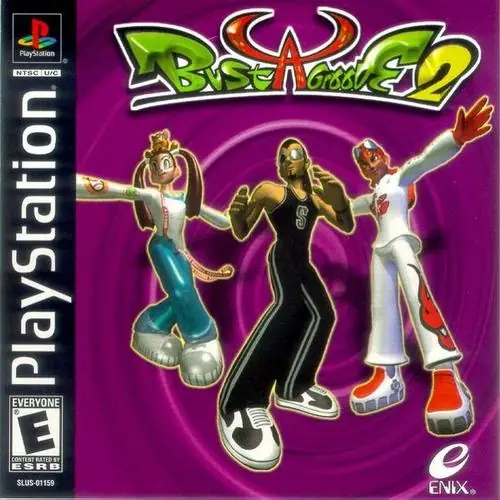
Bust a Groove 2's gameplay is still the same from the previous title. However, backgrounds had become crazier; if a player attains high scores, background stages will sport crazy effects and changes (see Fever Time).
"The single-player game has changed - it now features branching paths in the single-player game that move you up to more difficult opponents depending on how well you're dancing. The popularity meter has been axed; now your character has a small border around his or her name that changes in color depending on how well you're dancing. Also, a new meter sits in the middle of the screen that tracks every "Cool, Chillin', and Freeze" event and moves up accordingly. When all three bars are filled to capacity, your points are doubled for every dance move made during that time. In Bust a Groove 2 there is a standard two-player versus mode, a practice mode to help you get accustomed to timing the fourth beat, and a dance-view mode that allows you to cycle through each dancer's individual moves and string them together to make your own dances."
The game also included 2 new commands aside the somersault and "Jammer" (attack) moves. This time, the player could now do a 'reflect move' and guard attacks.
If a player obtains a high score by completing a stage with very few mistakes or missed actions, a special dance solo starring the winner of the round takes place immediately after the round ends. This is known as "Fever Time".
In some cases, both the winner and loser may dance together during a special Fever Time. This occurs if both players were able to finish the stage with high scores.
Reception
In Japan, Game Machine listed Bust a Groove 2 on their September 1, 1999 issue as being the eleventh most-successful arcade game of the month.
Next Generation reviewed the PlayStation version of the game, rating it three stars out of five, and stated that "Honestly, the whole game just feels like a retread of a past hit with developers who didn't do anything other than milk the success of the last title. The game is definitely fun for a while, but it's really not the evolution of the series we'd hoped for."
Bust a Groove 2, along with its predecessor, is one of the more valuable PlayStation games on the secondary market. For example, complete, used copies sell for more than $100 which is more than the original MSRP of $35.99.