
The articlegameplay, story, development, reception
Gameplay
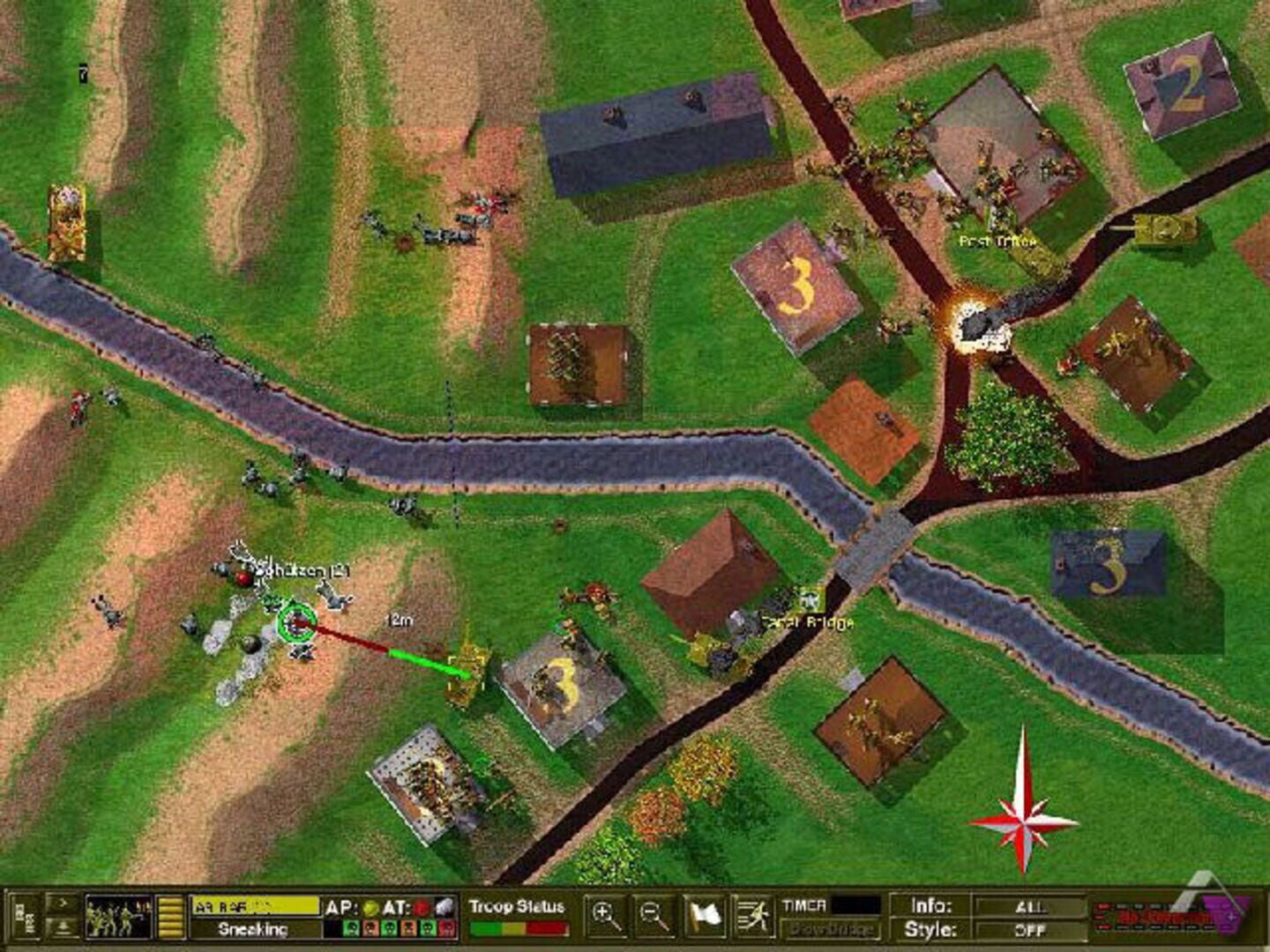
Combat takes place on a two-dimensional map with three-dimensional terrain elements. Depending on the map, terrain features can include a variety of features providing concealment and cover, such as hills, hedges, foxholes, trenches, streams and buildings. Units have limited fields of vision (particularly vehicles), suffer from fatigue, have limited ammunition, can be suppressed, will break and flee if their morale drops too low, and generally behave in a manner similar to real life (although there are options to make units always visible, always obey orders, and/or fearless).
The units used in the game vary, but are nonetheless divided into two categories: infantry and support. The infantry category contains most infantry units, such as rifle infantry, scouts, snipers, MG42 machine gunners (for the German side), antitank infantry (for the Allied side), heavy assault teams, and reserves. More specialized infantry teams such as flamethrower engineers, mortar teams and machine gun teams are placed in the support category, as are vehicles (including halftracks, armored cars, tanks, tank destroyers, assault guns) and fixed guns.
Development
Following an unofficial report on March 8, 1997, Close Combat: A Bridge Too Far was announced by publisher Microsoft and developer Atomic Games on March 11. The original Close Combat was among Microsoft's "most successful titles" by that point, according to Next Generation, and the sequel was "expected to not depart from the original to drastically". Earlier in the year, there had been speculation within the game industry that Atomic would be hired by Avalon Hill to develop Computer Squad Leader, a project ultimately delegated to Big Time Software in January 1997. Like its predecessor, A Bridge Too Far was published by Microsoft on a "title to title" basis; the company held no stake in Atomic.
In mid-March, Microsoft announced its planned computer game releases for 1997, which included A Bridge Too Far.
Reception
Like its predecessor, A Bridge Too Far achieved worldwide sales of roughly 200,000 units by February 1999. Atomic Games' head Keith Zabalaoui said that the first two Close Combat titles each outsold the company's earlier games by around ten to one. Before the release of Close Combat III, he described A Bridge Too Far as the company's "most successful game yet".
Macworld's Michael Gowan wrote that A Bridge Too Far "boils down the complexity of battle into a fairly intuitive interface". He summarized it as "a solid campaign game".


