

- 75/100
- Players21 ratings

1987 · Palace Software · Fighting
Death Sword
Barbarian: The Ultimate Warrior is a video game first released for Commodore 64 personal computers in 1987; the title was developed and published by Palace Software, and ported to other computers in the following months. The developers licensed the game to Epyx, who published it as Death Sword in the United States. Barbarian is a fighting game that gives players control over sword-wielding barbarians. In the game's two-player mode, players pit their characters against each other. Barbarian also has a single-player mode, in which the player's barbarian braves a series of challenges set by an evil wizard to rescue a princess.
- Released
- 30 December 1987
- Platforms
- Acorn ElectronAmigaAmstrad CPCApple IIAtari 8-bitAtari ST/STEBBC Microcomputer SystemCommodore C64/128/MAXMS-DOSZX Spectrum
- Genres
- Fighting
- Developers
- Palace Software
- Publishers
- EpyxKlassixL.K. AvalonPalace SoftwareSuperior SoftwareU.S. Gold
- Modes
- MultiplayerSingle-player
- Perspective
- Side view
- Themes
- ActionFantasy
About
Barbarian: The Ultimate Warrior is a 1987 video game developed and published by Palace Software for the Amstrad CPC, Commodore 64, and ZX Spectrum. The game was ported to many other systems and was licensed to Epyx who published it as Death Sword in the United States.
Barbarian is a fighting game that gives players control over sword-wielding barbarians. In the game's two-player mode, players pit their characters against each other. Barbarian also has a single-player mode, in which the player's barbarian braves a series of challenges set by an evil wizard to rescue a princess.
›Story
In the single-player story mode, the player controls a nameless barbarian who is on a quest to defeat the evil wizard Drax. Princess Mariana has been kidnapped by Drax, who is protected by 8 barbarian warriors. The protagonist engages each of the other barbarians in single combat to the death. Overcoming them, he faces the wizard. After the barbarian has killed Drax, Mariana drops herself at her saviour's feet and the screen fades to black.The United States version of the game names the protagonist Gorth.
Keywords
- martial arts
- abandonware
- cga graphics
- bpjm indexed
- barbarian protagonist
Media
The articlegameplay, story, development, reception
Gameplay
Barbarian: The Ultimate Warrior is a fighting game that supports one or two players. Players assume the roles of sword-wielding barbarians, who battle in locales such as a forest glade and a "fighting pit". The game's head-to-head mode lets a player fight against another or the computer in time-limited matches. The game also features a single-player story mode, which comprises a series of plot-connected challenges.
Using joysticks or the keyboard, players move their characters around the arena, jumping to dodge low blows and rolling to dodge or trip the opponent. By holding down the fire button and moving the controller, players direct the barbarians to kick, headbutt, or attack with their swords. Each barbarian has 12 life points, which are represented as 6 circles in the top corners of the interface. A successful attack on a barbarian takes away one of his life points (half a circle).
Development
In 1985, Palace Software hired Steve Brown as a game designer and artist. He thought up the concept of pitting a broom-flying witch against a monster pumpkin, and created Cauldron and Cauldron II: The Pumpkin Strikes Back. The two games were commercial successes and Brown was given free rein for his third work. He was inspired by Frank Frazetta's fantasy paintings to create a sword fighting game that was "brutal and as realistic as possible".
Brown based the game and its characters on the Conan the Barbarian series, having read all of Robert E. Howard's stories of the eponymous warrior. He conceptualised 16 moves and practised them with wooden swords, filming his sessions as references for the game's animation. One move, the Web of Death, was copied from the 1984 sword and sorcery film Conan the Destroyer.
Reception
Barbarian's advertisements triggered some outcries of moral indignation. Electron User reported that another magazine had refused to publish Superior Software's advert for its licensed BBC Micro and Acorn Electron ports unless parts of the image were covered up. Electron User, who published the uncensored advertisement, received letters from readers and religious bodies, who called the image "offensive and particularly insulting to women" and an "ugly pornographic advertisement". Richard Hanson, Superior's managing director commented that the Advertising Standards Authority had confirmed that the image was not in bad taste, and that the publicity was likely to send the game to the top of the charts.
Chris Jager, a writer for PC World, considered the cover "a trashy controversy-magnet featuring a glamour-saucepot" and a "big bloke [in leotard]".
Releases by platformdates and regions as published
Editions and related releases
- Remade as
- Barbarian: The Death Sword
Games like this
 Nintendo exclusive
Super Chinese Fighter
1995 · SNES
Fighting · Martial arts
 Timed SNK
Ragnagard
1996 · Arcade, Neo Geo +4
Fighting · Martial arts
 84
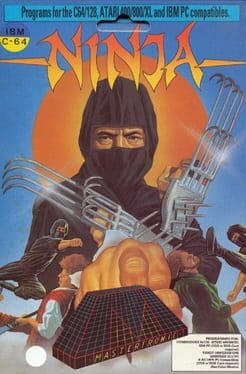
Ninja
1986 · Amiga, Amstrad CPC +8
Fighting · Martial arts
 72
EA Sports UFC 5
2023 · PlayStation 5, Xbox Series X/S
Fighting · Martial arts
 48
Mortal Kombat Mythologies: Sub-Zero
1997 · Nintendo 64, PlayStation
Fighting · Martial arts
 54
Jump Force
2019 · Nintendo Switch, PlayStation 4 +2
Fighting · Often paired
 61
Dead or Alive
1996 · Arcade, PlayStation +1
Fighting · Martial arts
 Xbox exclusive
Iron Phoenix
2005 · Xbox
Fighting · Martial arts
Collections1 collection
Platform libraries
Description adapted from its source, CC BY-SA 4.0.