The articlegameplay, story, development, reception
Gameplay
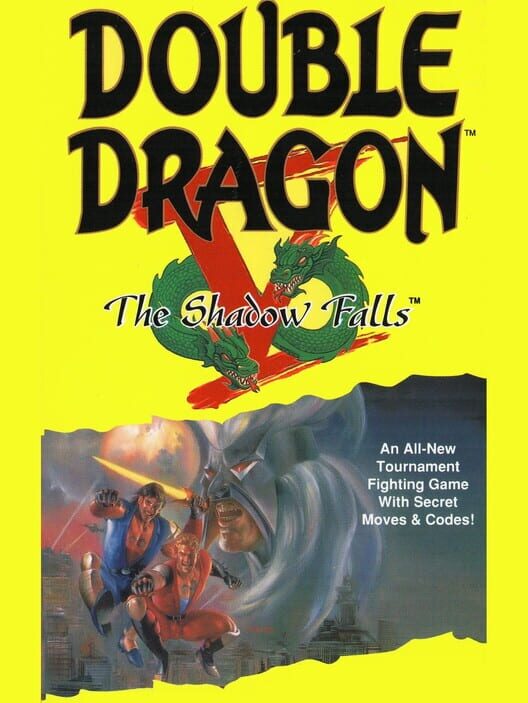
Double Dragon V: The Shadow Falls is a fighting game that follows the 8-way directional pad/stick and 6-button layout common to most fighting games at the time (including Street Fighter II), consisting of weak, medium and strong punches and kicks. The Genesis version supports the standard 3-button controller (making use of the start button to toggle between punches and kicks), as well as the 6-button controller released the previous year, while the Jaguar version makes use of its 3-button controller for punches and the 3, 6 and 9 keypad buttons for kicks instead. Characters have several special moves, as well as finishing moves called "Overkills" where the losing character has their own unique death animation when defeated by a certain type of basic attack.
The game features four game modes to choose from: Tournament, Vs. Battle, Quest, and Watch. Tournament is an arcade-style single player mode, where the player competes against a series of computer-controlled opponents, with each character having their own ending. Vs.
Battle is a two-player mode where one player battles another. Quest is an alternate single player mode where one competes in a series of plot-based matches and the player can choose to play as one of the Lee brothers, who are on a mission to stop the Shadow Master from releasing a plague, or play as one of the Shadow Warriors, who must compete to become the Shadow Master's new second-in-command. In Quest Mode, the player can also adjust the attributes of their own character. Watch Mode allows the player to pit two computer-controlled characters against each other.
There is also a Dossiers mode, where the player gets to view the game's character profiles, as well as an Options mode to adjust the difficulty setting, control configuration and other features.
Development
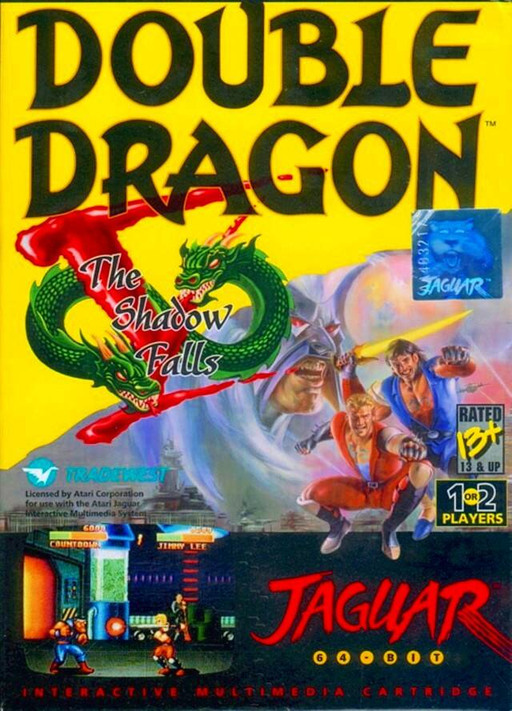
The Atari Jaguar port was showcased in a playable state at the SCES '94. The Jaguar version was developed at Telegames' CDG division by Ed Salvo, who previously worked on titles for the Atari 2600 such as Apollo's Spacechase and Wizard Video Games' The Texas Chainsaw Massacre, along with his wife Janet Salvo and former VSS employee David Mahaffey.
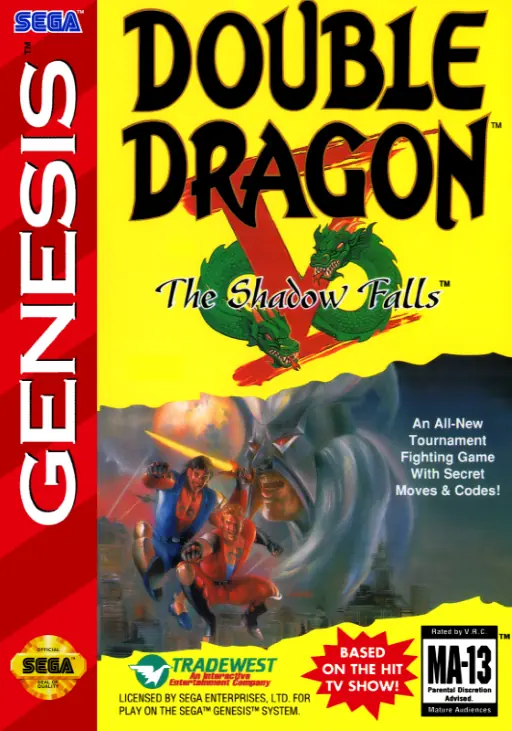
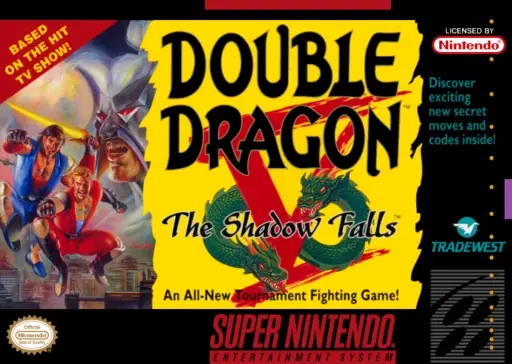
Double Dragon V was released in North America on August 5, 1994. The Atari Jaguar version was released in both North America and Europe in April 1995, and later in Japan in July of the same year by Messe Sansao.
Reception
The original release for the SNES generally received mixed reviews. GamePro described the game as an unoriginal but competent Street Fighter II clone with good character sprites and a variety of options. The four reviewers of Electronic Gaming Monthly commented that the game would appeal to younger gamers with its cartoon style and easy-to-perform moves, but summarized it as a strictly average entry among the many fighting games on the market.
Reviewing the Genesis version, GamePro again described it as a passable Street Fighter clone, but were generally more dismal in their assessment, commenting that most of the special moves are difficult to execute and the game is too simplistic to appeal to experienced fighting game fans. They also found the sound effects so bad that they recommended turning them off.
The later Atari Jaguar version received generally negative reviews. The four reviewers of Electronic Gaming Monthly unanimously agreed that the game is better than the Jaguar's previous fighting games (Kasumi Ninja and Dragon: The Bruce Lee Story) but substandard in absolute terms. Their chief criticisms were that the Jaguar version has the same graphics and audio as the by-then outdated SNES version, and has far worse controls, with the use of the Jaguar controller's number pad making it almost impossible to execute special attacks. GamePro's reviewer expressed little problem with the controls but still panned the game, criticizing the "headache-inducing music" and arguing that it is unacceptable for a game which was graphically average even on 16-bit systems to be ported to a 64-bit system with no enhancements aside from the backgrounds.
Next Generation said that some characters in the game have good designs, but called art and animation flat and stilted, respectively. They also concurred that the background improvements in the Jaguar version were not enough to make the game's graphics better than mediocre.