- 80/100
- Players20 ratings
1998 · FromSoftware · Adventure · Puzzle
Echo Night
PlayStation exclusive
Echo Night is a mystery adventure video game developed by From Software. The story revolves around Richard Osmond and his journey to find out what happened to the ship Orpheus, which mysteriously disappeared from the sea. The story will uncover too the mystery about two stones which contain some kind of power.
- Released
- 13 August 1998
- Platforms
- PlayStationPlayStation 3PlayStation Portable
- Genres
- AdventurePuzzle
- Developers
- FromSoftware
- Publishers
- FromSoftware
- Series
- Echo Night
- Modes
- Single-player
- Perspective
- First person
- Themes
- HorrorSurvivalMystery
- Country
- Japan
- Age ratings
- ESRB TCERO B
- Languages
- English, Japanese
- Entry
- #1 in Echo Night
About
Echo Night is a 1998 adventure game developed by FromSoftware for the PlayStation. It is the first game in the Echo Night series, following up with the Japan-exclusive Echo Night 2: The Lord of Nightmares in 1999, and Echo Night: Beyond in 2004. A spin-off for the PlayStation Portable was included with Adventure Player, an adventure game creation tool, which was released in Japan in June 2005.
The story follows Richard Osmond as he searches for his missing father, and investigates his connection to two magical stones aboard the ghost ship Orpheus, which mysteriously disappeared at sea.
›Story
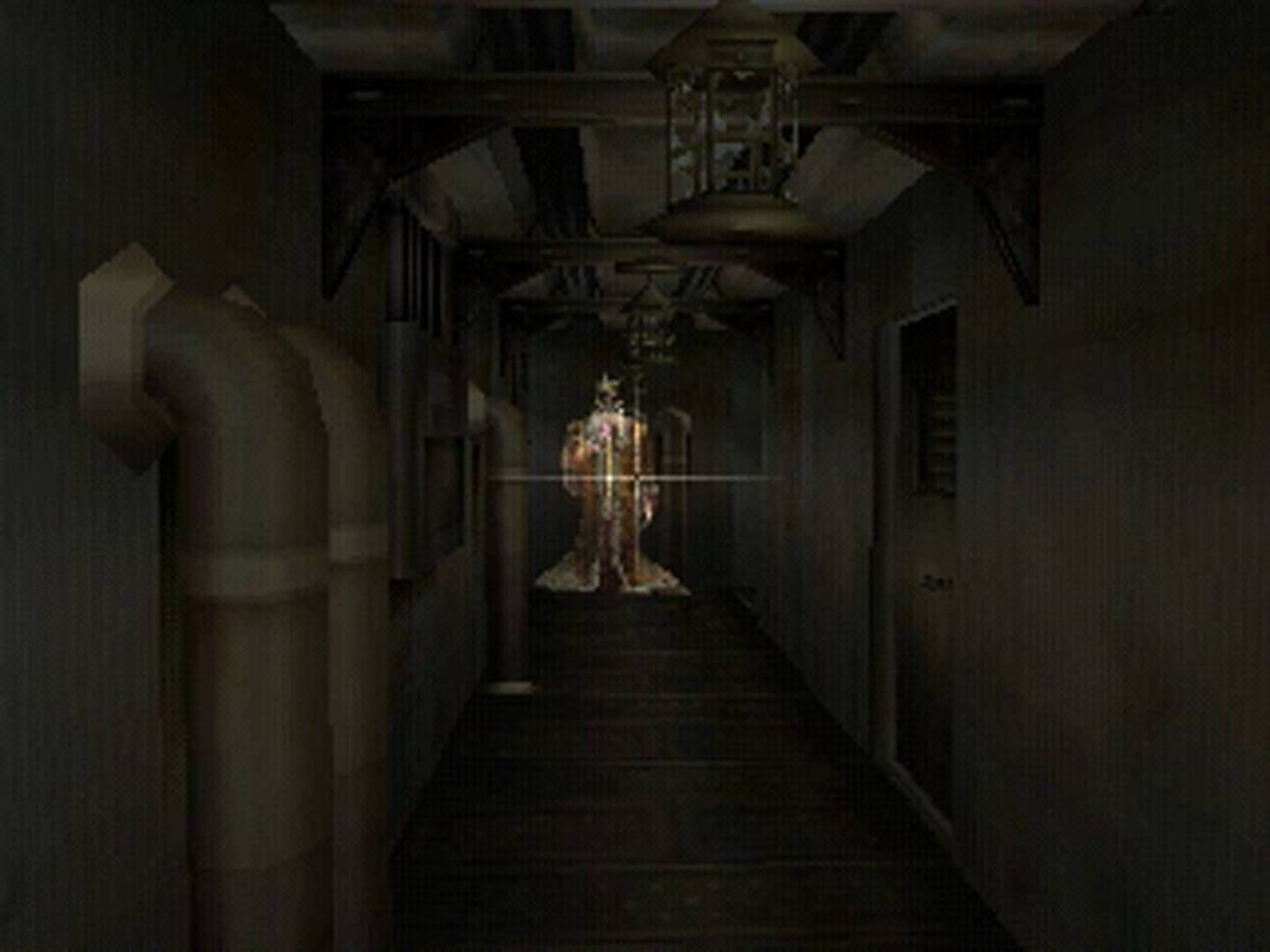
In Echo Night you roam around a ship called the Orpheus, searching for items and releasing the souls of ghosts roaming the ship by helping them fill their final wishes so that they can find peace. Helping ghosts give you items that allow you to progress in the game, also in general adventure game fashion, there are puzzles you must complete to receive new items.
There are evil ghosts haunted by their memories that will attack you, preventing you from progressing in the game. You can temporarily banish the ghosts by putting on the lights in each room.
Keywords
- time travel
- action-adventure
- survival horror
- playstation network
- digital distribution
- psone classics
- playstation tv support
- backwards compatibility
Media
The articlegameplay, story, development, reception
Gameplay
Echo Night is played from a first-person perspective. The player can navigate different environments and interact with various items to progress the story. The player is often transported into the past via NPCs or certain objects to uncover more information pertaining to the story and characters. Aboard the Orpheus, the player must talk with souls of deceased passengers and solve puzzles to fulfill their final wishes and help them move on.
As the player fulfills these tasks, the souls will vanish and leave behind an "astral piece", which can be used to get different game endings. Occasionally the player will encounter hostile ghosts who will attack and can deplete the player's health. There are no combat or defensive items in Echo Night, so when confronted with an aggressive ghost, the player must turn on the lights in the room to ward off the ghosts. These light switches often require additional puzzle solving, and sometimes can only be accessed after helping souls in the area move on.
Story
A cutscene in 1913 depicts the passenger liner Orpheus navigating stormy waters. On-screen text explains the ship mysteriously vanished without a trace, and search teams were unable to find evidence of its disappearance.
The game begins in 1937 at the apartment of Richard Osmond as he examines a strange key mailed to him from his estranged father, Henry Osmond. Immediately afterwards he receives a phone call from the police stating that Henry has been missing for some time and now his house has mysteriously burned down. The police allow Richard to investigate the remnants of his father's home, whereupon Richard is able to use the mysterious key to find a secret passageway leading to his father's diary. When Richard touches the diary, he is transported to a scene on a moving train with a young man.
Reception
The game received "mixed" reviews according to the review aggregation website GameRankings.
Japanese gaming magazine Famitsu gave the game a 31 out of 40 score.
Releases by platformdates and regions as published
Title IDsone per regional release, with its latest update
In the same series
Games like this
 PlayStation exclusive
Athena: Awakening from the Ordinary Life
1999 · PlayStation, PlayStation 3 +1
Adventure · Puzzle
 PlayStation exclusive
Kowloon's Gate
1997 · PlayStation, PlayStation 3 +1
Adventure · Often paired
 PlayStation exclusive78
Clock Tower
1996 · PlayStation, PlayStation 3 +1
Adventure · Puzzle
 79
Resident Evil: Director's Cut
1996 · Expanded · Nintendo DS, PlayStation +3
Adventure · Puzzle
 PlayStation exclusive39
Clock Tower: Ghost Head
1998 · PlayStation, PlayStation 3 +1
Adventure · Puzzle
 PlayStation exclusive51
Chaos Break
2000 · PlayStation, PlayStation 3 +1
Adventure · Action-adventure
 PlayStation exclusive84
Kula World
1998 · Android, PlayStation +2
Adventure · Puzzle
 Timed PlayStation69
Dino Crisis
1999 · Dreamcast, PlayStation +3
Adventure · Puzzle
Collections1 collection
Platform libraries
- Downloadable PlayStation games (North America)Released titles
Description adapted from its source, CC BY-SA 4.0.