
- 75/100
- Players155 ratings
- 90/100
- Critics1 review
More scores
- Metacritic32 critic reviews
- 86/100
- Metacritic usersuser score
- 77/100
- GameFAQsJust Right
- 3.72/5
- Player reviews
- 56% positive683 reviews
- Steam Deck
- Unsupported
- Runs on
- Windows
- Price
- US$6.99
Where to get it
2000 · Lucasfilm Games · Adventure · Point-and-click adventure
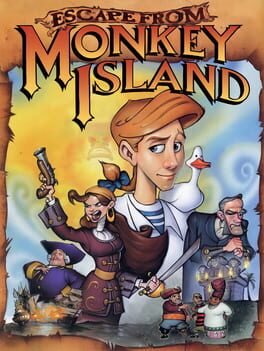
Escape from Monkey Island
PlayStation console exclusive
This is the fourth chapter of the Monkey Island series. As normal, prepare to find lots of salty humor and engaging game play from this legendary series. Loaded with lusciously rendered backgrounds and more monkeys than you can handle, Escape from Monkey features an original cinematic story full of drama. The game is highlighted by hundreds of challenging puzzles.
- Released
- 8 November 2000
- Platforms
- PlayStation 2WindowsmacOS
- Genres
- AdventurePoint-and-click adventurePuzzle
- Developers
- Lucasfilm Games
- Publishers
- Lucasfilm Games
- Series
- Monkey Island
- Modes
- Single-player
- Perspective
- Side view
- Themes
- FantasyHistoricalComedy
- Engine
- LucasArts adventure games
- Country
- United States
- Age ratings
- ESRB TPEGI 12USK 0
- Languages
- English, French, German, Italian, Spanish (Spain)
- Entry
- #4 in Monkey Island
- Time to beat
- 10hmain story12hcompletionist
- Composers
- Clint Bajakian
About
Escape from Monkey Island is a 2000 adventure game developed and published by LucasArts. It is the fourth game in the Monkey Island series, and the sequel to The Curse of Monkey Island (1997). The game was first released for Microsoft Windows in November 2000, and was ported to Mac OS and PlayStation 2 in 2001. It is the first game in the series to use 3D graphics, and the second game to use the GrimE engine, which was upgraded from its first use in Grim Fandango (1998).
The game centers on the pirate Guybrush Threepwood, who returns home with his wife Elaine Marley after their honeymoon, to find her erroneously declared dead, and her office of governor up for election. Guybrush must find a way to restore Elaine to office, while uncovering a plot to turn the Caribbean into a tourist trap, headed by his nemesis LeChuck and an Australian conspirator Ozzie Mandrill.
Players say
Media
The articlegameplay, story, development, reception
Gameplay
Escape from Monkey Island is an adventure game that consists of dialogue with characters and solving puzzles. The game is controlled entirely with the keyboard or alternatively with a joystick, making it the only non-point-and-click game in the Monkey Island series.
A feature of the game are action-lines: Guybrush will glance at any items that can be interacted with; the player can use 'Page Up' or 'Page Down' to select the item that he wants Guybrush to look at.
Story
Guybrush Threepwood and Elaine Marley return to Mêlée Island from their honeymoon. They find that Elaine has been declared officially dead, her position as governor has been revoked and her mansion is scheduled to be demolished. The governorship is up for election, and suddenly a person known as Charles L. Charles presents himself as the lead candidate.
As Elaine begins her campaign to recover her position, Guybrush hires navigator Ignatius Cheese in a game of insult arm-wrestling, meets again with two of his old "friends", Carla and Otis, and heads out to Lucre Island to recover the Marley family heirlooms and obtain the legal documents to save her mansion. During his trip, Guybrush learns of the Marley family's greatest secret: a voodoo talisman known as the Ultimate Insult, which allows the user to spread insults so heinous, it destroys the spirit and will of those who hear it. He is framed for bank robbery by crook Pegnose Pete at the hiring of the Australian land developer Ozzie Mandrill, but proves his innocence.
Development
The game was made with Sean Clark and Michael Stemmle as lead designers, both of whom worked on LucasArts' previous adventure titles Indiana Jones and the Fate of Atlantis and Sam & Max Hit the Road. Sean Clark also worked on Loom and The Dig. Escape uses a slightly improved version of the GrimE engine introduced by Grim Fandango. Compared to the rest of the series, the SCUMM scripting language was replaced by the Lua programming language. This is referenced in-game; the pirate-themed SCUMM Bar, which first appeared in The Secret of Monkey Island, is replaced during the game with the tropical-themed Lua Bar.
A new version of the iMUSE interactive music system incorporating MP3 compression, among other changes, was built and used for the game. Interactive programming of the music and ambiance streams in the iMUSE system was done by lead sound designer Larry the O. Escape's introductory music is identical to that of the third game, unlike the earlier sequels which featured newly composed remixes of the well-known Monkey Island theme. Clint Bajakian, who had previously been an additional composer on Monkey Island 2: LeChuck's Revenge, acted as the game's main composer, with additional tracks by Michael Land (who had been the lead composer on the previous three Monkey Island games), Peter McConnell, Anna Karney, and Michael Lande (not to be confused with Michael Land).
Reception
Discussing Escape from Monkey Island's performance in December 2000, Simon Jeffery of LucasArts said that the company was "really happy with the [game's] success". He noted that it was "selling well" in the United States and "incredibly well in Europe", which he called proof that a market still existed for adventure games, despite a widespread belief that the genre had died. The game's computer version sold 55,275 copies and earned $2 million in the United States by the end of 2000, according to the market research firm PC Data. In the German market, Escape debuted at #4 on Media Control's computer game sales chart for November 2000.
It placed ninth and 16th in its following two months, respectively. PC Data estimated its sales in the United States at 32,576 units for 2001, and 9,168 for the first six months of 2002. Its jewel case SKU sold 11,061 copies in North America during 2003.
Releases by platformdates and regions as published
Title IDsone per regional release, with its latest update
In the same series
 83
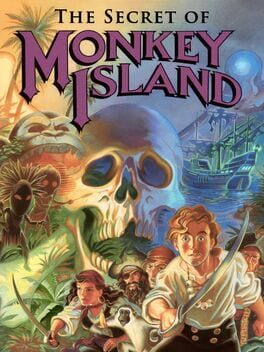
The Secret of Monkey Island Special Edition
1990 · Remake · Amiga, Atari ST +9
Lucasfilm Games
 Xbox exclusive88
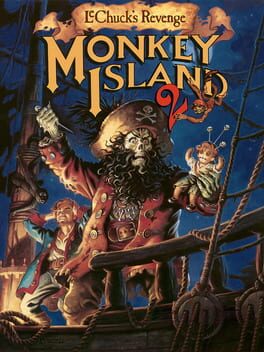
Monkey Island 2: LeChuck's Revenge
1991 · Amiga, FM Towns +4
Lucasfilm Games
 85
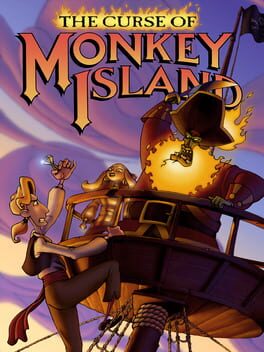
The Curse of Monkey Island
1997 · Windows, macOS
Lucasfilm Games
 Timed Nintendo77
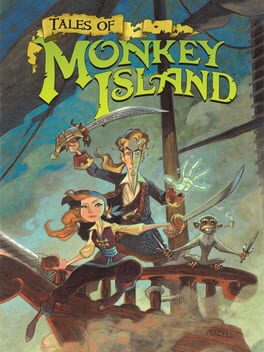
Tales of Monkey Island
2009 · PlayStation 3, Wii +3
Telltale Games
 86
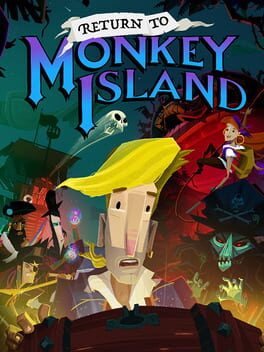
Return to Monkey Island
2022 · Android, Linux +6
Terrible Toybox
Games like this
 80
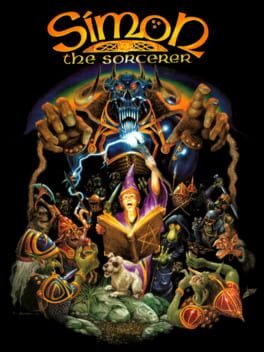
Simon the Sorcerer
1993 · Acorn Archimedes, Amiga +7
Adventure · Point-and-click adventure
 87
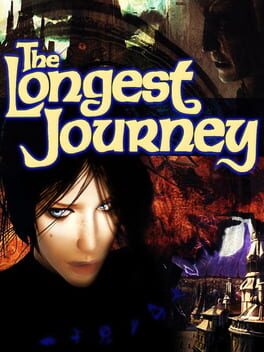
The Longest Journey
1999 · Windows, iOS
Adventure · Point-and-click adventure
 82
Time Gentlemen, Please!
2009 · Windows
Adventure · Point-and-click adventure
 83
Simon the Sorcerer II
1995 · Amiga, MS-DOS +3
Adventure · Point-and-click adventure
 Timed PlayStation76
Deponia
2012 · Linux, Nintendo Switch +5
Adventure · Point-and-click adventure
 65
The Book of Unwritten Tales
2009 · Linux, Windows +1
Adventure · Point-and-click adventure
 79
The Legend of Kyrandia: Hand of Fate
1993 · FM Towns, MS-DOS +3
Adventure · Point-and-click adventure
 77
Runaway: A Road Adventure
2001 · Windows
Adventure · Point-and-click adventure
Collections4 collections
Description adapted from its source, CC BY-SA 4.0.