


2012 · Ubisoft Montreal · Adventure · First-person shooter
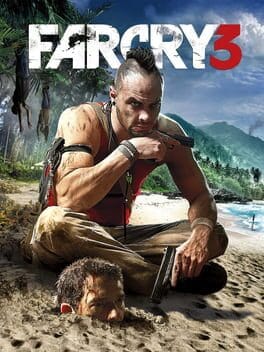
Far Cry 3
Explore an island playground as stunningly beautiful as it is diverse – from mountain ranges to swampy grasslands and white sandy beaches. Fight your way through the island’s towns, temples, river ports and more.
- Released
- 28 November 2012
- Platforms
- Nintendo Switch 2PlayStation 3WindowsXbox 360Xbox One
- Genres
- AdventureFirst-person shooterShooter
- Developers
- Ubisoft Montreal
- Publishers
- Ubisoft Entertainment
- Modes
- Co-opMultiplayerSingle-player
- Perspective
- First person
- Themes
- ActionSurvivalStealthSandboxOpen world
- Engine
- Dunia Engine
About
Far Cry 3 is a 2012 first-person shooter game developed by Ubisoft Montreal and published by Ubisoft. It is the third main installment in the Far Cry series after Far Cry 2. The game takes place on the fictional Rook Islands, a tropical archipelago which can be freely explored by players. Gameplay focuses on combat and exploration.
Players can use a variety of weapons to defeat human enemies and hostile wildlife, and the game features elements found in role-playing games such as skill trees and experience. After a vacation goes awry, protagonist Jason Brody must save his friends, who have been kidnapped by pirates, and escape from the island and its unhinged inhabitants.
›Story
Far beyond the limits of civilization lies an island, a lawless place ruled by violence and human suffering, where your only escape is through drugs or the muzzle of a gun. This is where you find yourself, stranded in a place that has forgotten right from wrong, a place where you must live by the principles of violence to survive.
Keywords
- hunting
- exploration
- bloody
- poker
- drugs
- photography
- shark
- death
- run and gun
- chicken
- doctor
- insanity
Media
The articlegameplay, story, development, reception
Gameplay
Far Cry 3 is a first-person shooter set on the fictional Rook Islands, a tropical archipelago somewhere in the Pacific, controlled by pirates and mercenaries. Players control Jason Brody and can approach missions and objectives in a variety of ways. They can kill enemies by utilizing firearms such as assault rifles, sniper rifles, grenade launchers, rocket launchers, and explosives like land mines and grenades. Alternatively, players can utilize stealth to avoid the attention of enemies.
For instance, players can scout an enemy's outpost by using a camera to mark the locations of enemies, or toss rocks to distract enemies. The stealth approach, which can be done by using silenced weapons and combat knives, can prevent enemies from triggering alarms which call for reinforcements. Skills are collected by gaining experience from completing missions and killing enemies, and are unlocked in three skill trees, themed as the Spider, the Heron, and the Shark. Each skill tree upgrades different aspects of Jason's abilities, with the Spider upgrading his stealth takedowns and hunting skills, the Shark upgrading assault takedowns and health, and the Heron upgrading his long-range takedowns and mobility.
Story
Jason Brody (Gianpaolo Venuta) is on vacation with a group of friends in Bangkok, Thailand. On a skydiving trip, they unknowingly land on the pirate-occupied Rook Islands, where they are captured by pirate lord Vaas Montenegro (Michael Mando), who intends to sell them into slavery. Jason escapes with help from his older brother Grant (Lane Edwards), whom Vaas kills. Jason is rescued by Dennis (Charles Malik Whitfield), an adopted member of the islands' native Rakyat tribe.
Dennis recognizes Jason's potential as a warrior and gives him the Tatau, the tattoos of a Rakyat warrior. While helping the Rakyat, Jason finds one of his friends, Daisy (Natalie Brown), at the house of botanist Dr. Earnhardt (Martin Kevan). Impressed with Jason's prowess, the Rakyat allow him to be the second outsider to enter their sacred temple.
Development
Ubisoft Montreal served as the game's lead developer and was responsible for creating the game's single-player. It was a global production that involved multiple Ubisoft studios: Massive Entertainment created the game's multiplayer portion, Ubisoft Shanghai designed the missions and crafted the AI of wildlife, Ubisoft Bucharest provided quality assurance, Ubisoft Reflections assisted Montreal on the design of vehicles, and Red Storm Entertainment was responsible for making the PC version and the game's user interface. West Studio created early concept art for the game. The game's pre-production started in 2008, and more than 90 people worked on the game.
Far Cry 3 was initially planned to form a single cohesive narrative with the previous installments of the series, though this was abandoned when the game's development was partially restarted in 2010 due to the departure of several creative staff including the original creative director and narrative director. On November 6, 2012, Ubisoft confirmed that the game had been released to manufacturing. Far Cry 3 is the first game in the series to use the Dunia 2 game engine, a heavily modified and upgraded version of the Dunia engine used in Far Cry 2. The Dunia 2 engine was made to improve the performance of Dunia-based games on consoles and to add more complex rendering features such as global illumination.
Reception
James Stephanie Sterling from Destructoid felt the game had a larger emphasis on storytelling when compared with its predecessors, and liked the game's cast of characters. Sterling called the story "tightly written" and "stylishly presented". Matt Bertz from Game Informer agreed, calling the story "compelling". The game's cast of side-characters was praised for their acting and characterization.
Mando's performance as Vaas was praised by critics: Ryan Taljonick from GamesRadar stated that his presence made some missions memorable. Mitch Dyer from IGN noted that Jason is a relatable character due to his many flaws. Kevin VanOrd from GameSpot questioned some of the narrative decisions, such as the heavy emphasis on drug use. Other story beats, such as Jason's transformation into an effective combatant within a short period of time and the handling of Vaas's death in the story, were criticized.
Legacy
The game's success helped elevate the franchise's status, which is now viewed as a blockbuster series with a strong identity. Dom Peppiatt from GamesRadar wrote that Far Cry 3 and its expansion Blood Dragon helped cement Ubisoft's domination in the open-world first-person shooter genres and its position as both a developer and publisher. Many features from Far Cry 3, such as the presence of towers and wildlife hunting, were later used in other Ubisoft non-Far Cry games. Commenting on the Classic Edition, Alex Avard from GamesRadar+ described the game as a "formative game-changers" for Ubisoft, one that established the blueprint for open world game design for both future Ubisoft titles and other AAA games.
In a more negative review, Kevin Fox Jr. from Paste Magazine wrote that the game was one of the most influential titles in the 2010s as its genre-mixing game design and its apolitical and unsophisticated approach to storytelling were apparent sources of inspiration for modern games. He ultimately described Far Cry 3 as "the increasingly safe, increasingly rent-seeking omni-genre—the do-everything, feel-nothing game".
Speedruns
- Any%Vlad2D1h 53m 36s
- Any% (Classic Edition)SpeedIdol3h 53m 02s
- 100%Vlad2D8h 17m 03s
- All TowersAnton_YerBoi35m 03s
Releases by platformdates and regions as published
Editions and related releases
- Included in
- Far Cry: Wild ExpeditionFar Cry New Dawn: Ultimate EditionFar Cry CompilationFar Cry 3 + 4 Double PackFar Cry Anthology BundleFar Cry: Gold PackFar Cry: Bronze PackFar Cry: Silver Pack
- Downloadable content
- Far Cry 3: High TidesFar Cry 3: Monkey Business
- Ported as
- Far Cry 3: Classic Edition
- Standalone expansions
- Far Cry 3: Blood Dragon
Games like this
 86
Far Cry 3 Classic
2012 · PlayStation 3, PlayStation 4 +3
Adventure · First-person shooter
 81
Far Cry 4
2014 · PlayStation 3, PlayStation 4 +6
Adventure · First-person shooter
 90
Metal Gear Solid V: The Phantom Pain
2015 · PlayStation 3, PlayStation 4 +3
Adventure · Shooter
 80
Tom Clancy's Splinter Cell: Blacklist
2013 · PlayStation 3, Wii U +2
Adventure · Shooter
 89
Grand Theft Auto V
2013 · PlayStation 3, PlayStation 4 +5
Adventure · First-person shooter
 86
Max Payne 3
2012 · PlayStation 3, Windows +2
Shooter · Drugs
 86
L.A. Noire: The VR Case Files
2011 · PlayStation 3, SteamVR +2
Adventure · Exploration
 83
Tomb Raider: Definitive Edition
2013 · Android, Linux +5
Adventure · Shooter
Collections11 collections
Platform libraries
- Xbox 360 games (A–L)
- Backward-compatible games for Xbox One and Series X/SList of compatible titles from Xbox 360
- Xbox One X enhanced gamesList of enhanced titles
- Nintendo Switch 2 gamesList
- PlayStation 3 games (D–I)
Years
- Games released in 2012List › October–December
Genres
Players
Reception and records
Themes
Description adapted from its source, CC BY-SA 4.0.