
The articlegameplay, story, development, reception
Gameplay
Firewatch is an adventure game played from a first-person view that takes place in the American state of Wyoming in 1989. Like other walking simulator games, Firewatch features no combat or puzzles. The player takes on the role of Henry, a fire lookout in Shoshone National Forest. Through exploration of the surrounding area, Henry uncovers clues about mysterious occurrences in the vicinity that are related to the ransacking of his tower while he is out on a routine patrol and a shadowy figure that occasionally appears watching him from afar. To aid in navigation, the player has a compass and a map that Henry appends additional information to throughout the game.
Henry's only means of communication is a walkie-talkie connecting him to his supervisor, Delilah. Delilah tasks the player with minor duties, such as checking in on campers setting off fireworks, and engages him in conversation. The player may choose from a number of dialogue options to speak with her upon the discovery of new interactive objects or environments, or can choose not to answer at all. The player's choices will influence the tone of Henry's relationship with Delilah.
Story
In the spring of 1989, after his wife Julia (Larissa Gallagher) develops early-onset dementia, Henry (Rich Sommer) takes a job as a fire lookout in Shoshone National Forest in Wyoming. On his first day, Delilah (Cissy Jones), a lookout in another watchtower, contacts him via walkie-talkie and asks him to investigate illegal fireworks by the lake. Henry discovers a pair of teenage girls, who accuse him of leering. On his way back to his tower, he comes across a locked cave and spots a shadowy figure watching him.
He returns to his watchtower to find it ransacked. The next day, Delilah asks Henry to investigate a downed communication line, which he finds cut. Henry and Delilah plot to scare the teenage girls off, but Henry finds their campsite ransacked and abandoned. The teens are reported missing; fearing an inquiry, Delilah falsely reports neither she nor Henry encountered the girls.
Development
Firewatch is the first game by Campo Santo and was created by Jake Rodkin and Sean Vanaman, who were the creative leads on The Walking Dead; Nels Anderson, the lead designer of Mark of the Ninja; and artist Olly Moss. Chris Remo was involved in many aspects of the design and also composed the score. In total, the game involved 11 people—eight in-house developers and three remote workers.
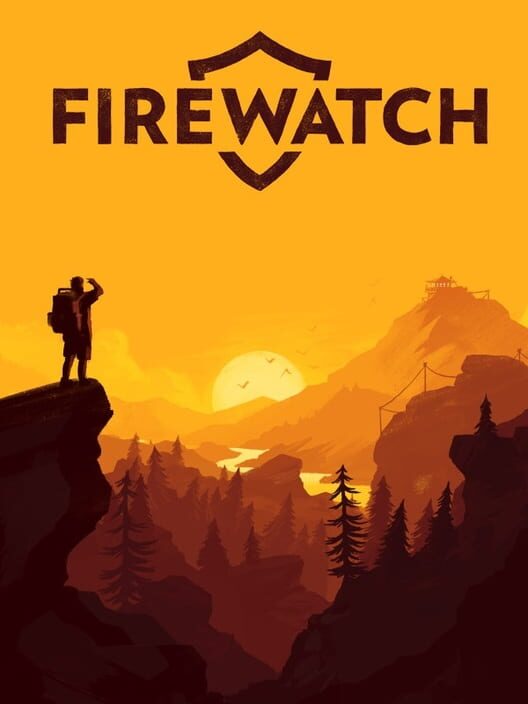
Development for Firewatch began with a single painting by Moss. Moss, who had previously been known primarily for his graphic design work, had joined Vanaman and Rodkin to found Campo Santo after spending many years working on the periphery of game development. In creating the painting, Moss emulated National Park Service posters from the New Deal era in art direction and bold colors. The development team went on a camping trip to Yosemite National Park to find inspiration for the game, where they visited a lookout tower built with the same design as its video game counterpart.
Reception
Firewatch was a critical success and received "generally favorable" reviews, according to review aggregator website Metacritic. Justin Towell of GamesRadar+ wrote that Firewatch was "one of the most enthralling slices of entertainment I've ever experienced", while GameSpot's Scott Butterworth called it a "thoughtful, engrossing experience". Phil Iwaniuk, writing for PCGamesN, felt that while other games can fail to impart a sense of time and place to the player that lasts, Firewatch left an enduring impression of a dreamlike experience. Less positively, PC World's Hayden Dingman called it a game "full of excellent dialogue and breathtaking moments and stunning vistas that ultimately amounts to nothing much at all." Critics noted specific technical issues with the PlayStation 4 version of the game, which Campo Santo partially ameliorated with post-release patches.
Critics noted that, as with other walking simulators, Firewatch did not offer a great amount of gameplay; The Verge's Andrew Webster noted the main component of the game was the choices players made in conversation. Some reviews considered the relative ease of gameplay as helping to immerse players in the setting and focus on establishing a relationship with Delilah. Nathan Ditum, writing for The Guardian, wished that the hints of greater interactivity the game promised early on carried through to the end, and that there had been more puzzle solving as part of the gameplay.


