Ludography
80/100
Players14 ratings
Indianapolis 500: The Simulation cover

1989 · Papyrus Design Group · Racing · Sim racing

Indianapolis 500: The Simulation

Indianapolis 500: The Simulation is a 1989 computer game. It was hailed as the first step of differentiating racing games from the arcade realm and into racing simulation. It was developed by the Papyrus Design Group, consisting of David Kaemmer and Omar Khudari, and distributed by Electronic Arts. It first released for DOS and later for the Amiga in 1990.

Released
1989
Platforms
MS-DOSAmiga
Genres
RacingSim racingSimulationSports
Developers
Papyrus Design Group
Publishers
Electronic Arts
Modes
Single-player
Perspective
First person
Country
United States
Age ratings
ESRB E
Composers
Rob Hubbard

About

Indianapolis 500: The Simulation is a racing video game developed by Papyrus Design Group and published in 1989 for MS-DOS. An Amiga version followed in 1990. It was the first game developed by the organisation that would later become iRacing.

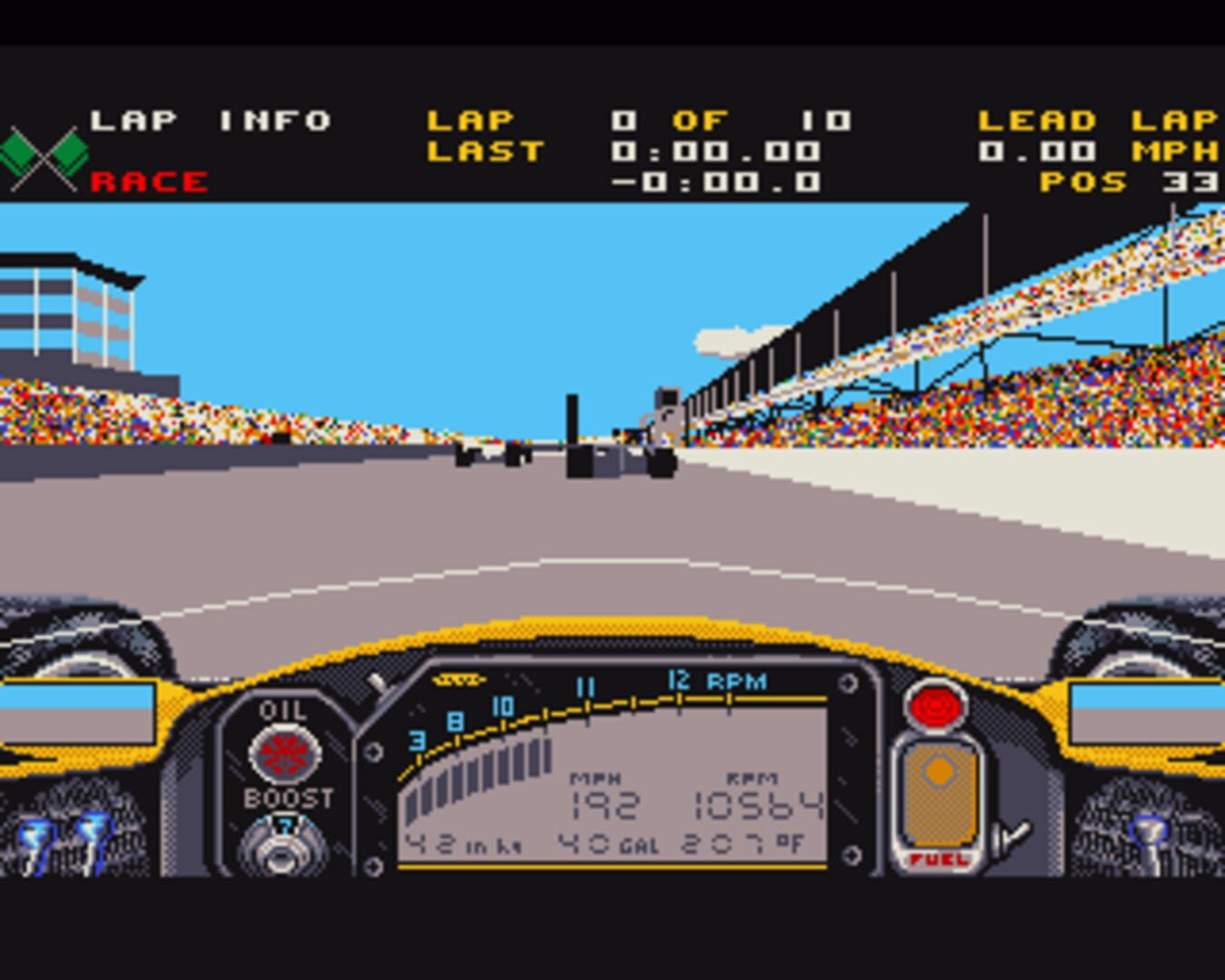
The game attempts to be a full simulation of the Indianapolis 500 race. Races are from a first-person perspective. There is a replay mode which uses different camera angles. Indy 500 allows realistically setting-up the car, which affects how it handles. The field and qualifying order are true to the 1989 Indianapolis 500 starting grid, with one exception: the player's car, numbered 17, replaces Car #29 of Rich Vogler, who qualified in 33rd and last place.

›Story

There are also practice and qualifying settings. Practice enables car setups to be altered and tested in real time. Choosing not to participate in the qualifying session results in one starting at the back of the field. The qualifying session requires four laps to be completed, with the mean value of the four lap times determining the qualifying position.

No car damage can occur during a Practice session, although other cars may be present on the track and their wreckage remains on the track if the player's car collides with them at any point. Car damage can occur during qualifying sessions.

The cars one can drive are a yellow Penske-Chevrolet, a red Lola-Buick, or a blue March-Cosworth, with the Penske having the fastest default setup (but if one sets the car up well, any of the above racecars can compete effectively). Various settings can be changed during Practice from menus associated with Function keys F3–F10. One's own car is always numbered 17.

Indy 500's theme music was produced by Rob Hubbard, who at the time was new to Electronic Arts as a music director.

Keywords

  • instant replay
  • polygonal 3d
  • vehicle customization
  • realism
  • sports cars

Media

Indianapolis 500: The Simulation screenshot 1

The articlegameplay, story, development, reception

Gameplay

There are four race options:

10 laps (no damage, no yellow flags)

Reception

The game sold more than 200,000 units by 1994.

Auto racer Barry Werger praised the game's graphics, controls, and realism in Computer Gaming World. He described it as a "hyper-realistic simulation [and] a valuable educational tool", and advised casual racers uninterested in running many laps to test each change to the racecar's design to "stick to Out Run". The Amiga version was voted the 9th best game of all time in Amiga Power.

Releases by platformdates and regions as published

Releases by platform
PlatformReleasedRegions
MS-DOS31 December 1989Worldwide
Amiga31 December 1990Worldwide

Editions and related releases

Included in
Electronic Arts Top Ten Pak

Games like this

Collections4 collections

Genres

Description adapted from its source, CC BY-SA 4.0.