
The articlegameplay, story, development, reception
Gameplay
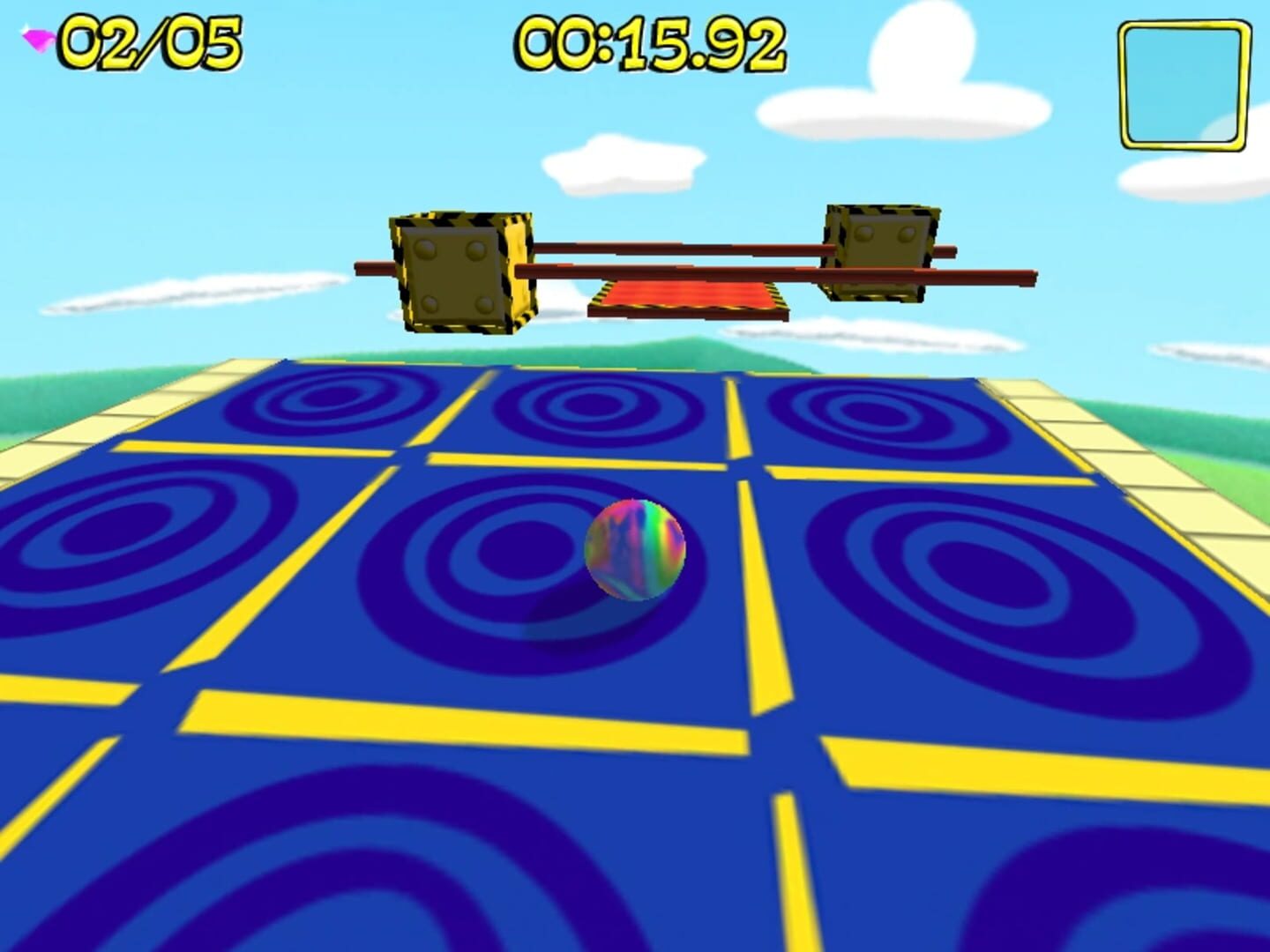
Basic gameplay involves taking control of a marble, viewed from a third person perspective, rolling it from a start pad to a finish pad without falling out of bounds. The player controls the marble’s spin and movement, and can also make the marble jump. The player can control the marble’s spin even in the air, which affects both the marble’s acceleration through the air and its momentum when bouncing off a surface. Levels may contain items that can be collected via collision with the marble, such as gems that need to all be collected before a level can be finished and powerups which apply various temporary effects to the gameplay that are beneficial to the player. Levels may also contain hazards which push the marble out of bounds and special surface types which change how the marble interacts with the ground.
A timer at the top of the screen tracks how long it takes the player to finish a level, and the top fastest times for each level are able to be viewed by the player. Levels may require the player to finish within a time limit to unlock the next one. Marble Blast Gold introduces Gold Times, an optional additional time limit specified for each level. Finishing a level below its Gold Time results in a special indicator on its time leaderboard. Beating a Gold Time usually involves finding hidden powerups and/or taking shortcuts.
Development
Marble Blast was developed by GarageGames and Monster Studios, two independent video game companies co-founded by Jeff Tunnell, former head of video game developer Dynamix. It was one of the first games to use GarageGames’ proprietary Torque Game Engine, originally developed by Dynamix for their game Tribes 2. It was developed alongside Monster Studios’ game Chain Reaction, with the two projects sharing development team members and assets. Inspired by Marble Madness and originally envisioned as a multiplayer racing game, development began in the first half of 2002 with the working title Marble Reaction. Multiplayer functionality ended up being cut early in development.
The game was released for Windows on December 13, 2002 as a digital purchase on GarageGames' website, and was made available for Mac and Linux several weeks later.


