
The articlegameplay, story, development, reception
Gameplay
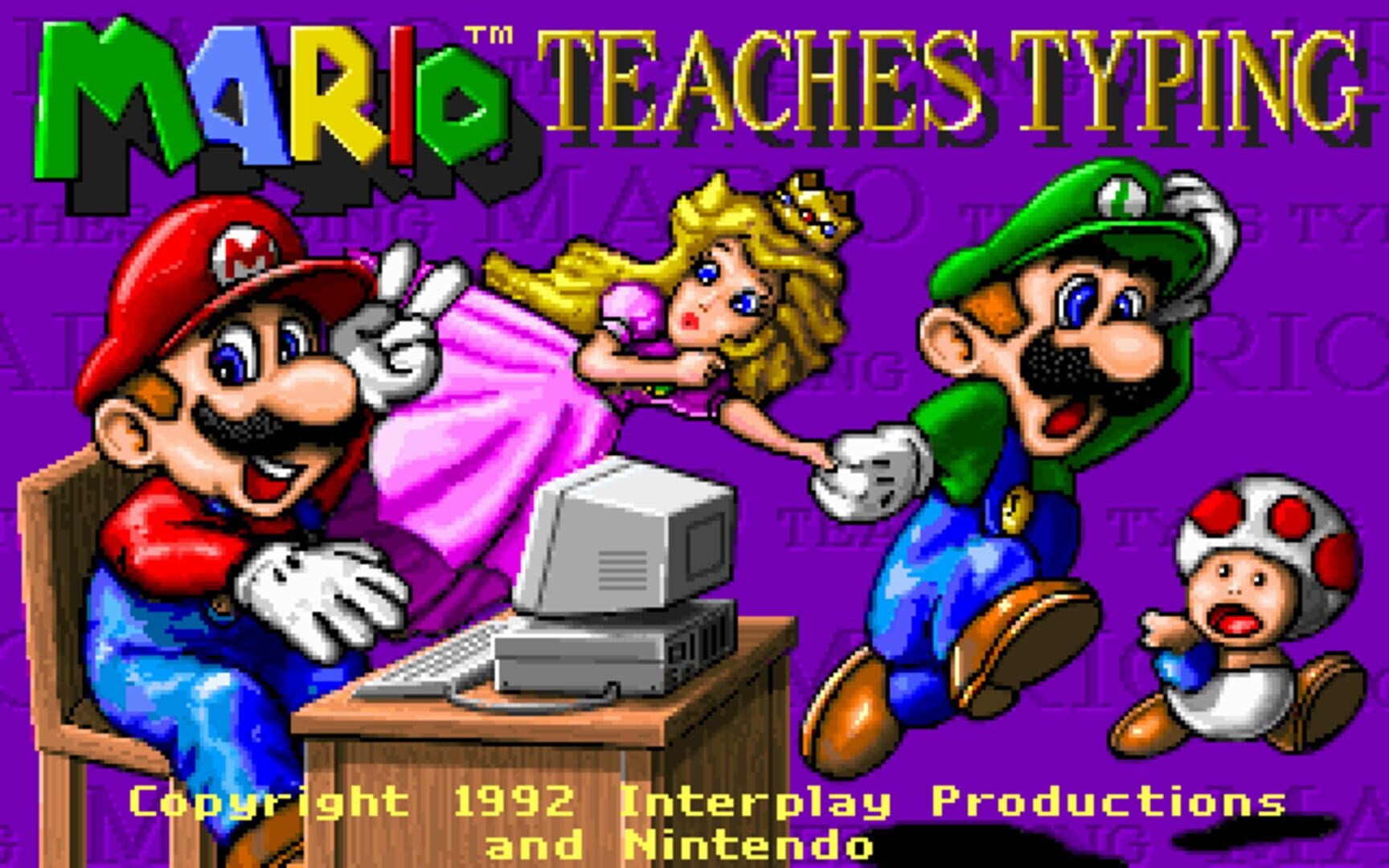
Mario Teaches Typing is a single-player educational typing game aimed at teaching children touch typing. From the Main Menu screen, the player can select lessons as well as manage student profiles and lesson settings. As part of their profile, the player can set a words per minute (WPM) goal and change the player character to Mario, Luigi, or Princess Peach. Reaching the WPM goal will provide the player with a printable certificate.
Via settings in a lessons menu, courses can focus on the home row only or include specific segments of the keyboard; for example, the bottom and number rows can be included with the home row, or the lesson can encompass the whole keyboard. Localized versions were also published, such as a German release that supports QWERTZ keyboards and umlauts.
Development
Mario Teaches Typing was developed and published by Interplay Productions. Thomas Decker produced and designed the game with Kurt Dekker and Jay Patel as the programmers. Art was handled by Dave Mosher, Todd Camasta, and Patrick Whelan. Ronald B.
Ruben provided the voice for Mario; it was the first time that the character had spoken in a game. David Govet along with George Sanger arranged the music while Hamilton Altstatt handled the sound effects. The game reuses music from Super Mario World.
Reception
Mario Teaches Typing sold more than 800,000 copies. Fargo considered it a success. The software frequently appeared in top education sales charts for years after its initial release. , Babbage's, Waldensoftware, and Electronics Boutique.
The following month, the organization reported that it was the sixth-bestselling software in home education and the ninth top-selling education game. PC Research also reported that Mario Teaches Typing was the sixth top-selling IBM PC education game in September 1992. It dropped to ninth the following month and tenth in December 1992. At the Software Etc.
Legacy
Following Mario Teaches Typing, Martinet became the official voice actor for Mario, voicing him for decades in over 150 games. Martinet later transitioned from Mario's voice actor to Nintendo's "Mario Ambassador" in 2023. Fargo noted that Miyamoto was happy with Mario Teaches Typing. The success of Mario Teaches Typing encouraged Nintendo to continue releasing educational computer games; it partnered with The Software Toolworks to release the several Mario-themed educational games in 1993.
Interplay maintained its relationship with Nintendo, releasing Mario's Game Gallery. However, Nintendo ceased endeavors on non-Nintendo systems, including with Interplay, after another outside company produced a game that was not up to its standards.


