
- 60/100
- Players12 ratings
1994 · EA Orlando · Mech simulation · Shooter
MechWarrior 3050
Timed Sega exclusive
The game is viewed in an isometric view and features a unique 2-player mode where one player controls the bottom half of the mech to navigate it around the map while the second player controls the upper torso, which moves independently.
- Released
- 1 December 1994
- Platforms
- SNESSega Genesis
- Genres
- Mech simulationShooterSimulation
- Developers
- EA Orlando
- Publishers
- ActivisionMalibu Games
- Modes
- Single-player
- Perspective
- Bird view / Isometric
- Themes
- Action
- Country
- United States
- Age ratings
- ESRB E
- Composers
- Brian L. Schmidt
About
MechWarrior 3050, also known as BattleTech in its original Sega Genesis release and in Japan as BattleTech 3050 (バトルテック3050), is a 1994 mech-based video game developed by Malibu. The first BattleTech based game to be released for the Sega Genesis, it was later ported to the Super NES by Activision as MechWarrior 3050. The Super NES version was localized and published in Japan by Ask Group.
The story takes place during the events of the Clan Invasion in the 3050 era. Players are assigned the role of a Clan Wolf Mechwarrior, who is sent to eliminate several Inner Sphere assets which threaten to destroy the Clan's dominance on the battlefield, and given a Timber Wolf/MadCat mech.
›Story
In the 31st century, the galaxy is engulfed in a large-scale war fought with heavily armed BattleMechs. The player takes the role of a MechWarrior piloting a Mad Cat Heavy OmniMech, carrying out missions against enemy forces and installations.
Operating alone in hostile territory, the player must complete objectives while facing large numbers of defenders. Success depends on navigating combat zones, managing the Mad Cat’s weapons effectively, and surviving sustained attacks. The setting presents a conflict in which defeat can be final, giving each mission a high degree of risk.
Keywords
- mission based
- mecha
- cheat code
- retroachievements
Media

The articlegameplay, story, development, reception
Gameplay
The game features an isometric perspective and centers around controlling a Mad Cat/Timber Wolf mech to destroy the Inner Sphere bases. Gameplay unfolds across five distinct stages, each featuring a unique environment such as swamps, deserts, or frozen wastelands. All missions are presented to the player in the form of a news feed.
Mission objectives range from destroying enemy radars and factories to conducting rescue operations, all of which involve extensive use of weaponry. The Mad Cat/Timber Wolf mech, with its ability to rotate 360 degrees, is armed with an array of weaponry, including missiles, lasers, mines, and flamethrowers, which the player chooses at the beginning of each mission. Limited ammunition necessitates frequent restocking from crates scattered around the map.
Reception
Though the four reviewers of Electronic Gaming Monthly complained that the game's single-player mode is difficult to the point of being inaccessible, all but one of them gave the Genesis version a positive recommendation, citing the diversity of missions, strong challenge, and impressive animations. They were evenly split on the Super NES version, with two of them recommending it based on the diversity of levels, and the other two focusing on the frustratingly difficult single player mode and the confusing controls. 75 out of 10 average. A critic for Next Generation gave it three out of five stars, assessing that, compared to the Genesis original, it has sharper graphics but clunkier animation and worse control.
He praised the game itself for its frantic, challenging onslaught of enemies. GamePro's Scary Larry was uneasy at how the two-player mode demands that the two players be in perfect sync with each other, and said that the failure to do so could lead to bitter arguments. He also criticized the undetailed graphics, choppy animation, and limited sound effects, but recommended the game for its challenging, strategic, and overall fun gameplay.
Releases by platformdates and regions as published
Title IDsone per regional release, with its latest update
Box artone per regional release we hold art for
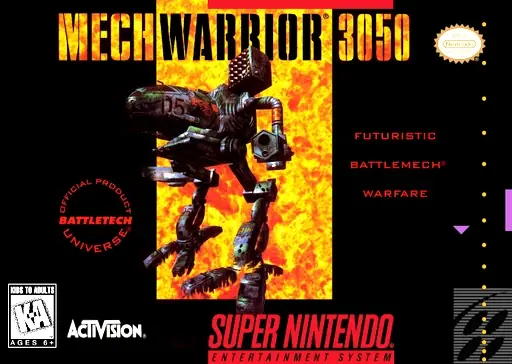
SNES
Games like this
 Sega exclusive
Battlecorps
1994 · Sega CD
Shooter · Simulation
 Nintendo exclusive65
MechWarrior
1993 · SNES
Mech simulation · Shooter
 PlayStation exclusive73
S.L.A.I.: Steel Lancer Arena International
2005 · PlayStation 2
Simulation · Mecha

Heavy Gear
1997 · Windows
Shooter · Simulation
 PlayStation exclusive
Armored Core: Nexus
2004 · PlayStation 2
Shooter · Mecha
 PlayStation exclusive
Metal Jacket
1995 · PlayStation
Shooter · Simulation
 70
Diep.io
2016 · Android, Browser +1
Shooter · Simulation
 Timed Sega79
MechWarrior 2: 31st Century Combat
1995 · MS-DOS, PlayStation +3
Mech simulation · Shooter
Collections3 collections
Platform libraries
- Super Nintendo Entertainment System gamesRetail releases
- Sega Genesis gamesLicensed games
Publishers
Description adapted from its source, CC BY-SA 4.0.