The articlegameplay, story, development, reception
Gameplay
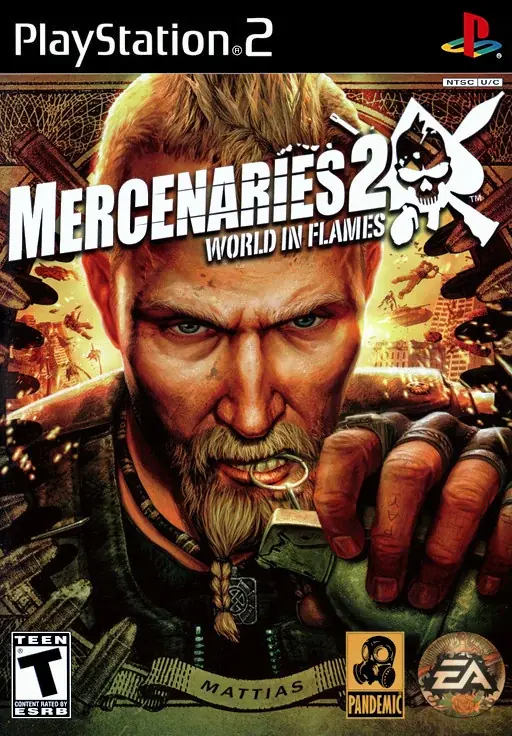
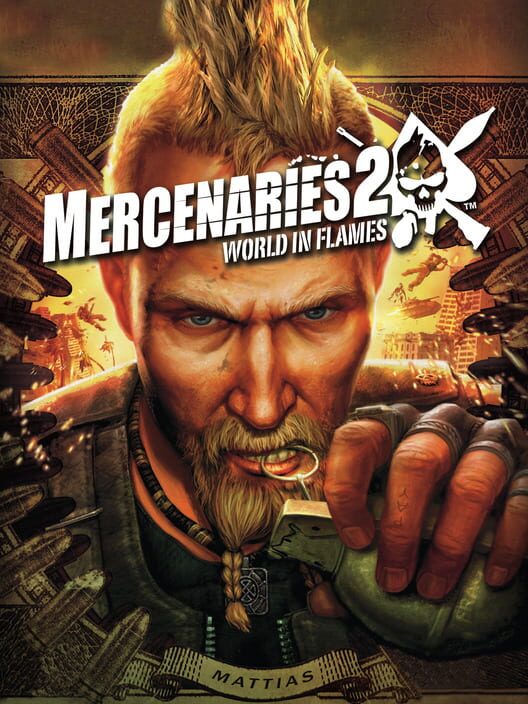
Most of the game's elements are inherited from its predecessor with the addition of new features. The game is set in an open-world map representing a fictionalized Venezuela featuring tropical landscapes mixed with urban zones, industrial sectors, military settlements and fishing villages scattered across the map. As the story progresses, the player gradually unlocks more sections of the map which can be explored.
The mercenary must complete missions for several factions in order to discover Solano's hideout and weaken its regime. There are primary, secondary missions and minigames, the last one can be completed at any time and does not affect the story directly. Apart from the missions, the player can hunt High-value Targets (HVTs) which are located in different parts of the map; each faction has its own HVTs that are either members of the Venezuelan regime or members of other factions. The player can either capture the HVT and call out a helicopter from the requesting faction or kill it and take a picture of their corpse; the former one has a higher bonus but it is harder to perform successfully.
Apart from the returning Allied Nations and China, other four factions that's present in the game are the Venezuelan army (abbreviated as VZ or VZA), Universal Petroleum, The People's Liberation army (PLAV) and the Pirates. Each faction has unique armaments, vehicles, uniforms and architectures. All of the factions can be friendly to the player at first (except for the VZ), but the relations with the player can change depending on the behavior of itself, for example, shooting a member of a faction or stealing and/or destroying its resources can cause one of the members to alert their HQ and if it successfully delivers the message can make a faction hostile. If a faction becomes hostile, its members will shoot the player on sight, and also it cannot complete missions or purchase items. If the player wants to fix any and all relations with a faction, it must either pay a fair bribe to the angered faction or kill personnel or destroy property of a rival faction so the displeased faction becomes friendly again.
Story
Following the events of the Second Korean War, the Mercenary and their technical support advisor Fiona Taylor leave Executive Operations to work independently. Three years later, the Mercenary is referred to a contract in Venezuela by Blanco, a Liberian who the Mercenary had worked with in Dakar. Blanco introduces them to Ramon Solano, a billionaire software entrepreneur with family ties to drug trafficking. Using his connections, Solano had convinced General Carlos Carmona and large portions of the Venezuelan Army to overthrow the Venezuelan government, but General Carmona had since been captured by a group of loyalist army units, leading Ramon Solano to hire the Mercenary to rescue him.
After successfully completing the contract, the Mercenary returns to Solano's estate, but Solano refuses to pay and orders them to be executed. Blanco also betrays the Mercenary, attempting to execute them, and the Mercenary is shot in the buttock amidst their escape. Backed by a majority of the Venezuelan armed forces, Solano publicly declares himself Venezuela's new leader as the Mercenary swears revenge.
Solano's coup d'état throws Venezuela into chaos, with leftist paramilitaries taking arms against both Solano's government and the U.S.-based fossil fuels corporation Universal Petroleum, which ends up resisting attempts to nationalize its vast hold on Venezuela's oil reserves with a small army of mercenaries. The Mercenary can fight for either side or both sides as they seek to build a private military corporation of their own, gathering funds, resources, and personnel along the way.
The growing violence and disorder ultimately leads to foreign intervention, with the American-led Allied Nations bringing a vast force in under the command of Agent Joyce, while the Chinese send forth Zhou Peng, now a general in the People's Liberation Army, to command a similarly massive army against their American-led adversaries. Both sides offer considerable incentives to back them, and the Mercenary must ultimately side with one side or the other. As Solano's fortified bunker complex can only be breached by a nuclear-tipped "bunker buster" bomb, the Mercenary works to obtain one through the AN or the Chinese, and ultimately settles their score with Solano before leaving for India.
Reception
Mercenaries 2: World in Flames received "mixed or average" reviews on all platforms except the PlayStation 2 version, which received "generally unfavorable reviews", according to the review aggregation website Metacritic.
Though praised for its colorful and destructive environments, many reviews have complained of "nagging annoyances" throughout the game that occasionally feel rushed and unfinished. One of the major problems was the unintelligent AI of both friendly and enemy NPCs, and the issue was aggravated by voice acting and repetitive lines. Some reviewers found several gameplay mechanisms questionable, such as the air supports and airstrikes being of limited value, over-powerful melee attacks and simplistic faction dynamics. The reactions from the new co-op mode were divided; while another player added to the fun, there were limitations, such as the tether between players and limited role of the passenger when in a vehicle.
Edge gave the PlayStation 3 version a score of 6/10 and said that, while it is inferior to the original game and suffers from poor NPC programming, it nonetheless "remains an absolute blast". In Japan, Famitsu gave it a score of one eight, one nine, and two sevens for the PlayStation 3 and Xbox 360 versions; and one six, one seven, and two fives for the PS2 version.
The version released on PlayStation 2 received overwhelmingly negative reviews, with IGN calling it "insulting" and "clearly a half-assed rebadging of the first game that wasn't finished", giving it a 3.9/10. GameSpot gave the PS2 version a 3.5/10 and said it "feels like a really bad GTA:SA mod made by a fan who was still in the learning phases of how to mod" and blamed "clipping, hideously blurry cutscenes, repetitive buildings, an endless of slough of glitches, enemies that all look alike...and a miserable color palette" as reasons this version could be considered "one of the worst games ever released on the PlayStation 2". GameSpot also shunned EA for tricking buyers into thinking the PS2 version of the game would be the same as the PS3 and Xbox 360 versions by using gameplay footage and still images from the newer console version to promote the PS2 version.
Mercenaries 2 was nominated for "Dubious Honors: Worst Game Everyone Played" by GameSpot in their 2008 video game awards, which was a category for games with large sales that had been panned by the critics. In addition, it won "Dubious Honors: Most Disappointing Game" by GameSpot.
S. federal government of trying to drum up support from the American public for a real-life invasion of Venezuela with the purpose of overthrowing Hugo Chávez. S. Army.
In response to the criticism, the official website of the game included the following disclaimer: Pandemic Studios is in the business of entertainment. S. government agency concerning the development of ''Mercenaries 2''. All persons, storylines and events are purely fictional and bear no relation to real events.
As with any number of games, movies and books, the decision to choose interesting events and locations is purely designed to tell a compelling story, as well as provide a fun and rich experience for the gamer.