
The articlegameplay, story, development, reception
Gameplay
The core gameplay of Meteos, described as a "shoot-and-lift-up puzzle" game, requires players to use a stylus to move colored blocks—the eponymous "meteos" that fall from the top of the screen. Creating a vertical or horizontal line of three or more blocks causes the meteos to ignite and rise; they, or any blocks above them, disappear once they leave the screen. The speed and frequency of falling blocks can be adjusted with the "speeder" gauge. Power-ups may help or hinder the player or opponents; one example is a giant hammer that destroys multiple blocks with a few swings.
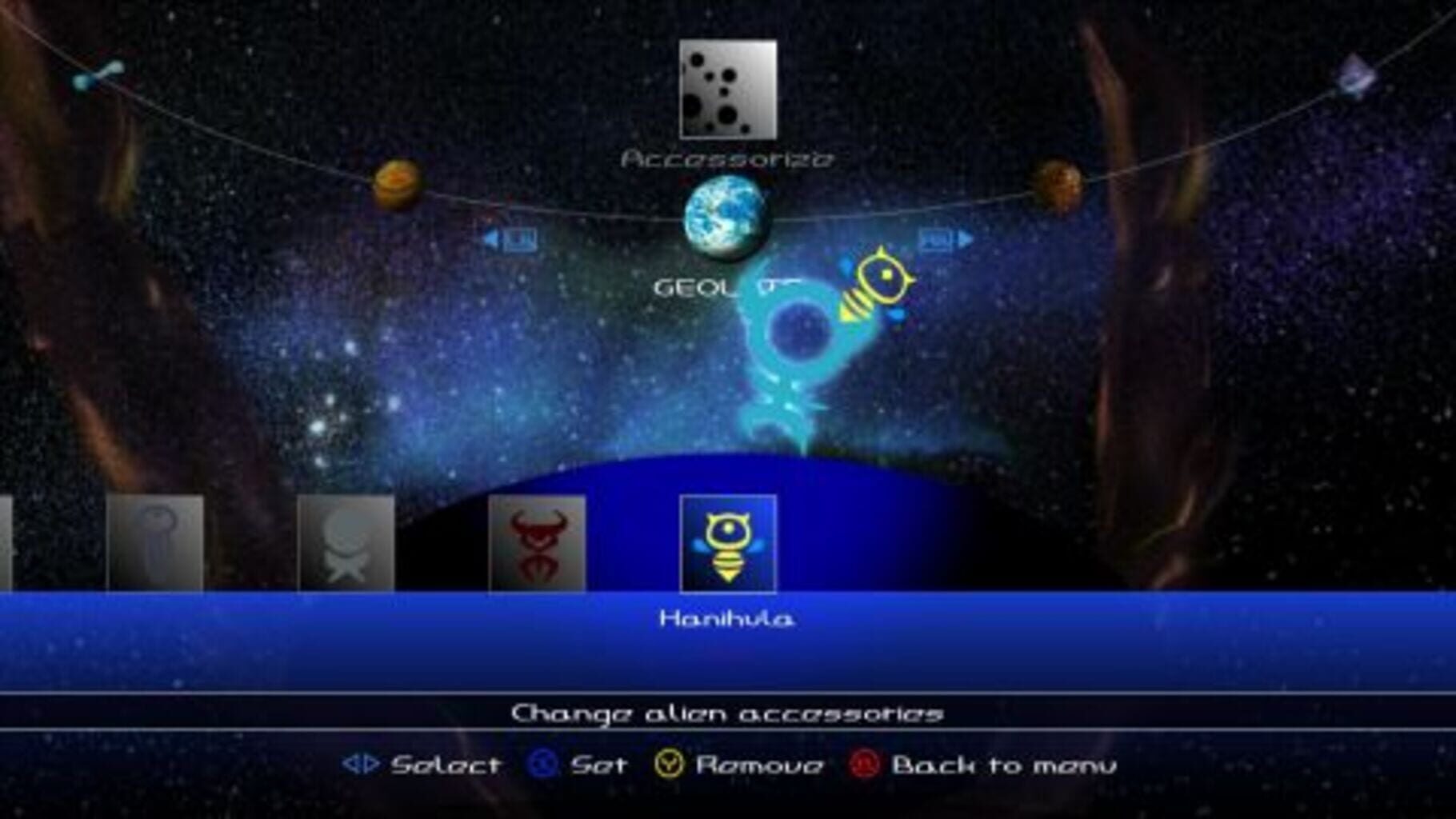
The game ends if the blocks reach the top of the screen. Each block sent out of the playing field is cached in a virtual bank, from which the player can unlock new planets, aliens and sounds. The player can play as one of thirty-two aliens and their respective planets, each of which has a unique gravitational pull that affects the way the blocks launch.
Development
Meteos was developed by Q Entertainment and released by Bandai in Japan and Nintendo in the United States. The game was first announced by Nintendo in August 2004; it was produced by Q Entertainment founder Tetsuya Mizuguchi, who also produced Sega's Space Channel 5 (1999) and Rez (2001). HAL Laboratory alumnus and creator of the Kirby series Masahiro Sakurai served as the game designer, and Takeshi Hirai was its director, while Takayuki Nakamura and Kaori Takazoe produced the game's soundtrack. The genres of music used for each planet include classical, country, pop and Balinese, and music reminiscent of that used in Space Invaders (1978).
The game was conceived when Tetsuya Mizuguchi asked Masahiro Sakurai to make a falling block puzzle. Believing the puzzle game genre had not evolved since Tetris Attack (1995), Sakurai originated the idea of having the blocks fall down and shoot back up. The game's prototype was created in three days by a designer, a programmer and a graphic artist; it was inspired by the television series 24, the film The Matrix and the video game Missile Command. According to Mizuguchi, 24's camera work and the beginning of The Matrix—in which green computer code cascades down the screen—served as the basis of the puzzle-game concept. In a Famitsu interview, Sakurai said the opening CG video explaining its backstory was added to provide a sense of the game's world.
Reception
Meteos generally received praise from video game critics; review aggregating website Metacritic recorded a score of 88/100. According to UK market research company Chart-Track, after three days of release the game debuted at number one in DS sales for the week of September 24, 2005. Chart-Track's 2005 sales report for the UK ranked the game 46th in the DS category, with sales of about 10,000 copies. By November 12, 2006, it had sold 57,880 copies in Japan. Game critics compared Meteos to other puzzle games, such as Tetris and Lumines—the latter also released by Q Entertainment for the PlayStation Portable.
Multiple reviewers praised the gameplay. IGN commended its gameplay modes for being individualized and distinctive, while G4 called its multiplayer mode "engrossing". Greg Kasavin of GameSpot also praised the single-player and multiplayer modes, though he described the gameplay to be "fun but formulaic". GameSpy's Phil Theobald criticized Meteos' stylus-driven control theme, considering it the game's chief flaw.


