
The articlegameplay, story, development, reception
Gameplay
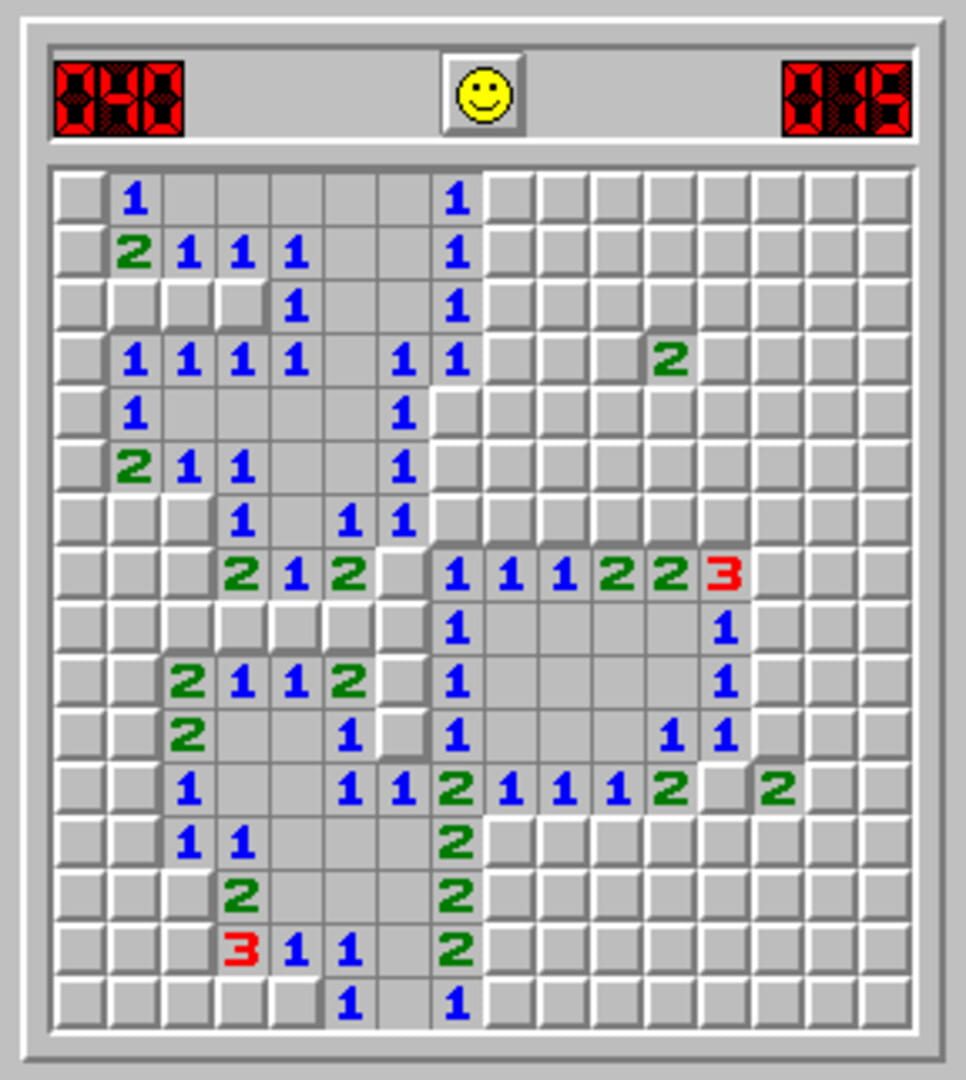
Minesweeper is a puzzle video game. In the game, mines (that resemble naval mines in the classic theme) are scattered throughout a board, which is divided into cells. Cells have three states: unopened, opened, and flagged. An unopened cell is blank and clickable, while an opened cell is exposed. Flagged cells are those marked by the player to indicate a potential mine location.
A player selects a cell to open it, typically using left click on a mouse. If a player opens a cell containing a mine, the game ends. Otherwise, the opened cell displays either a number, indicating the number of mines vertically, horizontally or diagonally adjacent to it, or a blank tile (or "0"), and all adjacent non-mined cells will automatically be opened. Players can also flag a cell, usually with a right mouse click, to denote that they believe a mine to be in that place. In some versions of the game when the number of adjacent mines is equal to the number of adjacent flagged cells, all adjacent non-flagged unopened cells will be opened when left and right mouse buttons are pressed simultaneously, a process known as chording.
Development
According to TechRadar, Minesweeper was created by Microsoft in the 1990s, but Eurogamer commented that Minesweeper gained a lot of inspiration from a "lesser known, tightly designed game", Mined-Out by Ian Andrew for the ZX Spectrum in 1983. According to Andrew, Microsoft copied Mined-Out for Microsoft Minesweeper. 11. The game was written by Robert Donner and Curt Johnson.
Johnson stated that Microsoft Minesweeper's design was borrowed from another game, but denies it was Mined-Out. In 2001, a group called the International Campaign to Ban Winmine campaigned for the game's topic to be changed from landmines. The group commented that the game "is an offence against the victims of the mines". A later version, found present in Windows Vista's Minesweeper, offered a tileset with flowers replacing mines as a response.


