
The articlegameplay, story, development, reception
Gameplay
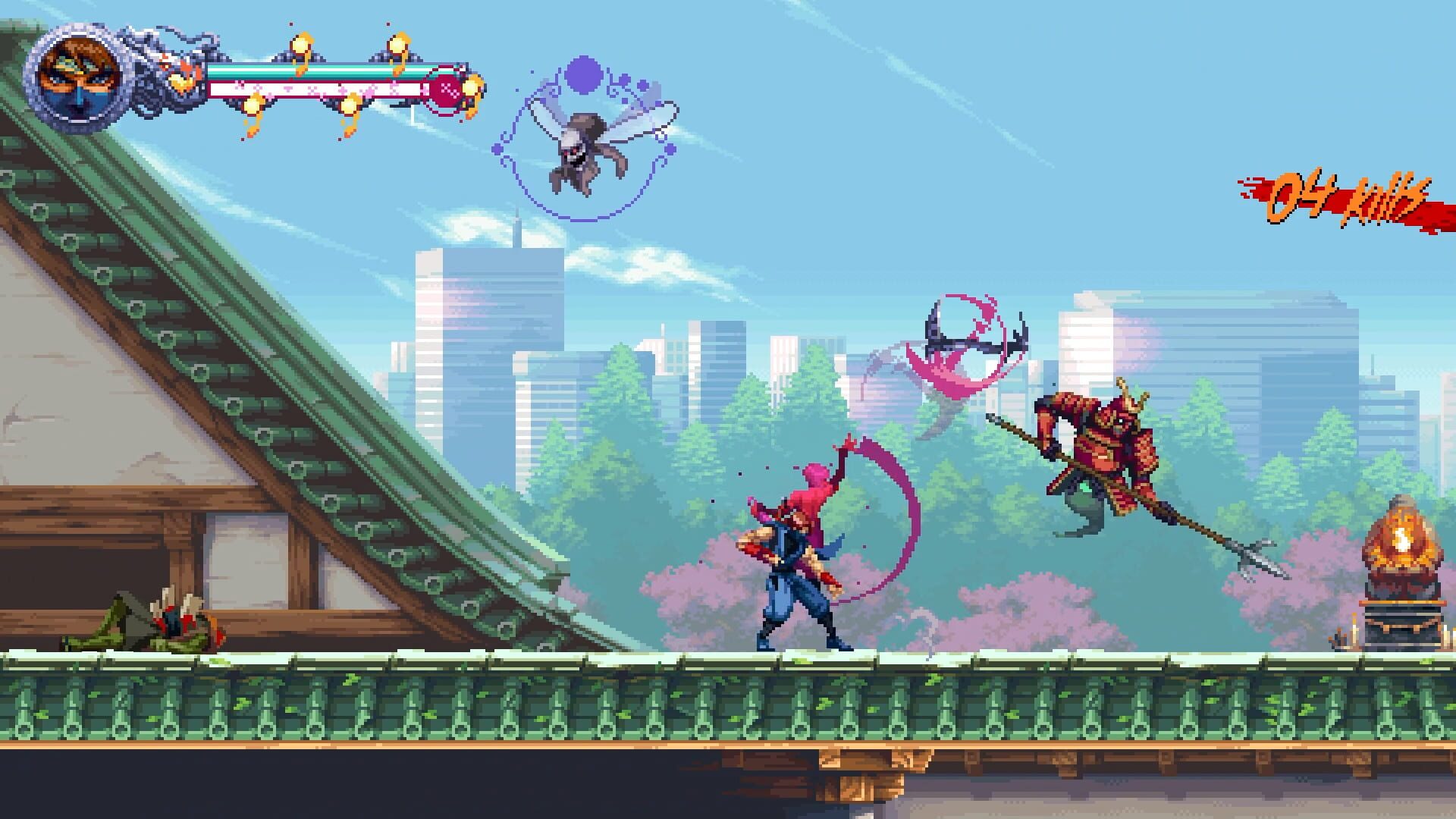
Ninja Gaiden: Ragebound is a side-scrolling action video game. In the game, the player assumes control of Kenji Mozu, an aspiring ninja who must protect Hayabusa Village against demons. Kenji wields a katana and excels at melee combat. Most enemies can be killed with one hit, though the game also introduces enemy variants and boss characters who can survive multiple attacks.
Occasionally, some enemies are highlighted with either a pink or blue color, requiring players to defeat them using certain techniques. Once they are defeated, Kenji enters a "hypercharged" state, allowing him to kill all types of enemies with one hit. Kenji is very acrobatic, able to dodge, deflect ranged attacks, climb across ceilings, dash in the air, and clamber onto walls. He can also perform a "Guillotine boost", which allows him to strike and bounce off enemies and projectiles.
Story
Ryu Hayabusa is training promising new recruits for the Dragon Ninja clan when suddenly, the barrier between the world of the demons and the world of humans is shattered. As demons start to pour through the invisible chasm, Ryu gets a letter from his father, telling him to take the Dragon Sword to America and find a certain man that will set off the events of Ninja Gaiden (1988). In his absence, Ryu's protege Kenji Mozu volunteers to defend the village from demon incursion. Meanwhile, the base of the Black Spider Ninja clan is attacked by a separate wave of demons.
As the kunoichi Kumori manages to fight off the invaders, the clan's headmaster, Obaba, tasks her with striking a deal with the demons' leader, and using a magical weapon called the Tamashi Kunai to bind their leader to Kumori, and thus to the clan's will. However, the demon lord Jagäzk springs a trap on Kumori before she is able to use the kunai and binds her to a wall. Later, Kenji manages to defeat one of Jagäzk's generals, but is caught in the demon's explosion, barely alive as he lands at the spot where Kumori is held.
Development
The game was developed by The Game Kitchen. Dotemu was given the opportunity by Koei Tecmo to create a 2D Ninja Gaiden game, and approached The Game Kitchen as a development partner as they were impressed by their work on Blasphemous. The studio began working on the project about halfway through the development of Blasphemous II.
A member of the Black Spider Clan was introduced as a secondary playable character as the team felt that it will be interesting for players to control a character who is traditionally an antagonist in the Ninja Gaiden series. While the team was initially inspired by the 3D Ninja Gaiden games and experimented with combo-based combat, they were unable to recreate them in a 2D game and therefore, quickly switched to the format of the older 8-bit and 16-bit Ninja Gaiden games which have a larger emphasis on keeping momentum and finding ways to dispatch enemies effectively. Team Ninja served as a consultant for the game and provided feedback to The Game Kitchen after playing early builds of the game. Sergio de Prado served as Ragebound's composer, with contributions from composers of the original Ninja Gaiden trilogy (Keiji Yamagishi, Ryuichi Niita, and Kaori Nakabai).
Reception
Ninja Gaiden: Ragebound received "generally favorable" reviews, according to review aggregator platform Metacritic. Fellow review aggregator OpenCritic assessed that the game received "mighty" approval, being recommended by 92% of critics. In Japan, four critics from Famitsu gave the game a total score of 32 out of 40, with each critic awarding the game an 8 out of 10.
IGN gave the game a rating of 9/10, praising the game's artstyle and calling the combat "satisfying". GamesRadar+ lauded the game's difficulty and combat, though criticism was directed at the game's upgrade system. Game Informer praised Ragebound's gameplay and platforming challenges, stating that the game is "hard to put down". Nintendo Life praised the game's stage design and boss battles while criticizing the lack of support for Nintendo Switch 2 which results in frame rate issues. The short length of the game had mixed reception, with PC Gamer praising the lack of gameplay repetition, while GameSpot stated that the game "ends prematurely".